
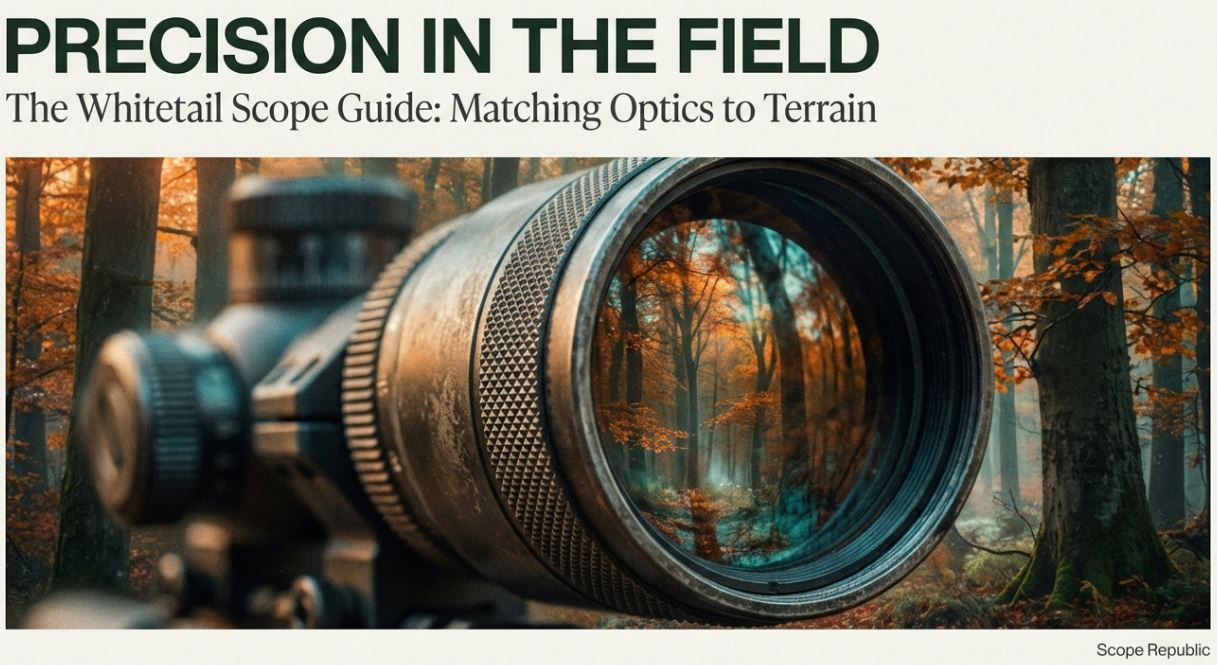


Whitetail deer hunting accounts for more rifle scope purchases in North America than any other hunting application, yet many hunters end up with optics that don’t match their specific terrain and shooting scenarios. The 30-yard treestand shot in Alabama timber demands completely different glass than a 250-yard food plot setup in Kansas, and understanding these distinctions will help you select optics that actually improve your success rate rather than just adding weight to your rifle.
This guide breaks down scope selection by hunting method, terrain type, and the realistic shot opportunities you’ll encounter across whitetail country. We’ll cover what works in thick Eastern hardwoods, open Midwestern agricultural land, Southern pine forests, and everything between, with specific models that excel in each scenario and honest assessments of where they fall short.

What Makes a Whitetail Scope Different
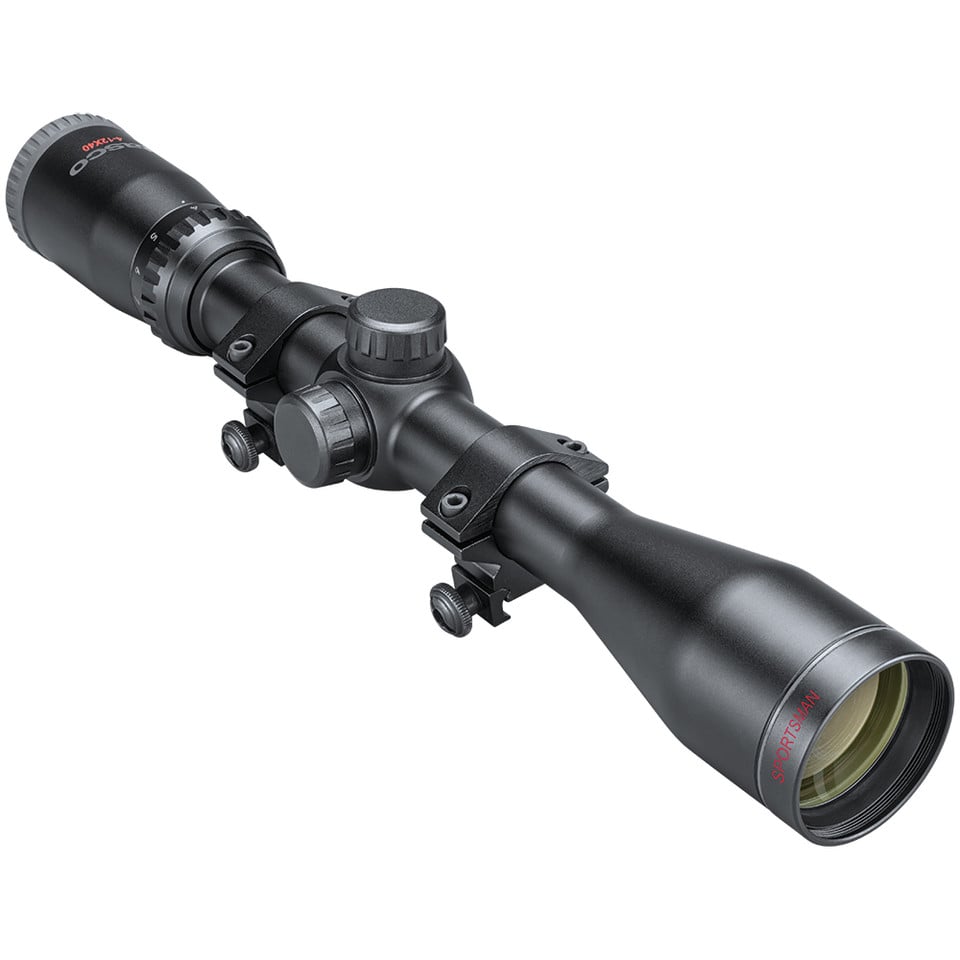
Whitetail hunting presents a unique set of optical requirements that differ significantly from Western big game hunting or varmint shooting. Most whitetail shots occur between 50 and 150 yards, with the vast majority happening during the low-light windows of dawn and dusk when deer are most active. The shooting positions vary dramatically – you might be angled down from a treestand at 20 feet, shooting from a ground blind through a small window, or taking a standing shot across an open field. This combination of short to moderate ranges, poor lighting conditions, and varied shooting angles means your scope needs excellent low-light transmission, forgiving eye relief, and a magnification range that doesn’t force you into tunnel vision when a buck appears at close range.
The speed of shot opportunity also sets whitetail hunting apart from most other rifle applications. A mature buck might offer a 3-second window as he crosses a shooting lane, or you might have 10 minutes to watch a deer feed into position across a field. Your scope needs to accommodate both scenarios without compromise. Field of view at low magnification becomes critical when you need to locate a deer in thick cover, while turret reliability matters less than in long-range shooting since most whitetail hunters hold for wind and elevation rather than dialing. The 3-9x40mm configuration has dominated whitetail hunting for decades because it addresses these specific needs better than most alternatives, though modern low-power variables and mid-range tactical scopes now offer compelling options.
Best Scopes for Treestand Hunting
Treestand hunting creates specific optical challenges that many hunters overlook when selecting scopes. The downward shooting angle – typically 15 to 25 degrees – can cause scope shadow or complete loss of sight picture if your scope has inadequate eye relief or poor eyebox. You need a minimum of 3.5 inches of eye relief, and ideally closer to 4 inches, to maintain a full sight picture when your head position shifts slightly on an angled shot. Short, lightweight scopes also handle better on treestand rifles since you’re often maneuvering in tight quarters and may need to shoot from awkward positions.
The Leupold VX-Freedom 3-9x40mm remains one of the most popular treestand scopes for good reason – it weighs 12 ounces, offers 4.2 inches of eye relief across the magnification range, and provides the wide field of view you need to track deer moving through shooting lanes. The Twilight Light Management System delivers solid low-light performance for the price point (typically $250-$300), though it doesn’t match premium glass in the final minutes of shooting light. For hunters willing to spend more, the Trijicon Huron 3-9x40mm offers better glass quality and a more forgiving eyebox, with the downside being a $400-$500 price tag. The Vortex Diamondback HD 3-9x40mm splits the difference at around $300, providing HD glass and Vortex’s warranty, but slightly less eye relief (3.7 inches) than the Leupold.
Top Picks for Field and Food Plot Setups
Open field hunting and food plot setups allow for longer shots where you can take your time, making higher magnification and precise reticles more valuable than in timber hunting. Shots regularly extend to 200-300 yards across Midwestern soybean fields or large Southern food plots, and you’ll often have time to range the distance and settle into a solid shooting position. A 3-12x or 4-16x scope gives you the magnification to clearly identify antlers and place shots precisely on vitals at distance, while still offering low enough magnification if a deer appears close.
The Vortex Viper HS 4-16x44mm handles field hunting exceptionally well, with target-style turrets if you want to dial elevation and a Dead-Hold BDC reticle that works for holdovers on deer-sized targets out to 300 yards. The 44mm objective gathers enough light for dawn and dusk shooting, though you’ll notice the exit pupil gets small above 12x in dim conditions. At around $550, it competes directly with the Leupold VX-3HD 4.5-14x40mm, which offers Leupold’s proven reliability and slightly better glass clarity, but a smaller objective lens that limits low-light performance. For budget-conscious hunters, the Athlon Argos BTR Gen 2 4-14x44mm delivers first focal plane reticles and exposed turrets at $300, with glass quality that punches above its price point – the trade-off being less refined turret feel and a reticle selection limited to mil-based options that some hunters find less intuitive for hunting applications.
| Model | Magnification | Objective | Reticle Plane | Weight | Eye Relief | Price Tier |
|---|---|---|---|---|---|---|
| Leupold VX-Freedom 3-9x40mm | 3-9x | 40mm | SFP | 12 oz | 4.2″ | $250-$300 |
| Vortex Diamondback HD 3-9x40mm | 3-9x | 40mm | SFP | 15.4 oz | 3.7″ | $300 |
| Vortex Viper HS 4-16x44mm | 4-16x | 44mm | SFP | 18.5 oz | 4″ | $550 |
| Leupold VX-3HD 4.5-14x40mm | 4.5-14x | 40mm | SFP | 14.6 oz | 3.7-4.2″ | $550-$600 |
| Athlon Argos BTR Gen 2 4-14x44mm | 4-14x | 44mm | FFP | 24 oz | 3.5-3.9″ | $300 |
Low-Light Performance: Dawn and Dusk Glass
Low-light performance determines success or failure in whitetail hunting more than any other optical characteristic, since legal shooting hours typically end 30 minutes after sunset and the majority of mature buck movement occurs in these marginal light conditions. Objective lens size matters, but not as much as marketing suggests – a 40mm objective on a quality scope with excellent lens coatings will outperform a 50mm objective on a scope with mediocre glass and coatings. The exit pupil calculation (objective diameter divided by magnification) tells you how much light reaches your eye, and you want an exit pupil of at least 4mm in low light, which means running a 40mm scope at 10x maximum or a 50mm scope at 12x maximum when shooting in dim conditions.
Premium glass and multi-coating technology separate adequate low-light scopes from exceptional ones in those critical final 15 minutes of shooting light. The Zeiss Conquest V4 3-12x56mm represents one of the best low-light whitetail scopes available, with German glass and Zeiss’s T* coating delivering a noticeably brighter image than most competitors in the $800-$1,000 range. The large 56mm objective provides a 4.7mm exit pupil even at 12x magnification. For hunters on tighter budgets, the Leupold VX-5HD 3-15x44mm offers Twilight Max HD coating technology and Guard-Ion lens protection for around $700, with slightly less low-light capability than the Zeiss but better overall versatility. The Burris Fullfield IV 2.5-10x42mm deserves mention for budget-focused hunters at $300-$350, providing solid low-light performance through high-quality glass and a larger exit pupil at maximum magnification, though the turrets feel less refined than premium options.
Common Mistakes When Choosing Deer Scopes
The most common mistake whitetail hunters make is buying too much magnification for their actual hunting scenarios. A 6-24x scope might seem versatile, but you’ll rarely use anything above 12x for deer hunting, and the added weight, bulk, and reduced field of view at low magnification hurt you far more than the extra top-end magnification helps. Hunters also tend to fixate on objective lens size without considering that a 50mm objective requires higher mounting, which can create cheek weld issues and makes the rifle more awkward to carry through thick cover. A 40mm or 44mm objective handles better on most hunting rifles and provides adequate light gathering for all but the most extreme low-light conditions.
Another frequent error involves choosing reticles that are too complex for whitetail hunting applications. A Christmas tree-style reticle designed for long-range precision shooting offers holds you’ll never use on whitetail and creates visual clutter that slows target acquisition. A simple duplex reticle or basic BDC reticle covers 95% of whitetail hunting scenarios more effectively. Hunters also commonly neglect to verify their scope’s eye relief from actual shooting positions – that 4 inches of eye relief works fine at the range shooting prone, but becomes problematic when you’re twisted in a treestand or shooting from a ground blind. Mount your scope, then practice getting into your actual hunting positions to verify you get a full sight picture without scope shadow.
Quick checklist for evaluating whitetail scopes
- Magnification range: 3-9x for timber/treestand, 3-12x or 4-14x for fields
- Eye relief: Minimum 3.5 inches, preferably 4+ inches for treestand hunting
- Objective size: 40-44mm for most applications, 50mm+ only for dedicated low-light use
- Weight: Under 20 ounces for timber rifles, under 25 ounces for field rifles
- Reticle: Simple duplex or BDC; avoid complex tactical reticles
- Low-light performance: Test in actual dawn/dusk conditions if possible
- Second focal plane: Better for most hunters; reticle stays same size at all magnifications
- Mounting height: 40mm objectives work with standard rings; 50mm+ need high rings
- Warranty: Lifetime transferable warranty adds value for long-term use
Reticle and Magnification: What You Need
Second focal plane (SFP) reticles make more sense for the majority of whitetail hunters because the reticle stays the same apparent size regardless of magnification setting. This means your aiming point remains consistent and visible whether you’re at 3x or 9x, and you don’t have to worry about your BDC or holdover marks only being accurate at maximum magnification. First focal plane (FFP) reticles scale with magnification, which benefits tactical and long-range shooters who dial elevation, but creates a reticle that becomes very fine and hard to see at low magnification in timber or thick cover – exactly where many whitetail shots occur.

For magnification selection, match your scope to your longest realistic shot opportunity. If you hunt Eastern hardwoods where 100 yards is a long shot, a 3-9x scope provides everything you need with minimal weight and maximum field of view. Midwestern agricultural hunters who regularly shoot across 300-yard bean fields benefit from 4-14x or 4-16x magnification to clearly identify deer and place precise shots. A simple duplex reticle works for most hunters who know their trajectory and can estimate holdover, while BDC reticles help if you want defined aiming points for specific ranges – just verify the BDC matches your actual cartridge and load, since they’re designed around specific velocity and trajectory curves. Illuminated reticles add $50-$150 to scope cost and help in very low light conditions, but they’re not essential for most whitetail hunting and add battery dependency you don’t need.
FAQ: Whitetail Scope Questions Answered
What magnification do I need for treestand hunting?
Most treestand shots occur between 20 and 80 yards, making 3-9x magnification ideal for this application. You’ll typically shoot on 3x to 5x for the wide field of view and fast target acquisition, using higher magnification only to identify antlers or confirm shot placement before pulling the trigger. Anything higher than 9x creates too narrow a field of view when deer appear suddenly at close range.
Do I need parallax adjustment on a whitetail scope?
Most whitetail hunting occurs at ranges where parallax error is minimal – typically under 2 inches at 100 yards even without adjustment. Scopes with fixed parallax set at 100 or 150 yards work fine for the majority of deer hunting scenarios. Parallax adjustment becomes more valuable if you regularly shoot beyond 250 yards or want to use your scope for target practice at varied ranges, but it’s not essential for most hunters and adds cost and complexity.
What’s the best budget scope for deer hunting under $300?
The Vortex Diamondback HD 3-9x40mm and Athlon Argos BTR Gen 2 3-12x42mm both deliver excellent value in this price range. The Vortex offers proven reliability, HD glass, and Vortex’s lifetime warranty, while the Athlon provides first focal plane reticles and exposed turrets if you want more tactical features. The Leupold VX-Freedom 3-9x40mm also deserves consideration for its superior eye relief and lightweight design.
Should I get an illuminated reticle for low-light hunting?
Illuminated reticles help in very dim conditions where you can still legally shoot but struggle to see a black reticle against dark timber or thick cover. They’re most useful in the final 10-15 minutes of legal shooting light, but not essential for most hunters. If you frequently hunt in extremely thick cover or very low light conditions, the added cost ($50-$150) can be worthwhile – just choose red illumination over green, as red preserves night vision better.
What’s better for whitetail – 3-9x or 4-12x magnification?
This depends entirely on your hunting terrain. The 3-9x works better for timber hunting, treestand hunting, and any scenario where shots occur under 150 yards – the lower bottom end (3x vs 4x) provides noticeably better field of view for finding deer in cover. The 4-12x makes more sense for field hunting, food plots, or Western whitetail hunting where shots regularly extend to 200-300 yards. Most Eastern and Southern hunters benefit more from 3-9x, while Midwestern and Western hunters often prefer 4-12x.
How much should I spend on a deer hunting scope?
A quality whitetail scope runs $250-$600 for most hunters, with the $300-$400 range offering the best balance of performance and value. Scopes below $200 often have poor low-light performance and questionable durability, while scopes above $700 provide diminishing returns for most hunting applications. Spending $400-$500 on scopes like the Leupold VX-3HD or Vortex Viper HS gets you glass quality and features that will handle any whitetail hunting scenario without paying for tactical features you won’t use.
Quick takeaways
- Match magnification to your terrain: 3-9x for timber, 4-14x for fields
- Low-light performance matters more than maximum magnification
- Simple reticles (duplex or basic BDC) work better than complex tactical reticles
- Second focal plane reticles suit most hunters better than first focal plane
- 40-44mm objectives provide the best balance of light gathering and handling
- Eye relief of 4+ inches prevents scope shadow on angled treestand shots
- Most hunters see better results spending $300-$500 than buying premium $1,000+ scopes
Expert Conclusion: Match Your Scope to Terrain
Your hunting terrain should drive every scope decision you make, not marketing hype or features that look impressive but don’t match your actual shooting scenarios. Eastern hardwood hunters carrying rifles through thick timber need short, lightweight scopes with wide fields of view at low magnification – a 3-9x40mm that weighs 12-15 ounces serves you far better than a 25-ounce tactical scope with features you’ll never use. Midwestern hunters sitting over 300-yard bean fields need enough magnification to clearly identify deer and make precise shots at distance, making 4-14x or 4-16x scopes with quality glass the better choice. Southern hunters working pine plantations and thick cover need fast target acquisition more than magnification, often benefiting from 2-7x or 3-9x scopes that let them shoot with both eyes open.
The most important factor after matching magnification to terrain is low-light performance, since whitetail movement peaks during