
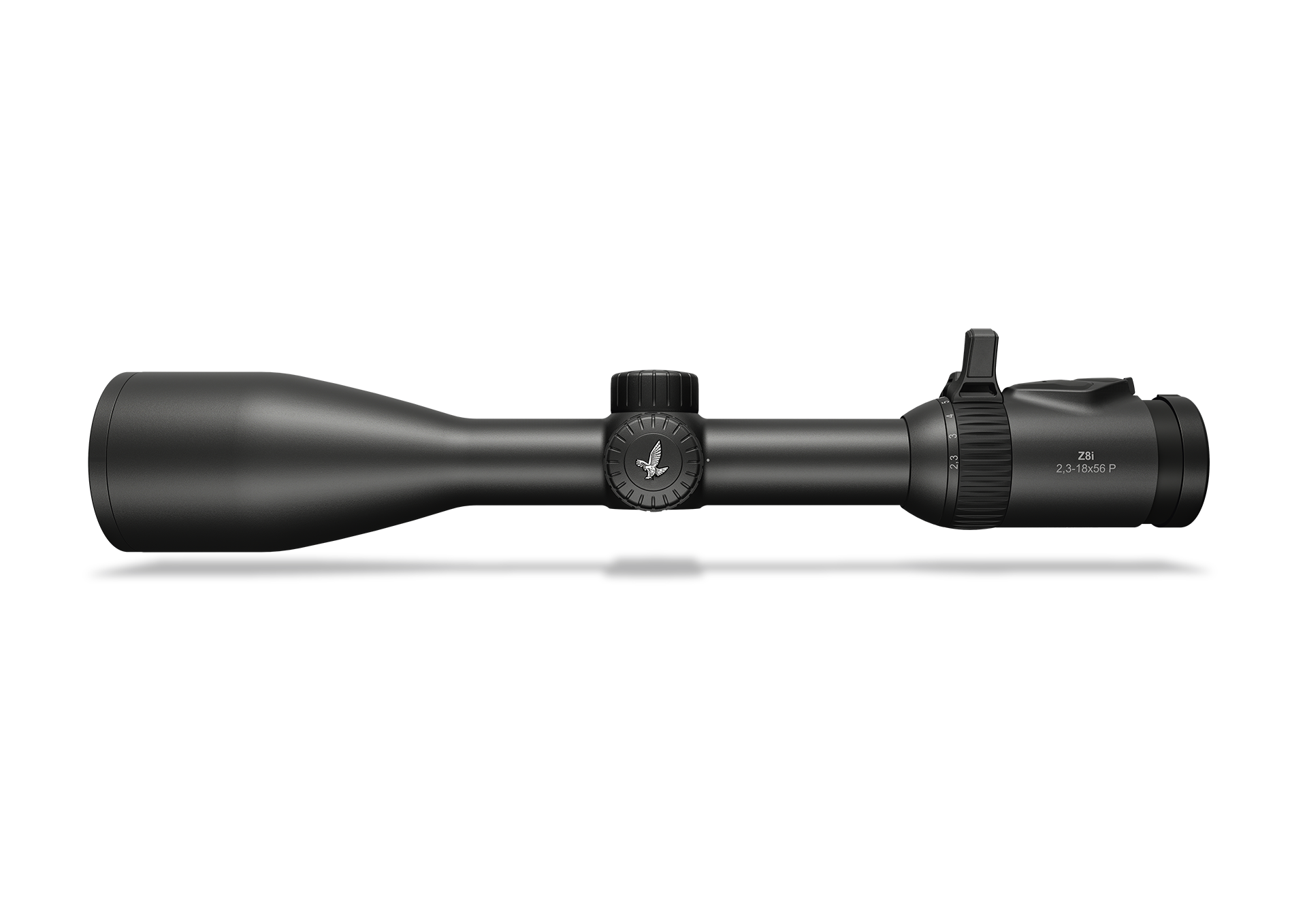
The Swarovski Z8i 2.3-18×56 arrives in a presentation that matches its premium price point – robust packaging, lens covers that actually fit properly, and a throw lever included from the factory. First handling reveals a scope that’s surprisingly compact given its 56mm objective, measuring just 14.2 inches and weighing 21.9 ounces without mount. The tube diameter is standard 30mm, and the overall construction feels dense without being cumbersome. The matte finish resists glare effectively, and the eyepiece rotates smoothly for diopter adjustment with clear markings that lock securely.
Build quality is exceptional in ways that become apparent through extended use rather than initial inspection. The magnification ring turns with perfectly damped resistance – not too stiff for quick adjustments, not loose enough to shift unintentionally in a scabbard. The Swarovski Z8i 2.3-18×56 uses a single-piece 30mm maintube machined from aircraft-grade aluminum, and the objective housing integrates seamlessly without visible joints that could compromise weather sealing. Swarovski’s warranty is transferable and lifetime, which matters when you’re investing this much. The illumination turret sits low-profile on the left, with a battery compartment that opens without tools but seals tight enough that I’ve never worried about moisture intrusion during mountain hunts in wet conditions.
Optical performance in the field
Glass quality is where the Z8i 2.3-18×56 justifies its cost. Edge-to-edge clarity is genuinely excellent across the magnification range, with minimal chromatic aberration even when glassing against bright snow or backlit timber. Color rendition leans neutral rather than warm, which I find more useful for judging distances and identifying features in varied terrain. At 18x, the image remains sharp enough for precise shot placement beyond 400 yards, though heat mirage becomes the limiting factor before the glass does. Resolution at maximum magnification rivals anything in this class, including Zeiss and Leica offerings.
Low-light performance with the 56mm objective is outstanding, extending usable shooting time well into dusk. I’ve consistently made ethical shots on game 30-40 minutes after I’d have packed it in with a 42mm scope. The wide field of view at 2.3x – 60 feet at 100 yards – makes this scope exceptionally fast for close-range driven hunts or timber work, where you need to acquire targets quickly. Light transmission is rated at 91%, and while I can’t verify that number independently, the practical difference between this and my Zeiss V8 2.8-20×56 is negligible in actual hunting conditions. Eye relief is a generous 3.7 inches and remains consistent across magnification changes, which matters when shooting from awkward positions.
Turrets & reticle functionality
The Z8i uses capped turrets with 1/4 MOA clicks that are tactile and audible without being loud enough to spook game. Tracking has proven reliable across multiple range sessions – I’ve dialed for distance out to 600 yards repeatedly and always returned to zero without drift. The turrets aren’t designed for rapid dialing; they’re hunting turrets meant to stay set and forgotten unless you’re making deliberate adjustments. Each revolution provides 23 MOA of travel, with 69 MOA total elevation adjustment available. That’s adequate for most hunting applications but less than what you’d get from a dedicated long-range scope.
I tested the Z8i with Swarovski’s 4W-I reticle, which features a simple plex design with a fine center crosshair and four ballistic aiming points below center. The illuminated center dot is daylight-bright when needed and dims to night-vision-compatible levels at lower settings. The reticle sits in the second focal plane, so holdovers are calibrated for 18x only – this matters if you plan to use the ballistic marks for ranging or holdover. For pure hunting use, I prefer second focal plane because the reticle remains visible and uncluttered at low magnification. The illumination system uses a CR2032 battery that’s lasted over a year of intermittent use, and the off positions between each brightness setting let you rotate through settings without turning the scope completely off.
Real-world use across hunting scenarios
I’ve taken the Z8i 2.3-18×56 on mountain hunts in Montana, timber hunts in northern Wisconsin, and prairie antelope hunts in Wyoming. The magnification range proves genuinely versatile – 2.3x is low enough for quick shooting inside 50 yards when an elk appears in thick timber, while 18x provides confidence for 400-yard shots across open country. The wide field of view at low power makes it easier to stay on moving game compared to scopes that bottom out at 3x or higher. Weight is reasonable for an all-around hunting scope, though it’s not what I’d choose for a dedicated mountain rifle where every ounce matters.
The scope has handled temperature swings from single digits to over 90 degrees without fogging internally or losing zero. I’ve knocked it against rocks, scraped it through brush, and subjected it to the kind of abuse that happens during actual backcountry hunting – no issues. The fast-focus eyepiece lets me dial in a sharp image quickly when moving between glassing and shooting positions. One practical limitation: the 56mm objective requires high rings, which can feel awkward on some rifle stocks and makes for a less instinctive cheek weld. This isn’t unique to Swarovski, but it’s worth considering if you’re coming from a 40mm or 44mm scope.
How it compares to direct competitors
| Scope | Weight | Elevation Travel | Low Mag FOV | Price Range |
|---|---|---|---|---|
| Swarovski Z8i 2.3-18×56 | 21.9 oz | 69 MOA | 60 ft | $3,000-$3,300 |
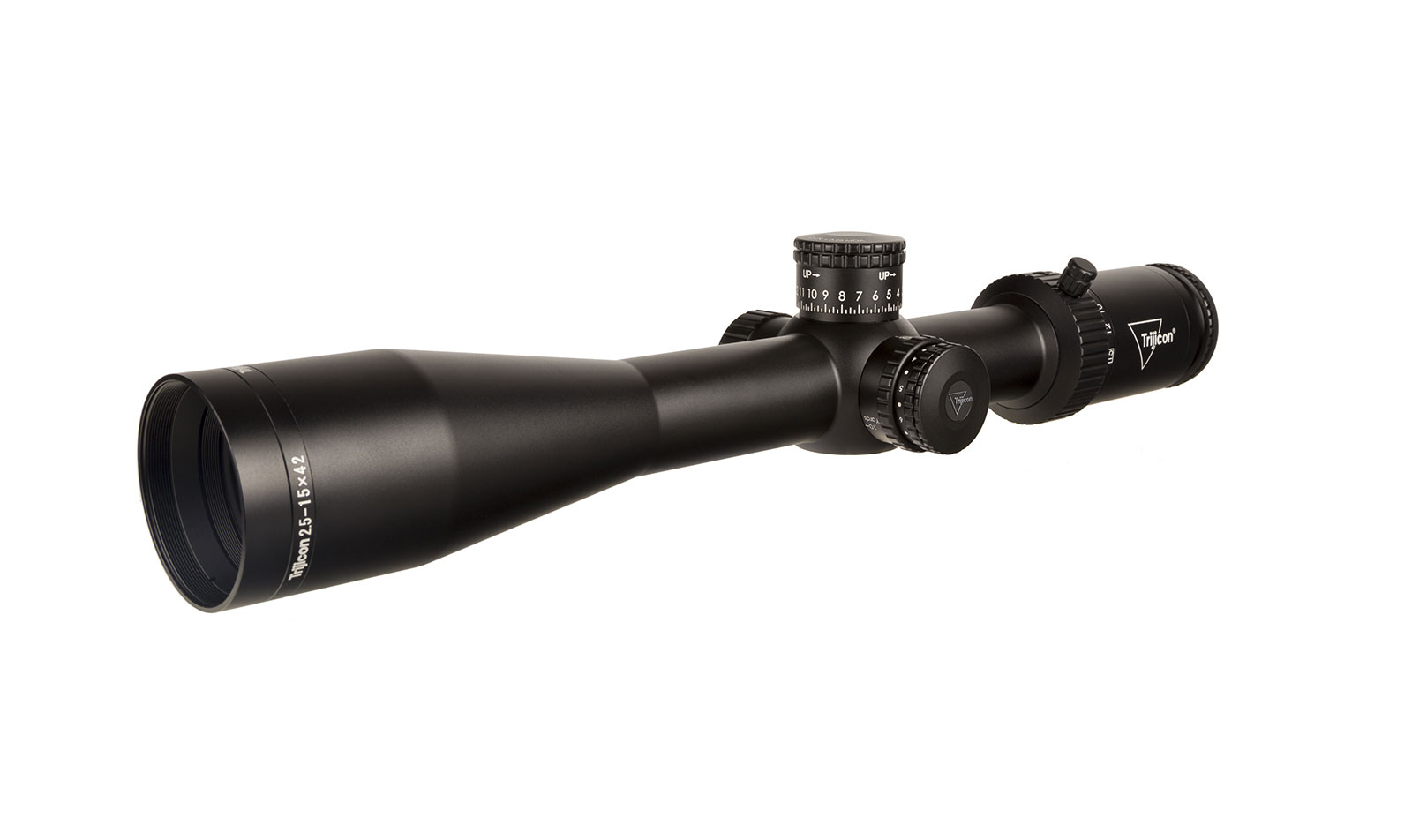
| Zeiss V8 2.8-20×56 | 22.9 oz | 74 MOA | 54 ft | $2,800-$3,100 |
| Leica Magnus 2.4-16×56 | 22.6 oz | 63 MOA | 56 ft | $2,600-$2,900 |
| Kahles K624i 6-24×56 | 31.0 oz | 86 MOA | 22 ft | $3,200-$3,500 |
The Zeiss V8 2.8-20×56 offers slightly more top-end magnification and a bit more elevation adjustment, with glass quality that’s effectively identical in the field. The Zeiss costs slightly less and weighs an ounce more – the practical difference is minimal. Where the Swarovski pulls ahead is the lower bottom magnification and wider field of view, making it noticeably faster for close-range work. If you hunt situations where shots inside 100 yards are common, the Z8i’s 2.3x low end is a real advantage.
The Leica Magnus 2.4-16×56 is the closest direct competitor, with similar magnification range and field of view. Glass quality is excellent across all three European makers – you won’t make a bad choice based on optics alone. The Magnus costs less and some shooters prefer Leica’s slightly warmer color rendition, but I’ve found the Swarovski’s illumination system more intuitive and the turrets more precise. The Kahles K624i represents a different use case entirely – it’s heavier, starts at higher magnification, and is built for long-range precision rather than general hunting versatility. If you’re primarily shooting beyond 300 yards, the Kahles makes more sense. For mixed-range hunting, it’s too specialized.
Common mistakes when using the Z8i
The most frequent error I see is mounting the Z8i too far forward to accommodate the large objective, which compromises eye relief and makes it difficult to achieve proper eye box alignment. The scope needs to be positioned so your eye naturally falls into the optimal viewing position when your cheek hits the stock – don’t sacrifice this to clear the objective bell. Use high rings (at least 1.18 inches from rail to scope center) and accept that the sight picture will be higher than you might prefer. This isn’t a scope for ultra-low mounting, and fighting that reality creates more problems than it solves.
Another mistake is treating the ballistic reticle holdovers as precise without actually verifying them with your specific load. Those subtensions are calibrated for certain ballistic curves and only accurate at 18x magnification – if you’re dialing down for closer shots, the holdover marks won’t correspond to the printed values. I’ve watched shooters miss because they assumed the reticle would work universally without range confirmation. Take the time to shoot at distance and document where your actual impacts land at various ranges and magnification settings. Also, don’t over-tighten the ring screws – Swarovski specifies 18 inch-pounds on the cap screws and 45 inch-pounds on the base screws. I’ve seen shooters crank down rings thinking they’re preventing shift, when they’re actually risking damage to the tube. Use a proper torque wrench and trust the engineering.