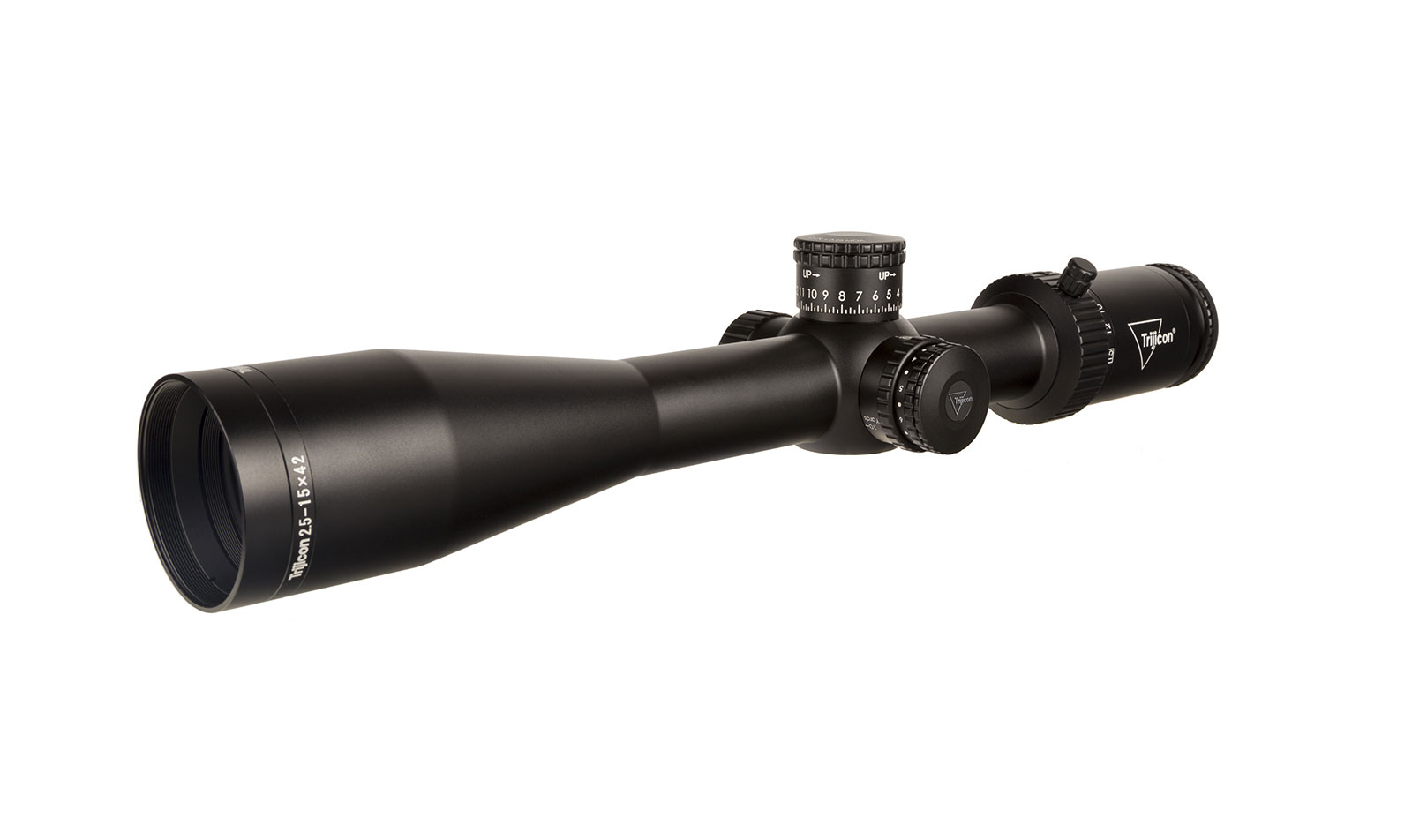

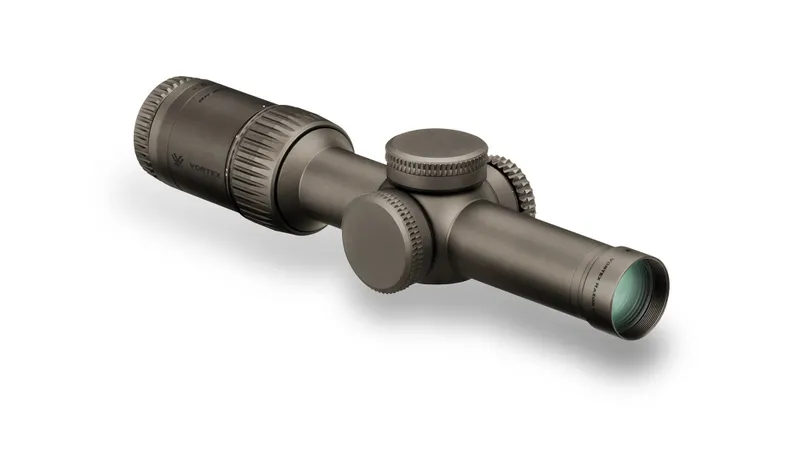
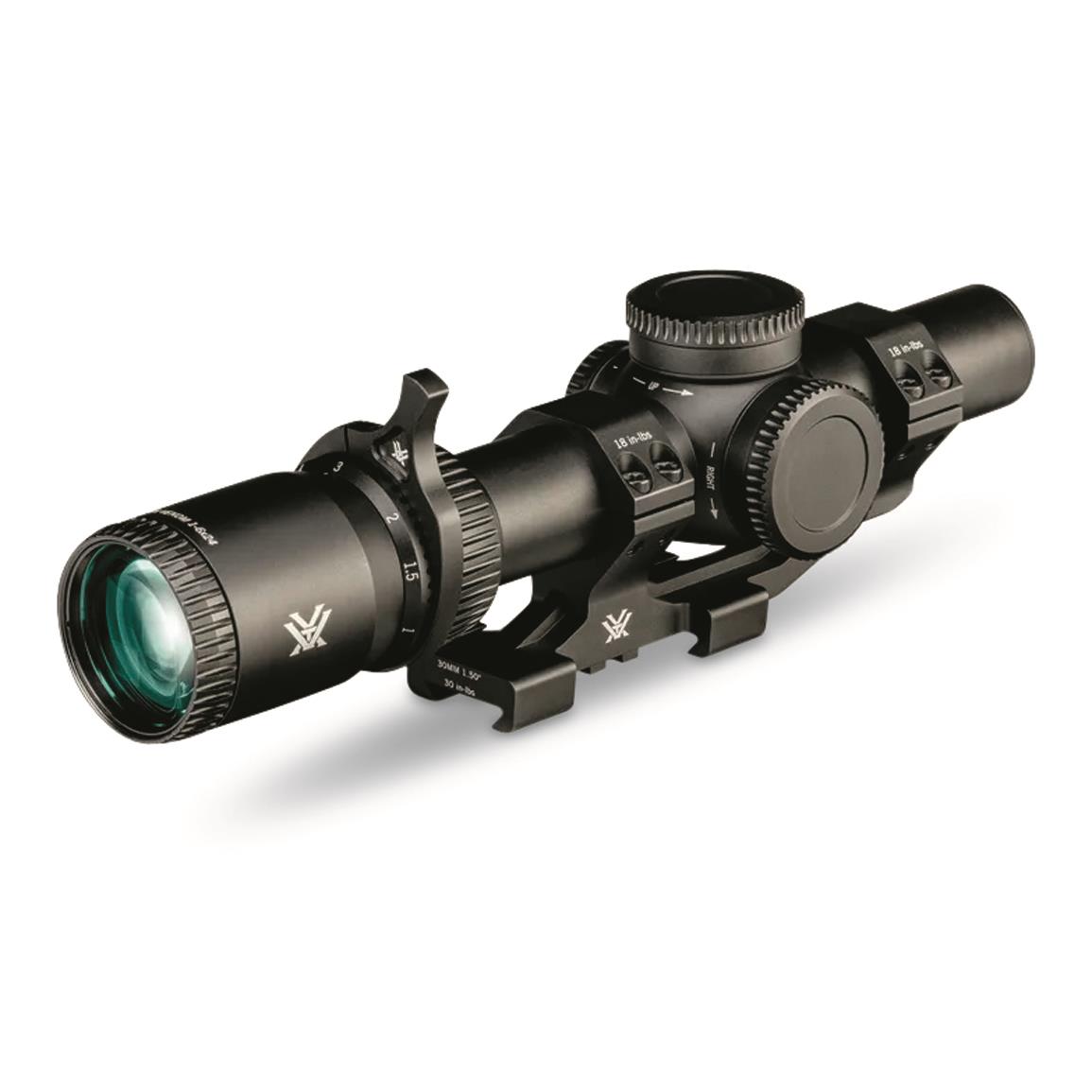


The Vortex Razor HD Gen II-E 1-6×24 arrives with the kind of heft that immediately signals serious construction – at 21.5 ounces, this isn’t a lightweight carbine optic, but that weight translates directly into rigid durability. The tube is a true 30mm design with a single-piece construction that feels overbuilt in the best way possible. Everything about the Vortex Razor HD Gen II-E 1-6×24 communicates tactical intent, from the aggressive throw lever mount point to the deeply knurled magnification ring that provides positive grip even with wet gloves.
Finish quality is excellent, with a matte anodizing that resists glare without feeling delicate. The eyepiece has generous fast-focus threads that lock solidly once adjusted, and there’s no play anywhere in the assembly. Vortex positioned the turrets low and protected, which is smart for a scope likely to see hard use on patrol rifles or dynamic hunting scenarios. The illumination dial sits on the left side with tactile clicks between brightness settings – 11 positions total, with an off notch between each for rapid transitions in changing light.
Optical Performance in the Field
Glass clarity in the Vortex Razor HD Gen II-E 1-6×24 is legitimately impressive, especially considering its price point below true alpha-tier optics. Edge-to-edge sharpness remains consistent across the magnification range, with minimal distortion even when cranked to 6x. Color rendition leans slightly warm but remains natural enough for target identification at distance. In bright daylight, contrast and resolution rival scopes costing significantly more, though the most expensive European glass still holds a slight advantage in ultimate clarity.
Low-light performance is where this optic earns its keep for hunters working dawn and dusk. The 24mm objective isn’t massive, but the optical design maximizes light transmission effectively – I’ve successfully identified deer in heavy timber 20 minutes past legal shooting light without strain. Chromatic aberration is well-controlled, with only minor purple fringing visible when viewing high-contrast edges against bright sky at maximum magnification. The eye box is forgiving at 1x, tightening predictably as you zoom in, but never becoming frustratingly narrow like some budget LPVOs.
Turrets & Reticle Functionality
The Vortex Razor HD Gen II-E 1-6×24 ships with capped turrets that reset to zero – a sensible choice for a scope designed primarily for close to mid-range work rather than dialing corrections. Adjustments are 0.5 MOA per click with audible and tactile feedback that’s positive without being overly stiff. I’ve verified tracking on a tall target test and found it reliably accurate through multiple rotations, though most users will simply zero and leave the caps on for field use.
Reticle options include the JM-1 BDC and the EBR-556B, both first focal plane designs. The JM-1 is cleaner for hunting, with a fine center dot that doesn’t obscure small targets at distance, while the EBR-556B offers holdover references for tactical applications. Illumination is daylight-bright on the highest settings – genuinely visible in full sun – and dims appropriately for night vision compatibility on the lowest. At 1x with illumination on, the reticle provides true both-eyes-open shooting speed, though the scope isn’t a true 1x optically (there’s slight magnification, typical for this class).
Real-World Use Across Conditions
I’ve run the Vortex Razor HD Gen II-E 1-6×24 on a 16-inch AR-15 through two hunting seasons and multiple range sessions in conditions ranging from freezing rain to dusty August heat. The scope has held zero through transport in truck beds, ATV vibration, and typical field handling without issue. The magnification ring turns smoothly with just enough resistance to prevent accidental adjustment, and the throw lever (not included, but readily available) makes transitions from 1x to 6x nearly instantaneous.
For driven boar hunts and timber whitetail work, this optic excels. The 1x setting allows rapid target acquisition on moving game inside 50 yards, while the 6x magnification extends practical range to 300-400 yards with appropriate ammunition and shooter skill. I’ve found myself leaving it at 3-4x for most hunting scenarios, which provides enough detail for shot placement without sacrificing too much field of view. In heavy rain, water beads off the coated lenses well, though you’ll still want a scope coat in sustained downpours. Fogging has never been an issue thanks to proper nitrogen purging.
How It Compares to Competitors
| Optic | Weight | Price Range | Glass Quality | Illumination | Best For |
|---|---|---|---|---|---|
| Vortex Razor HD Gen II-E 1-6×24 | 21.5 oz | $1,100-$1,300 | Excellent | Daylight-bright | Tactical/hunting crossover, hard use |
| Trijicon Credo HX 1-6×24 | 19.8 oz | $1,000-$1,200 | Excellent | Daylight-bright | Fast target acquisition, patrol rifles |
| Nightforce NX8 1-8×24 | 17 oz | $1,800-$2,000 | Superior | Very bright | Weight-conscious precision applications |
| Kahles K16i 1-6×24 | 17.6 oz | $1,800-$2,100 | Superior | Excellent | European hunting, premium build |
Against the Trijicon Credo HX 1-6×24, the Vortex offers comparable optical performance with slightly better low-light capability, though the Trijicon’s controls feel more refined and it shaves nearly two ounces. Both are excellent choices in this price bracket – your decision will likely come down to reticle preference and brand loyalty. The Nightforce NX8 1-8×24 costs significantly more but delivers noticeably better glass and an extra 2x magnification in a lighter package. If budget allows, the Nightforce represents a meaningful upgrade, particularly for precision applications.
The Kahles K16i 1-6×24 occupies similar pricing to the Nightforce and offers stunning European glass with a more hunting-oriented design philosophy. It’s lighter than the Vortex and optically superior in marginal light, but you’re paying premium prices for those refinements. The Vortex Razor HD Gen II-E 1-6×24 represents the sweet spot for shooters who want near-premium performance without breaking into the $2,000+ tier – it’s 85-90% of the performance for 60% of the cost.
Common Mistakes When Using This Optic
The most frequent error I see with the Vortex Razor HD Gen II-E 1-6×24 is mounting it too far forward on the receiver. This scope needs proper eye relief – approximately 3.5 inches – and many shooters position it incorrectly trying to maximize rail space or accommodate backup iron sights. Take time to find the correct position where you get a full sight picture at 1x without scope shadow, then lock it down. A quality cantilever mount designed for AR platforms will solve most positioning issues.
Another common mistake is failing to properly set the diopter before zeroing. The fast-focus eyepiece needs adjustment so the reticle appears crisp against a blank background before you ever fire a shot. Many shooters skip this step and end up with a blurry reticle or eye strain during extended shooting sessions. Additionally, some users expect true 1x performance and are disappointed by the slight magnification present at the lowest setting – this is a characteristic of the design, not a defect. If you need absolute 1x for close-quarters work, consider a red dot with magnifier setup instead. This optic is ideal for shooters who need versatility from 25 to 400 yards on a single platform, particularly those running semi-automatic rifles in dynamic hunting scenarios or tactical applications where durability matters as much as optical performance.