 Maksym Kovaliov
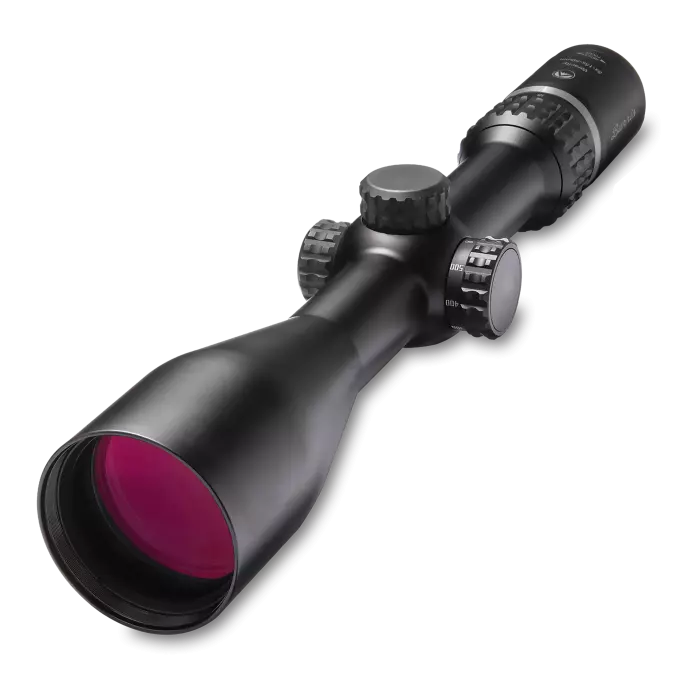
The Burris Veracity 3-15×50 arrives with a reassuring heft that immediately communicates serious intent. At 28.9 ounces, it sits in the middle ground between ultralight mountain optics and heavyweight tactical scopes – a deliberate compromise that becomes more sensible once you handle it. The 30mm main tube features a matte finish that resists glare without feeling overly coated, and the machining quality shows no tooling marks or rough transitions. The Burris Veracity 3-15×50 uses a single-piece construction that inspires confidence, though the ocular bell’s slightly bulbous profile won’t win design awards. This isn’t an optic trying to turn heads at the range – it’s built for function over form.
Burris equips this scope with their Hi-Lume multicoating across all air-to-glass surfaces, and the external lens elements show excellent resistance to fingerprints and moisture. The side parallax adjustment knob turns smoothly with distinct detents, though it requires more rotational force than some European competitors. The scope ships with flip-up lens covers that fit snugly without rattling – a small detail that matters during long days afield. The eye relief measures 3.5-4 inches across the magnification range, which is adequate but not generous. Larger-framed shooters or those using heavy-recoiling magnum calibers may find themselves wishing for another half-inch of clearance.

Optical Performance in the Field
Glass clarity in the Veracity 3-15×50 delivers what I’d characterize as very good performance that stops just short of exceptional. Edge-to-edge sharpness remains consistent through the lower and middle magnification ranges, with only minor softening appearing in the outer 15% of the field of view when cranked to 15x. Color rendition leans slightly warm, which many hunters actually prefer for picking out brown and tan game against autumn backgrounds. Resolution is sufficient for identifying antler points or judging trophy quality at distances beyond 400 yards in good light. Chromatic aberration is well-controlled – I noticed minimal purple fringing even when glassing backlit subjects against bright skies.
Low-light performance is where the 50mm objective and quality coatings earn their keep. During late-evening sits in heavy timber, the Veracity extended my effective glassing time by roughly 20 minutes compared to a 44mm scope of similar quality. The image remains usable well into civil twilight, though it doesn’t quite match the twilight performance of premium German or Japanese glass costing twice as much. At maximum magnification in dim conditions, the image dims noticeably – expected behavior that reminds you to dial back to 8-10x when light fades. In bright midday conditions, the scope handles glare admirably without the washed-out appearance that plagues cheaper optics.
Turrets & Reticle Functionality
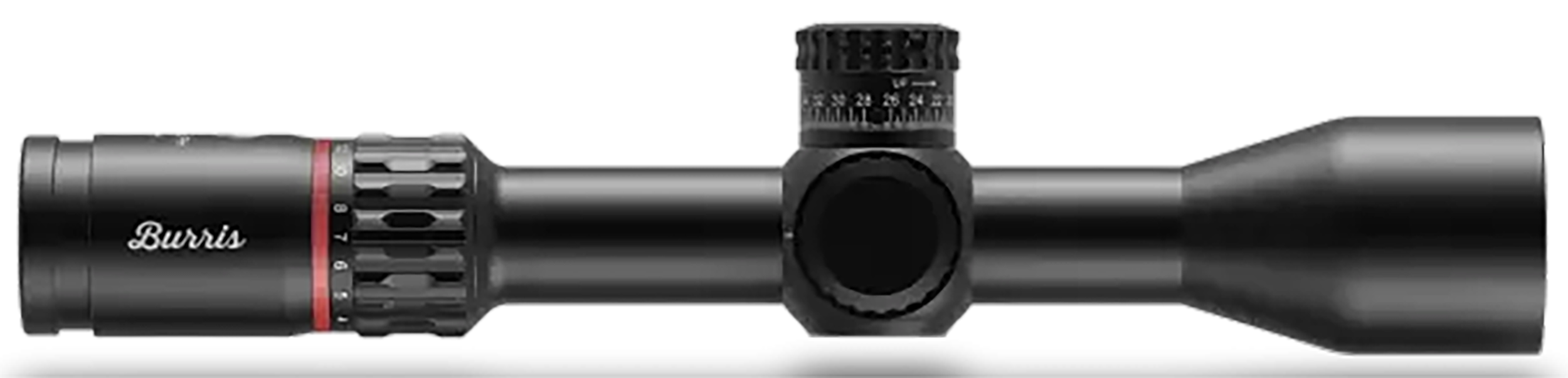
The Burris Veracity 3-15×50 features capped windage and elevation turrets with 1/4 MOA clicks – a hunting-focused configuration that prioritizes zero retention over rapid dialing. The clicks provide tactile and audible feedback that’s positive without being overly stiff, though they lack the mechanical precision of higher-end tactical scopes. Each rotation delivers 15 MOA of adjustment, with a total elevation travel of 60 MOA and windage travel of 40 MOA. That’s adequate for most hunting applications out to 500-600 yards but may feel limiting for serious long-range work. The turrets reset to zero easily after sighting in, and I experienced no shift in point of impact after repeated cap removals and installations.
The Ballistic Plex reticle (available in first focal plane or second focal plane) offers a practical compromise between simplicity and extended-range capability. I tested the FFP version, which features a duplex-style crosshair with hash marks calibrated for specific ballistic drops. At low magnification, the reticle remains visible without cluttering the field of view – critical for quick shots in timber. At 15x, the subtensions become usable for holdovers and wind calls, though the reticle thickness increases proportionally and can obscure small targets beyond 400 yards. The illumination system offers 11 brightness settings, with the middle positions providing excellent daylight visibility without bloom. Battery life claims of 1,000+ hours seem realistic based on my testing, and the CR2032 battery is readily available.
Real-World Use Across Conditions
I mounted the Veracity 3-15×50 on a .308 Winchester used for whitetail hunting and occasional steel shooting, logging approximately 300 rounds and 15 field days over varied terrain and weather. In the deer woods, the 3x low end proved genuinely useful for close-range encounters in thick cover – wide enough field of view to acquire moving targets quickly without the tunnel vision of higher minimum magnifications. The scope tracked consistently through temperature swings from 20°F to 75°F, maintaining zero despite being transported in a truck bed over rough logging roads. During a particularly wet October week, moisture never penetrated the scope body, and the external lenses shed water effectively without constant wiping.
The weight becomes noticeable during long stalks or mountain carries, particularly when compared to lighter 3-10x or 2-12x alternatives. On a rifle already weighing 8 pounds bare, the Veracity pushes the setup toward 9 pounds scoped – manageable but not ideal for all-day mountain hunting. The scope’s length (13.3 inches) also demands careful ring placement to achieve proper eye relief without running out of rail space. During prairie dog shooting sessions at 300-400 yards, the Veracity delivered repeatable hits on 4-inch targets, though the turrets lacked the refined feel that encourages frequent dialing. I found myself holding over using the reticle more often than adjusting elevation, which is probably how Burris intended this scope to be used.

How It Compares to Rivals
The Burris Veracity 3-15×50 occupies competitive territory against optics like the Vortex Viper HS-T 4-16×44, Athlon Midas TAC 5-25×56, and Leupold VX-3i 4.5-14×50. Against the Vortex Viper HS-T 4-16×44, the Burris offers slightly better low-light performance thanks to the larger objective, but the Vortex provides superior turret feel and more adjustment range for dialing. The Athlon Midas TAC 5-25×56 delivers more magnification and a more tactical feature set at a similar price point, though it’s noticeably heavier and less suited to traditional hunting applications. The Leupold VX-3i 4.5-14×50 counters with better glass clarity and a more refined feel throughout, but costs roughly $150-200 more depending on retailer.
| Feature | Burris Veracity 3-15×50 | Vortex Viper HS-T 4-16×44 | Athlon Midas TAC 5-25×56 | Leupold VX-3i 4.5-14×50 |
|---|---|---|---|---|
| Weight | 28.9 oz | 23.2 oz | 31.8 oz | 17.4 oz |
| Length | 13.3 in | 13.3 in | 15.0 in | 12.6 in |
| Elevation Travel | 60 MOA | 80 MOA | 80 MOA | 60 MOA |
| Turrets | Capped 1/4 MOA | Exposed 1/4 MOA | Exposed 1/10 Mil | Capped 1/4 MOA |
| Street Price | $500-550 | $550-600 | $500-550 | $650-700 |
The Veracity makes the most sense for hunters who prioritize versatile magnification range, solid low-light capability, and proven durability without stretching into premium pricing. It’s less compelling for precision rifle shooters who need tactical features or for weight-conscious backcountry hunters who measure every ounce. The scope represents Burris executing a traditional hunting design competently rather than breaking new ground.
Common Mistakes When Using This Scope
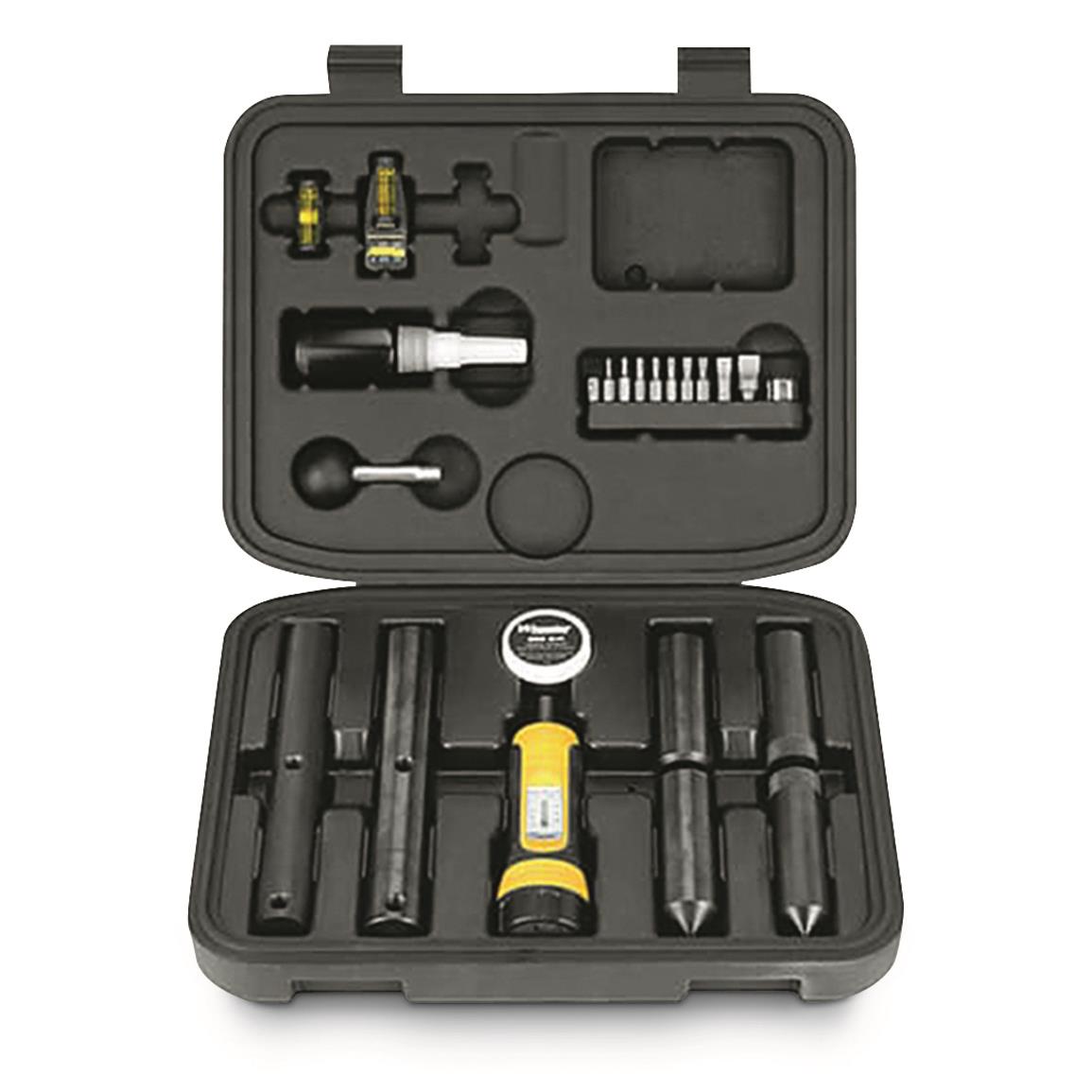
The most frequent error I’ve observed with the Veracity 3-15×50 involves mounting it too far forward in an attempt to maximize eye relief. This scope performs best when positioned to provide 3.8-4.0 inches of relief, which often means mounting it farther back than shooters initially expect. Placing it too far forward results in scope shadow and a restricted exit pupil, particularly at higher magnifications. Take time during installation to test eye relief at both 3x and 15x before permanently torquing rings – the optimal position may surprise you.
Another common mistake involves leaving the magnification cranked to 15x in low-light conditions, then wondering why the image appears dim and washed out. This scope performs optimally at 8-10x during the first and last hour of daylight, when most game movement occurs. The 50mm objective gathers impressive light, but physics still dictates that exit pupil diameter shrinks as magnification increases. Additionally, some users fail to properly set the parallax adjustment for their shooting distance, then blame the scope for apparent accuracy issues. The side focus knob requires deliberate adjustment – take the extra three seconds to dial it correctly for each engagement distance, and the scope will reward you with sharper images and more precise shot placement.