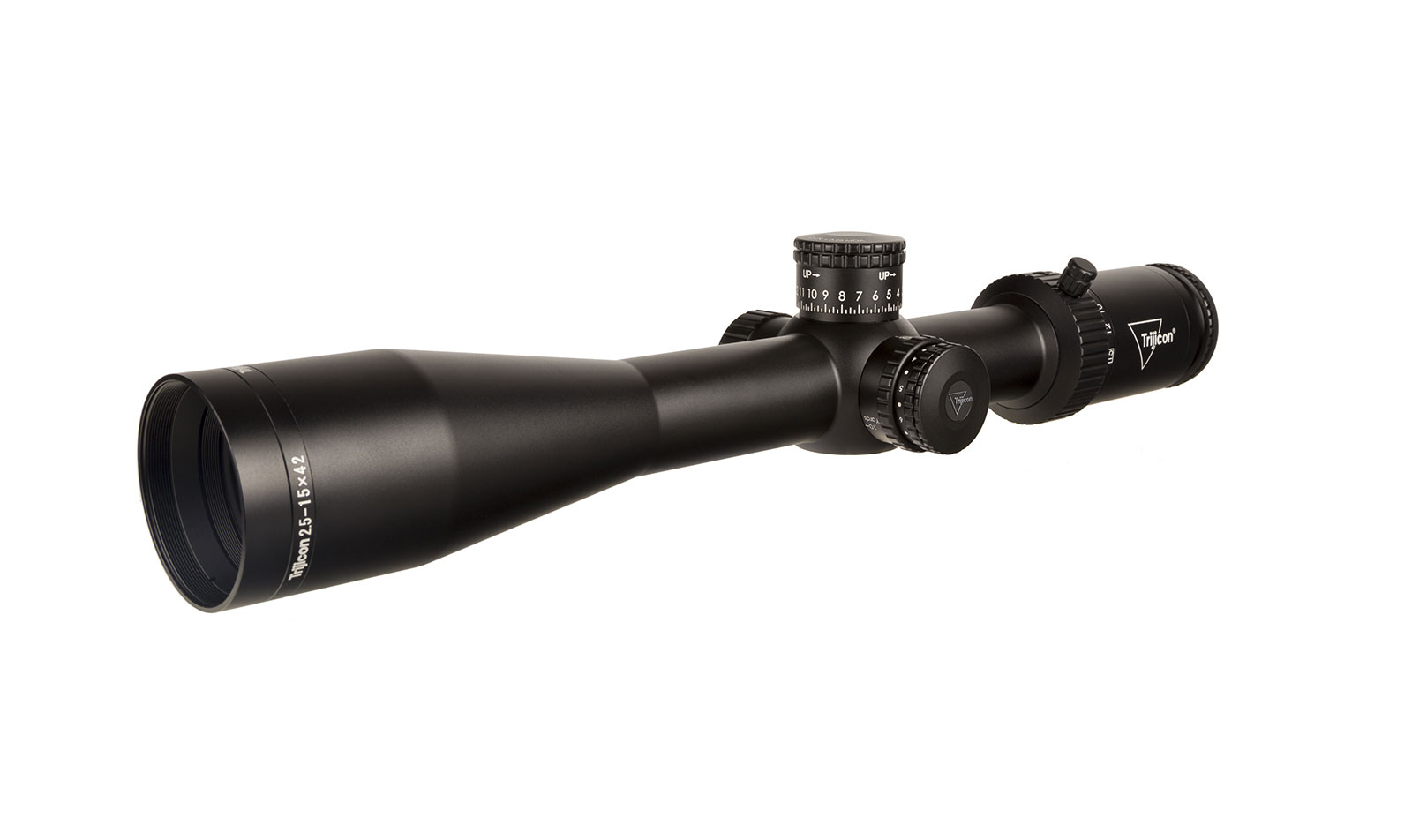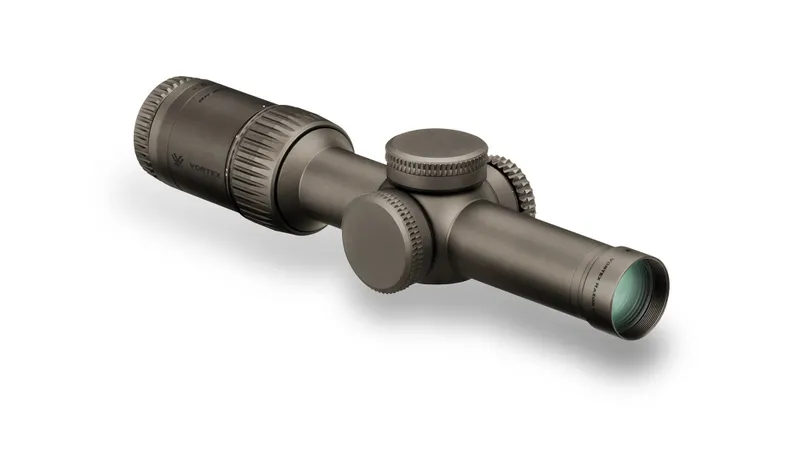

Zeiss V4 6-24×50
First Impressions & Build Quality
The Zeiss V4 6-24×50 arrives as a mid-tier offering from a brand known for premium optics, and the initial handling reveals a scope that feels substantial without crossing into burdensome territory. At 22.2 ounces, the Zeiss V4 6-24×50 sits in a reasonable weight class for a 50mm objective, though it’s not winning any ultralight awards. The machining is clean, with smooth transitions between the turret housing and main tube, and the matte finish resists glare effectively. The eyepiece rotates with appropriate resistance, and the magnification ring turns with consistent, predictable tension – neither too stiff nor too loose. First impressions suggest this is a workhorse scope built to handle field use without excessive pampering.
Durability concerns are minimal based on initial inspection and early field time. The 30mm main tube is standard for this class, and the scope ships with a fast-focus eyepiece that locks securely once adjusted. The objective bell is moderately sized, making it compatible with most medium-height rings without clearance drama. Zeiss rates this scope for heavy recoiling rifles, and after mounting it on a 300 Win Mag for extended testing, zero held consistently across multiple range sessions and transport. The scope doesn’t exhibit the bulletproof overbuilt feel of some tactical-oriented designs, but it demonstrates the kind of reliable construction you’d trust on a multi-day hunt where equipment failure isn’t an option.
Optical Performance in Variable Conditions
Glass quality is where Zeiss traditionally separates itself from budget competition, and the V4 6-24×50 delivers respectable performance that punches slightly above its price point. Edge-to-edge clarity is good – not exceptional – with noticeable softness in the outer 15% of the image at higher magnifications. Center resolution is sharp enough for precision work at distance, and chromatic aberration is well-controlled in high-contrast scenarios like tree lines against bright skies. Color rendition leans neutral without the warm cast some European optics exhibit, making target identification straightforward in varied terrain. This isn’t alpha-tier glass, but it’s clean enough that you won’t feel optically handicapped during critical shot opportunities.
Low-light performance is adequate but not a standout feature of this scope. Testing during the last 30 minutes of legal shooting light revealed usable clarity for ethical shots on game-sized targets, though the image begins losing contrast earlier than premium scopes in the $1,500+ range. The 50mm objective helps, but at 24x magnification in deep twilight, the exit pupil shrinks enough that you’ll want to dial back to 12-15x for optimal brightness. In flat, overcast conditions – common during late-season hunts – the V4 maintains good contrast and doesn’t wash out the way some budget scopes do. For dedicated low-light applications like driven hunts or evening stand sits, this scope performs competently but doesn’t excel the way Zeiss’s higher-end Conquest or Victory lines do.
Turrets & Reticle Functionality
The Zeiss V4 6-24×50 ships with exposed tactical turrets featuring 1/4 MOA adjustments, and they function with mechanical precision that inspires confidence for dialing solutions. Each click is distinct and audible, with no mushiness or indistinct detents between adjustments. The turrets are relatively low-profile compared to some tactical designs, which reduces snag potential in brush but may be harder to manipulate with heavy gloves. Turret caps are numbered clearly, and the zero-stop mechanism works as advertised – though it requires tools and deliberate setup rather than tool-free field adjustment. Tracking tests at 100 yards confirmed true 1/4 MOA adjustments across the full elevation range, with no wandering or inconsistency across multiple box drills.
Reticle options include several configurations, with the ZMOA-2 being particularly well-suited for hunting applications where holdovers and wind calls matter. The reticle is in the second focal plane, meaning subtensions are only accurate at maximum magnification – a design choice that keeps the reticle visible and uncluttered at low power but requires memorization or reference cards for holdovers at intermediate magnifications. The illumination system offers multiple brightness levels controlled by a side turret, with daylight-visible settings that work in bright conditions without washing out. The reticle is fine enough for precision work but thick enough at the center to acquire quickly on moving game. Parallax adjustment is located on the left side of the saddle and operates smoothly across the 50-yard to infinity range, though it requires deliberate attention – this isn’t a scope you’ll shoot well with if you ignore parallax management.
Real-World Use Across Hunting Scenarios
For western rifle hunting where shots extend beyond 400 yards, the Zeiss V4 6-24×50 performs admirably as a dedicated long-range hunting scope. The magnification range is appropriate for glassing distant hillsides at high power while still offering enough low-end capability for closer timber encounters. During a mule deer hunt in open terrain, the scope delivered consistent performance when dialing elevation for shots between 300 and 550 yards, and the reticle provided sufficient detail to hold for moderate wind without guessing. The weight penalty compared to lighter 3-15x or 3-18x scopes is noticeable during long days covering rough country, but it’s not prohibitive if you’re primarily shooting from stable positions rather than running-and-gunning.
For driven hunts, timber stalking, or quick-acquisition scenarios, this scope is less than ideal. The 6x low end is adequate but not generous – in thick cover or on moving game inside 100 yards, you’ll feel the magnification limitation compared to scopes starting at 3x or 4x. The eye box is forgiving enough for field positions but tightens noticeably above 18x, requiring more deliberate head placement. During a late-season whitetail hunt from a stand, the scope handled morning sits effectively, though the optical performance at dawn didn’t provide significant advantages over quality scopes in lower price brackets. This is fundamentally a precision-oriented hunting scope that rewards deliberate shooting over snap shooting, and it fits best in the hands of riflemen who prioritize accuracy at distance over speed at close range.
How It Compares to Direct Competitors
| Feature | Zeiss V4 6-24×50 | Vortex Viper PST Gen II 5-25×50 | Leupold VX-5HD 3-15×44 | Nightforce SHV 5-20×56 |
|---|---|---|---|---|
| Weight | 22.2 oz | 27.3 oz | 18.2 oz | 30.2 oz |
| Focal Plane | SFP | FFP | SFP | SFP |
| Turrets | Exposed, 1/4 MOA | Exposed, 0.1 MRAD | Capped, 1/4 MOA | Exposed, 1/4 MOA |
| Low-Light | Good | Good | Very Good | Excellent |
| Price Range | ~$1,000 | ~$900 | ~$1,100 | ~$1,250 |
Against the Vortex Viper PST Gen II 5-25×50, the Zeiss offers cleaner glass and better color fidelity, but the Vortex counters with first focal plane reticle functionality and slightly lower cost. The Vortex is noticeably heavier and bulkier, making it less appealing for hunting applications where weight matters. The Zeiss turrets feel more refined, though the Vortex’s FFP reticle provides more versatility for shooters who dial and hold at various magnifications. If you prioritize optical clarity and hunting-appropriate weight, the Zeiss edges ahead; if you want FFP functionality and don’t mind carrying extra ounces, the Vortex makes sense.
The Leupold VX-5HD 3-15×44 represents a different philosophy – lighter weight, lower magnification range, and arguably better low-light performance thanks to Leupold’s Twilight Max coating system. The VX-5HD is a better all-around hunting scope for varied conditions, with a more forgiving low-end magnification and superior glass quality in marginal light. However, it lacks the top-end magnification and exposed turrets that make the Zeiss V4 6-24×50 more capable for dedicated long-range work. The Nightforce SHV 5-20×56 offers bombproof reliability and exceptional glass, but at a weight penalty and higher price point – it’s the choice for shooters who refuse to compromise on durability and optical performance, though it feels overbuilt for most hunting applications.
Common Mistakes When Using the Zeiss V4
The most frequent error with the Zeiss V4 6-24×50 is ignoring parallax adjustment, particularly at mid-range distances between 150 and 400 yards. Because the scope is capable of precise long-range work, shooters often assume they can dial elevation and send it without confirming parallax is properly set. At higher magnifications, even slight parallax error introduces vertical dispersion that masquerades as poor shooting or wind miscalculation. Before any shot beyond 200 yards, confirm the parallax is adjusted so the reticle doesn’t shift against the target when you move your head slightly behind the scope. This takes two seconds and prevents frustrating misses that erode confidence in an otherwise capable optic.
Another common mistake is using the scope at maximum magnification in field conditions where it’s unnecessary and counterproductive. While 24x sounds appealing for long shots, atmospheric mirage, heat waves, and even your own breathing become magnified to the point where the image shimmers and precise aiming becomes difficult. For most hunting scenarios beyond 400 yards, 15-18x provides sufficient target resolution while maintaining a steadier, clearer image. Additionally, new users often overlook the second focal plane limitation – attempting to use reticle holdovers at mid-range magnifications without accounting for subtension changes leads to consistent misses. Either shoot at 24x where the reticle subtensions are calibrated, or learn the holdover conversions for your preferred intermediate magnification settings. The V4 rewards deliberate, methodical shooting – rushing through setup or ignoring these fundamentals will consistently undermine the scope’s capabilities.