


Why Mule Deer Scopes Differ from Whitetail
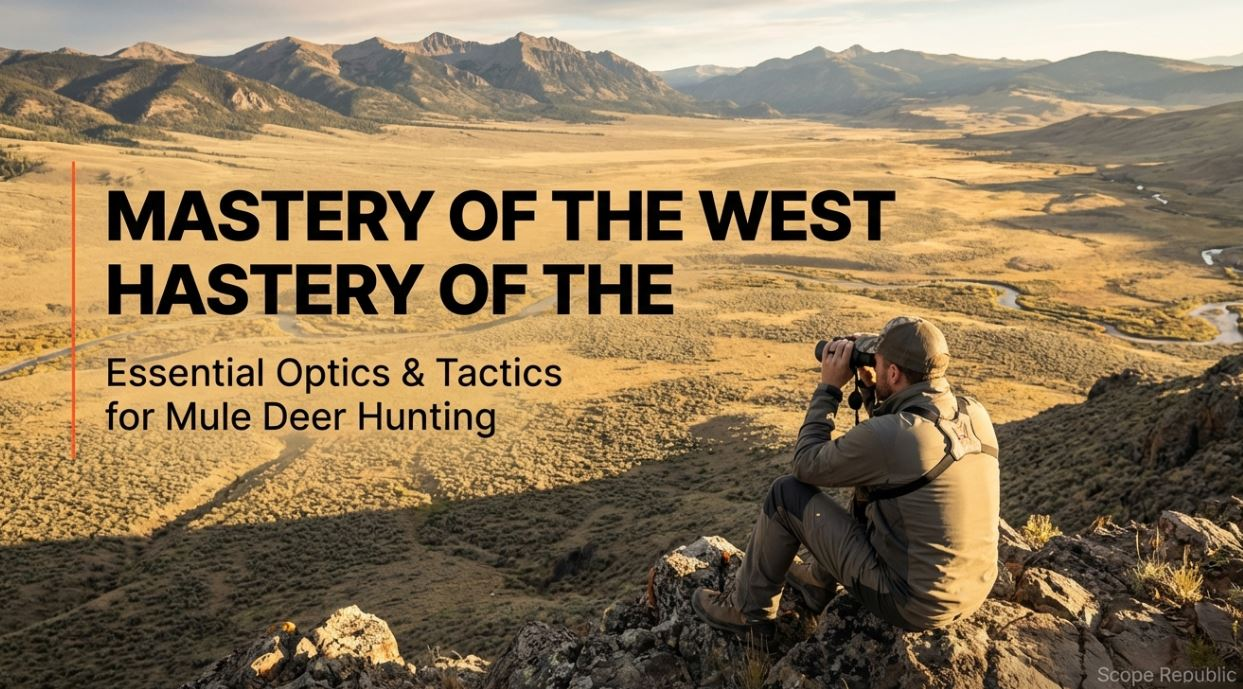
Mule deer hunting demands fundamentally different optics than whitetail hunting because of where and how you encounter these animals. Whitetail hunters typically shoot from 50 to 200 yards in wooded or agricultural settings, often from stands or blinds where quick target acquisition at low light matters most. Mule deer hunters, by contrast, spend hours glassing open basins, sagebrush flats, and alpine bowls, then execute careful stalks that end with shots ranging from 200 to 500+ yards across canyons or up mountainsides.
The terrain itself shapes your scope needs. Western mule deer country means thin air at 6,000 to 11,000 feet, intense sun that creates heat mirage by mid-morning, and dramatic elevation changes that affect bullet drop. Your scope must handle these conditions while mounted on a rifle you’ll carry for miles through rough country. A 3-9x scope that works perfectly for Midwest whitetails simply lacks the magnification and optical quality to pick out a bedded buck at 600 yards or to read wind across a canyon.
Essential Features for Western Mule Deer Scopes
Magnification range stands as the first critical specification. A scope with at least 12x to 15x on the top end allows you to evaluate antlers at distance, confirm your target, and place precise shots beyond 300 yards. The 4-16x, 4-20x, and 5-25x configurations dominate mule deer hunting because they offer enough low-end magnification for timber shots (4x to 5x) while reaching the power needed for open-country work. Scopes that max out at 9x or 10x force you to shoot at animals you can’t properly identify or pass on bucks you could have taken with better glass.
Glass quality and lens coatings separate adequate scopes from excellent ones in Western conditions. Heat mirage becomes a serious issue when glassing sage flats in September or October sunshine, and inferior glass magnifies this distortion while adding its own chromatic aberration and edge blur. Fully multi-coated lenses with HD or ED glass elements (extra-low dispersion) maintain image clarity through mirage and deliver the resolution needed to judge antlers at long range. Weight matters for mountain hunts, but not at the expense of optical performance – a scope that saves six ounces but can’t resolve detail through mirage costs you opportunities.
Quick checklist for evaluating mule deer scopes
- Magnification ceiling: Minimum 14x for open country, 16-25x for dedicated long-range setups
- Objective lens size: 44mm to 50mm balances light transmission with reasonable weight
- Reticle type: MOA or mil-based holdover reticle in first or second focal plane depending on shooting style
- Turret system: Exposed, repeatable turrets if you dial; capped turrets if you hold using reticle
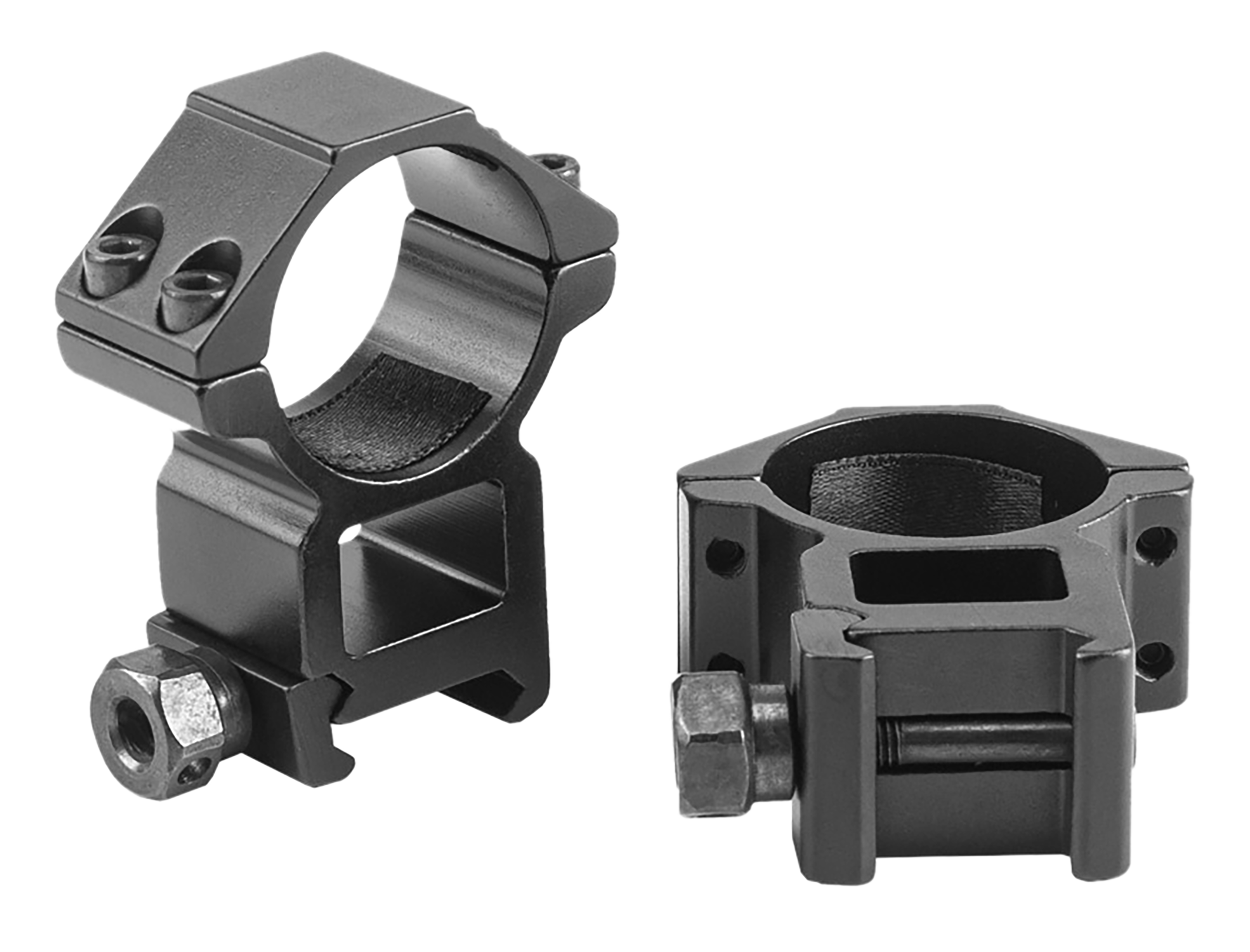
- Tube diameter: 30mm standard, 34mm for scopes with extensive internal adjustment
- Weight: 20-28 oz for all-around use, under 20 oz for dedicated backcountry hunts
- Eye relief: 3.5-4 inches minimum to prevent scope bite from magnum cartridges
- Parallax adjustment: Side focus parallax from 50 yards to infinity essential for long shots
- Glass quality: ED or HD glass preferred for mirage penetration and edge-to-edge clarity
- Durability rating: Waterproof, shockproof, and fog-proof for mountain weather changes
Top Rifle Scopes Ranked by Hunting Scenario
All-Around Versatility: 4-16x and 4-20x Configurations
The Leupold VX-5HD 4-20×52 represents the sweet spot for hunters who encounter varied terrain and shot distances. Its 5:1 zoom ratio covers close timber encounters at 4x through long canyon shots at 20x, while the 52mm objective gathers enough light for dawn and dusk hunting. The Guard-ion lens coating sheds water effectively during mountain weather changes, and at 23.3 ounces, it won’t punish you during all-day carries. The main limitation is price – expect to invest $900-$1,100 depending on reticle choice.
The Vortex Viper PST Gen II 5-25×50 offers similar versatility with more top-end magnification at a lower price point ($900). The glass quality sits just below premium tier but delivers solid performance in most conditions, and the EBR-2C or EBR-7C MOA reticles provide useful holdover references. The exposed turrets track reliably for dialers, though some users report stiff magnification rings that loosen with use. For hunters who glass heavily with binos and use the rifle scope primarily for shooting, this scope delivers excellent value.
Long-Range Specialists: 5-25x for Extreme Distance
The Nightforce NX8 4-32×50 pushes magnification to 32x in a relatively compact package (28.5 ounces), making it ideal for hunters who regularly shoot beyond 500 yards. The Japanese ED glass maintains resolution even at maximum power, and the DigIllum reticle illumination works well in low light without blooming. The narrow field of view at low magnification (23.9 feet at 4x) makes this scope less ideal for timber hunting or quick target acquisition, but for open-basin muleys where you have time to set up, it excels.
The Zeiss Conquest V6 5-30×50 delivers premium German glass at a price point ($1,600-$1,800) below true alpha-tier scopes. The 6:1 zoom ratio and 30x top end handle extreme-range shooting, while the ZMOA-2 reticle provides clean holdover references without cluttering the view. At 25.4 ounces, it carries reasonably well for its capability. The turrets feel precise but lack the zero-stop feature some long-range shooters prefer, requiring careful attention to your zero position after dialing.
Backcountry Lightweight Options
The Trijicon Tenmile HX 4-24×50 weighs just 23 ounces while delivering 24x magnification and excellent glass quality. The MOA-precise center dot in the reticle aids precise aiming without covering small targets, and the turrets track repeatably for elevation adjustments. This scope works particularly well for hunters who pack into remote areas where every ounce matters but can’t compromise on optical performance. The $1,400-$1,600 price reflects its specialized design and quality construction.
The Maven RS.3 4-20×50 comes from a direct-to-consumer brand that eliminates dealer markup, delivering $1,500+ optical performance for around $1,150. At 26 ounces, it’s not the absolute lightest, but the Japanese ED glass punches well above its price class. The SHR-W reticle (MOA-based holdovers) provides useful references without excessive clutter. Maven’s lifetime warranty and customer service reputation make this scope worth considering despite the brand’s relative youth in the market.
Budget-Conscious Performers
The Athlon Argos BTR Gen 2 6-24×50 delivers surprising optical quality for $400-$450, making it accessible for hunters building their first dedicated mule deer rifle. The first focal plane APMR reticle maintains its size relationship to the target across all magnifications, useful for ranging and holdovers. The glass quality doesn’t match premium scopes in severe mirage or low light, but for morning and evening hunting in good conditions, it performs adequately. The turrets feel slightly mushy compared to higher-priced options but track well enough for hunting applications.
The Vortex Diamondback Tactical 4-16×44 sits around $400 and offers a proven track record among budget long-range scopes. The 44mm objective limits light transmission compared to 50mm models, making it less ideal for first-light or last-light shots, but perfectly functional during prime midday glassing hours. The EBR-2C reticle in the first focal plane provides Christmas tree holdovers useful for wind calls. Consider this scope if you’re hunting open country where lighting conditions are generally favorable and shot distances stay under 500 yards.
| Scope Model | Magnification | Objective | Weight | Reticle Plane | Price Tier | Best For |
|---|---|---|---|---|---|---|
| Leupold VX-5HD | 4-20x | 52mm | 23.3 oz | SFP | $900-$1,100 | All-around versatility |
| Nightforce NX8 | 4-32x | 50mm | 28.5 oz | FFP | $2,400-$2,600 | Extreme long range |
| Trijicon Tenmile HX | 4-24x | 50mm | 23 oz | FFP | $1,400-$1,600 | Backcountry hunting |
| Athlon Argos BTR Gen 2 | 6-24x | 50mm | 25.4 oz | FFP | $400-$450 | Budget long range |
| Zeiss Conquest V6 | 5-30x | 50mm | 25.4 oz | SFP | $1,600-$1,800 | Premium glass quality |
Premium Glass for Serious Hunters
The Swarovski Z8i 3.5-28×50 represents the pinnacle of hunting scope design, with Austrian glass that maintains clarity through heat mirage better than almost any competitor. The 8:1 zoom ratio covers every conceivable mule deer scenario from timber to extreme range. The illuminated reticle center dot aids low-light shooting without washing out the image. At $3,400+, this scope costs more than many complete rifle setups, but for hunters who spend 20+ days per season in the field and demand absolute optical superiority, the investment makes sense.
The Leica Magnus 2.4-16×56 takes a different approach with a massive 56mm objective that excels in marginal light conditions. The lower magnification range (maxing at 16x) makes it less suitable for 600+ yard shots but perfect for hunters who prioritize dawn and dusk performance over extreme-range capability. The ballistic turret system allows quick adjustment for different ranges without complicated dial systems. This scope works best for hunters in timber-transition zones where shots rarely exceed 400 yards but lighting conditions are often challenging.
Common Mistakes When Choosing a Mule Deer Scope
Many hunters over-magnify their setups, mounting 5-25x or 6-24x scopes when their actual shooting rarely exceeds 350 yards. High magnification amplifies mirage, narrows field of view, and makes it harder to find animals in the scope at close range. Unless you regularly shoot beyond 450 yards and have verified your ability to make ethical kills at those distances, a 4-16x scope handles most mule deer hunting more effectively than higher-magnification options. The temptation to “have the power just in case” often results in scopes that spend most of their time at 8x to 12x anyway.
The second common error involves mismatching reticle and shooting style. Hunters who plan to dial elevation for different ranges often choose scopes with busy Christmas tree reticles they never use, adding visual clutter to their sight picture. Conversely, holdover shooters sometimes select simple duplex reticles that provide no reference points for wind or elevation holds. Determine whether you’ll primarily dial turrets or hold using reticle subtensions before selecting your scope – this decision should drive reticle choice more than any other factor. First focal plane reticles maintain their size relationship to targets across all magnifications, useful for ranging and holdovers, but second focal plane reticles remain the same visual size, which many hunters find less distracting at low power.
Reading Wind and Mirage Through Your Scope
Wind reading in open mule deer country requires attention to both environmental indicators and mirage patterns visible through your scope. Sagebrush movement, grass bending, and dust provide gross wind speed estimates, but mirage reveals wind direction and velocity more precisely at the target. Light mirage appears as gentle wavering that indicates 3-5 mph winds, while heavy mirage that obscures your target suggests 8-12+ mph conditions. The direction mirage moves shows wind direction – a right-to-left shimmer means wind is pushing from right to left, requiring you to hold or dial into the wind.
Higher magnification amplifies mirage significantly, which is why experienced Western hunters often glass at 12x to 15x rather than maxing out their scopes at 20x or 25x. When mirage becomes severe during midday heating, reducing magnification by 25-30% often restores enough image clarity to shoot accurately. Quality glass with ED elements maintains better contrast and resolution through mirage than budget optics, making the investment worthwhile for hunters who frequently encounter these conditions. Some hunters wait out severe mirage by shooting only during early morning, late evening, or on overcast days when ground heating is minimal.
Steep Angle Shots in Mountain Mule Deer Terrain
Steep uphill and downhill shots require understanding how gravity affects bullet trajectory. When shooting at steep angles (above 30 degrees up or down), your bullet impacts high because gravity acts on the bullet for less horizontal distance than the actual line-of-sight range. A 400-yard shot at a 45-degree angle has an effective horizontal distance of only about 280 yards, meaning you should use the 280-yard elevation rather than the 400-yard setting. Many modern ballistic reticles and rangefinders with angle compensation calculate this automatically, but understanding the principle prevents errors.

Shooting position stability matters more than usual on steep terrain. Uphill shots from unstable stances cause more misses than wind or elevation errors combined. Use your pack as a front rest whenever possible, get as low as practical to reduce your center of gravity, and consider letting a buck walk if you can’t establish a solid position. Downhill shots present their own challenges – the scope must have sufficient eye relief (3.5+ inches) to prevent scope bite when shooting from awkward positions, and you need enough adjustment range in your scope to dial down for extreme downhill angles. Test your scope’s adjustment limits before the hunt to verify it can handle the terrain you’ll encounter.
FAQ: Mule Deer Scope Magnification and Setup
What magnification range works best for most mule deer hunting?
A 4-16x or 4-20x scope handles the majority of mule deer scenarios effectively. The 4x to 5x low end works for timber shots under 100 yards, while 16x to 20x provides enough power for identifying and shooting bucks at 400-500 yards. Hunters who rarely shoot beyond 350 yards can use 3-15x scopes successfully, while those regularly engaging targets past 500 yards benefit from 5-25x configurations.
Should I choose first focal plane or second focal plane for mule deer hunting?
Second focal plane (SFP) reticles work well for most hunters because the reticle stays the same visual size across all magnifications, reducing clutter at low power. First focal plane (FFP) reticles are advantageous if you use holdovers at various magnifications or need to range targets using reticle subtensions. For hunters who dial elevation and use the reticle primarily for windage holds, FFP offers more flexibility. For those who shoot at a single magnification setting and prefer simple reticles, SFP is often preferable.
What’s the best scope setup for a 6.5 Creedmoor mule deer rifle?
The 6.5 Creedmoor’s moderate recoil and flat trajectory pair well with 4-16x or 4-20x scopes that emphasize optical quality over ruggedness needed for magnums. A scope with a turret system that tracks in 0.1 mil or 0.25 MOA increments lets you take advantage of the Creedmoor’s precision at extended range. Zero your rifle at 200 yards, which puts you about 2-3 inches low at 250 yards and requires only one turret adjustment for most shots beyond 300 yards. The Leupold VX-5HD 4-20×52, Vortex Viper PST Gen II 5-25×50, or Trijicon Tenmile 4-24×50 all match the Creedmoor’s capabilities well.
Do I need an illuminated reticle for mule deer hunting?
Illuminated reticles help during dawn and dusk shooting when dark reticles disappear against shadowed backgrounds. They’re particularly useful in timber or north-facing slopes where light levels drop quickly. However, most mule deer hunting occurs during midday hours when lighting is adequate without illumination. If you hunt during prime morning and evening hours regularly, illumination adds useful capability. If you primarily hunt midday when glassing conditions are best, you can save money and weight by skipping illumination.
How much should I spend on a mule deer scope?
Budget $600-$1,200 for a scope that will perform reliably in typical Western conditions without significant compromises. Scopes under $500 often have glass quality issues in mirage or low light, while scopes above $2,000 deliver diminishing returns for most hunters. The $800-$1,200 range includes sc