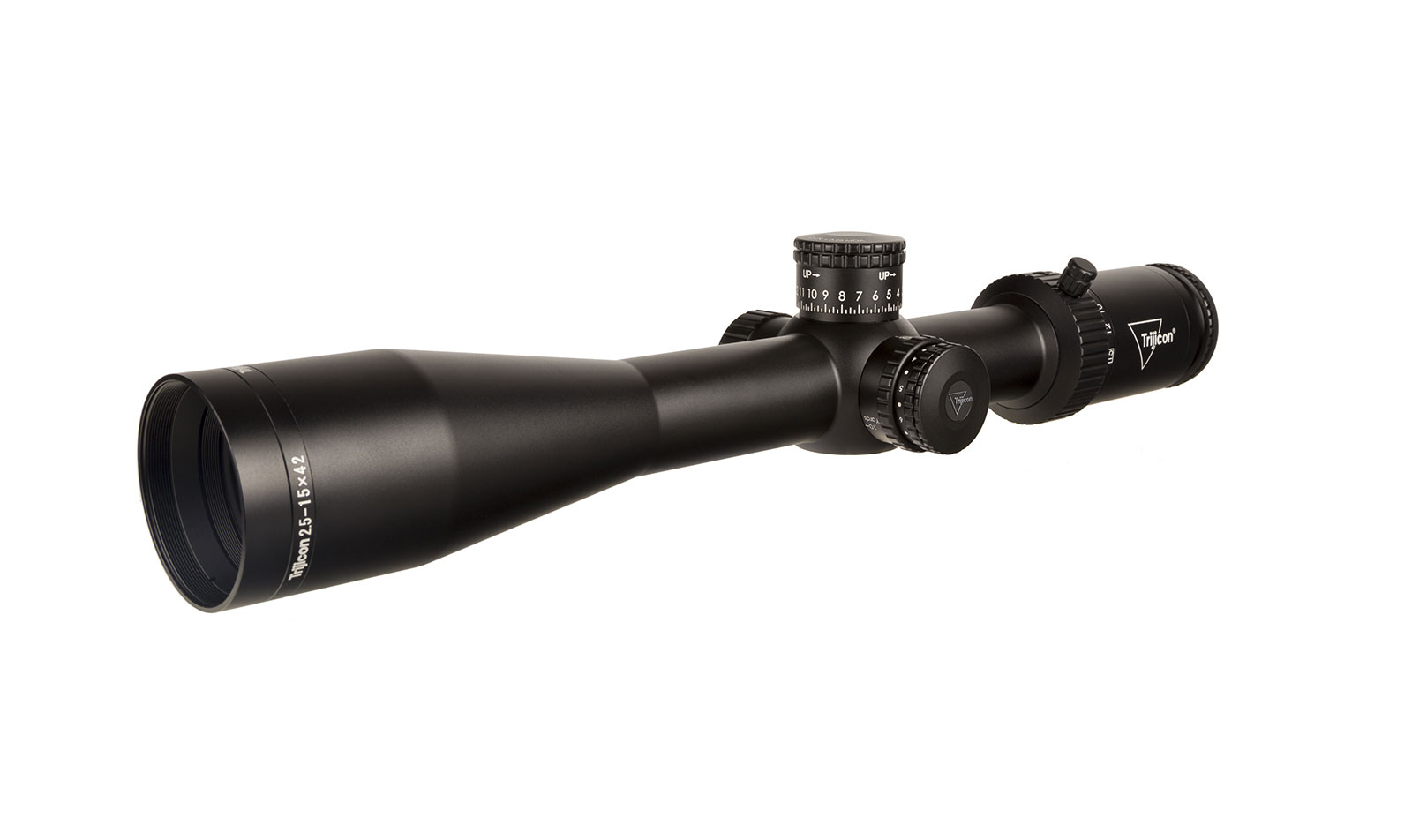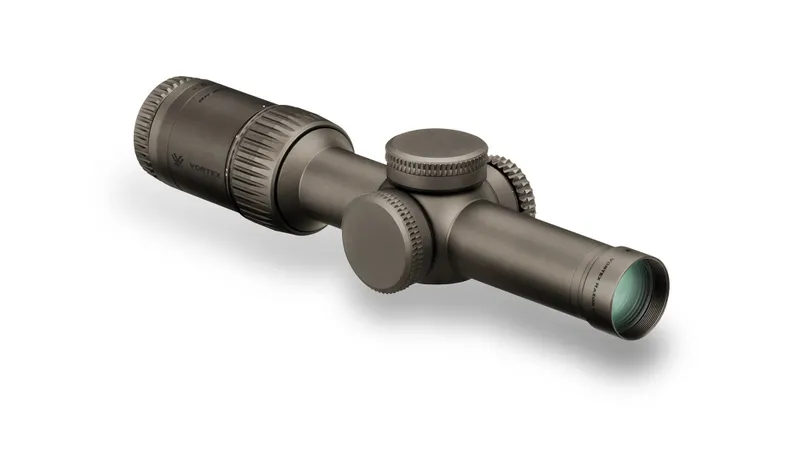

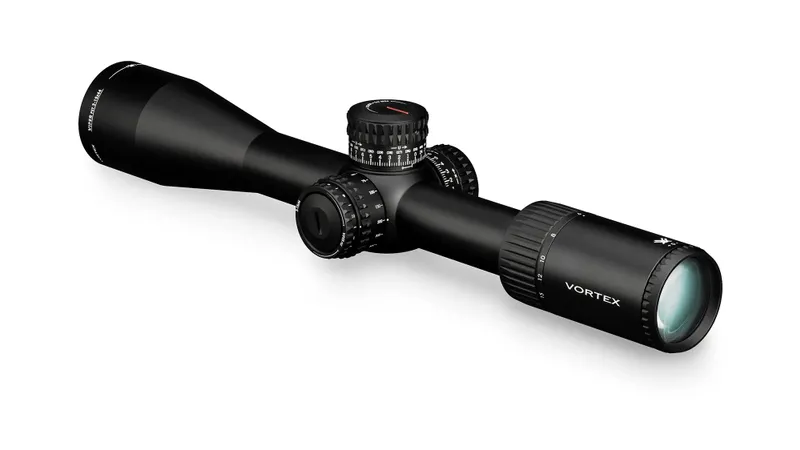
The Vortex Viper PST Gen II 3-15×44 arrives with a purposeful, no-nonsense appearance that immediately signals its mid-tier tactical heritage. At 21.6 ounces, it sits comfortably in the weight range where serious capability meets practical field carry – not featherlight, but far from punishing on a mountain rifle. The 30mm main tube features a matte anodized finish that resists glare effectively, and the machining quality shows clean edges and tight tolerances throughout. The turret housings are substantial without being bulky, and the side parallax adjustment dial turns with smooth, calibrated resistance. This is clearly a scope built for users who expect to manipulate controls regularly rather than set-and-forget hunters.
Build materials inspire confidence through extended handling. The Vortex Viper PST Gen II 3-15×44 uses aircraft-grade aluminum construction with o-ring seals at every junction point, and the scope has proven reliably waterproof and fog-proof across multiple seasons of testing. The eyepiece focus ring offers positive detents that hold zero once set for your eye, and the magnification ring rotates with firm, consistent tension – no slop or play even after hundreds of field adjustments. One minor weakness: the objective bell diameter is generous enough that low ring mounting can be challenging on some rifle actions, particularly Remington 700 variants with larger bolt handles. The scope caps are functional but unexceptional – they stay on when needed but lack the refined fit of higher-end European optics.
Optical Performance in the Field
Glass clarity through the Vortex Viper PST Gen II 3-15×44 delivers solid mid-tier performance that punches slightly above its price point. Edge-to-edge sharpness at 15x magnification is very good within the inner 80% of the image, with predictable softening toward the periphery – entirely acceptable for precision shooting where you’re focused on reticle center anyway. Color rendition leans slightly warm with good contrast, making game animals stand out against mixed woodland backgrounds during midday conditions. Chromatic aberration is well-controlled but not eliminated; you’ll see faint purple fringing on high-contrast edges (dark branches against bright sky) at maximum magnification, though it rarely interferes with target identification.
Low-light performance reveals both the scope’s strengths and its class limitations. During the critical last 20 minutes of legal shooting light, the Vortex Viper PST Gen II 3-15×44 provides usable brightness at 3x to 8x magnification – sufficient for identifying deer-sized game at reasonable hunting distances. Push beyond 10x in dim conditions and the image dims noticeably compared to premium European glass. The fully multi-coated XR Plus lens coatings do respectable work maximizing light transmission, but the 44mm objective simply can’t gather photons like larger 50mm or 56mm designs. For dawn and dusk hunting where shot opportunities occur within 300 yards, it performs adequately. For dedicated low-light glassing or mountain hunting where you’re evaluating animals at distance in poor light, you’ll feel the optical limitations.
Turrets & Reticle Functionality
The exposed tactical turrets are where this scope truly differentiates itself from traditional hunting optics. Each click delivers 0.1 mil adjustments with crisp, audible feedback that you can feel and hear even with gloves on. Turret tracking has proven mechanically reliable through multiple box tests and field verification – dial 5 mils up, 5 mils right, then return to zero, and you’ll consistently land within 0.1 mil of your starting point. The turrets feature a tool-free zero reset mechanism that’s genuinely useful: loosen the set screws, lift the turret, realign to zero, and tighten. The process takes 30 seconds and holds reliably. Revolution indicators are clearly visible, preventing confusion during multi-turn elevation adjustments for extreme long-range work.
Reticle options include the EBR-2C MRAD and EBR-7C MOA variants, both first focal plane designs that scale proportionally with magnification changes. The EBR-2C reticle (tested here) offers a floating center dot with hash marks at 0.2 mil intervals along the vertical and horizontal stadia – excellent for precise wind holds and ranging when needed. The reticle is busy enough to support tactical applications but not so cluttered that it obscures targets during hunting scenarios. Illumination features 11 brightness settings with an off position between each, allowing quick transitions from daylight to low-light conditions. Battery life is rated at 150 hours on medium settings, and the CR2032 battery lives in the left turret housing – accessible without removing the scope from the rifle. One critique: at 3x magnification, the reticle becomes quite fine, making the center dot difficult to acquire quickly against complex backgrounds.
Real-World Use Across Conditions
Mountain hunting with the Vortex Viper PST Gen II 3-15×44 revealed its practical versatility. At 3x, the generous eye box and forgiving eye relief (3.8 to 4.4 inches) make snap shooting on moving game reasonably quick, though it’s not as instinctive as a true 1-6x or 2-10x hunting scope. The weight distribution balances well on a Tikka T3x and Bergara B-14 Ridge during testing, adding noticeable but not excessive heft to rifles in the 7.5 to 8.5-pound range. During a week-long Colorado elk hunt involving steep terrain and rapid elevation changes, the scope maintained zero through repeated impacts against rocks and pack frames – no shift in point of impact across 50 verification shots. The side parallax adjustment proved essential for maintaining focus clarity between 100-yard timber shots and 400-yard meadow opportunities.
Weather resistance has been thoroughly validated across two hunting seasons and multiple precision rifle competitions. Heavy rain, snow, and temperature swings from 15°F to 95°F produced no internal fogging or moisture intrusion. The lens coatings shed water reasonably well, though not as effectively as premium Schott glass – expect to wipe the objective frequently during sustained rainfall. One practical limitation emerged during driven hunts: the 3x bottom end, while adequate for deliberate shooting, lacks the wide field of view and immediate target acquisition of lower-magnification scopes when game appears suddenly at close range. This optic truly excels in scenarios where you have time to assess range, dial elevation, and execute a precise shot – think prairie dog towns, long-range steel, or methodical spot-and-stalk hunting rather than fast-paced driven game or dangerous game backup situations.
How It Compares to Rivals
| Feature | Vortex Viper PST Gen II 3-15×44 | Athlon Ares ETR 3-18×50 | Burris XTR III 3.3-18×50 |
|---|---|---|---|
| Weight | 21.6 oz | 30.4 oz | 27.5 oz |
| Price | ~$900 | ~$1,150 | ~$1,200 |
| Glass Quality | Very Good | Very Good | Excellent |
| Turret Feel | Crisp, Reliable | Firm, Positive | Exceptional |
| Low Light | Good (44mm) | Better (50mm) | Better (50mm) |
| Warranty | VIP Unlimited | Lifetime | Forever |
Against the Athlon Ares ETR 3-18×50, the Vortex Viper PST Gen II 3-15×44 sacrifices some magnification range and objective diameter but gains nearly nine ounces of weight savings – a significant consideration for mountain rifles or extended carry. Optical quality between the two is comparable in good light, with the Athlon pulling slightly ahead during twilight conditions thanks to its larger objective. The Vortex turrets feel more refined with crisper detents, while the Athlon offers a slightly larger adjustment range per revolution. For hunters prioritizing rifle balance and carry weight, the Vortex makes more sense. For primarily stationary precision shooting where weight matters less, the Athlon’s extra capability justifies the bulk.
The Burris XTR III 3.3-18×50 represents a step up in refinement at approximately $300 more. The Japanese-made ED glass in the Burris delivers noticeably better color fidelity and contrast, particularly in marginal light. Turrets on the XTR III provide even more tactile feedback with a distinctly mechanical feel that inspires confidence during long-range elevation changes. However, the Vortex holds its ground in mechanical reliability – both scopes track accurately and return to zero consistently. The deciding factor often comes down to budget and intended use: if your shooting rarely extends beyond 600 yards and you value proven warranty support, the Vortex delivers 90% of the XTR III’s performance at 75% of the cost. If you’re regularly engaging targets beyond 800 yards or hunt in consistently poor light, the Burris’s optical advantage becomes worth the premium.
Common Mistakes When Using This Scope
The first focal plane reticle confuses many shooters transitioning from second focal plane hunting scopes. At 3x magnification, the reticle appears very fine – shooters instinctively crank magnification to 10x or higher to see the reticle clearly, then wonder why their field of view is so narrow and eye box so critical. The proper technique: learn to use the illuminated center dot at low magnification for close to mid-range work, accepting that the hash marks become almost invisible. Save high magnification for deliberate long-range shots where you need precise holdovers. Practicing at 3x to 5x magnification builds the neural pathways for quick target acquisition without sacrificing the reticle’s ranging capability when needed.
Parallax adjustment errors undermine accuracy more than most shooters realize with this scope. The side focus knob is conveniently located but easy to ignore – many users set it once at 100 yards and forget it exists. At 300 yards with parallax set for 100, you’ll introduce 0.3 to 0.5 mil of apparent shift depending on head position behind the scope. This matters significantly when you’re trying to make precise wind holds or target small vital zones. Develop the habit of checking and adjusting parallax for every shot beyond 150 yards, particularly in precision rifle applications. Another common error: over-tightening ring screws during mounting. The 30mm tube is robust but not indestructible – exceeding 20 inch-pounds of torque can deform the tube slightly, causing stiff magnification ring rotation or, in extreme cases, internal element misalignment. Use a proper inch-pound torque wrench and follow manufacturer specifications religiously.