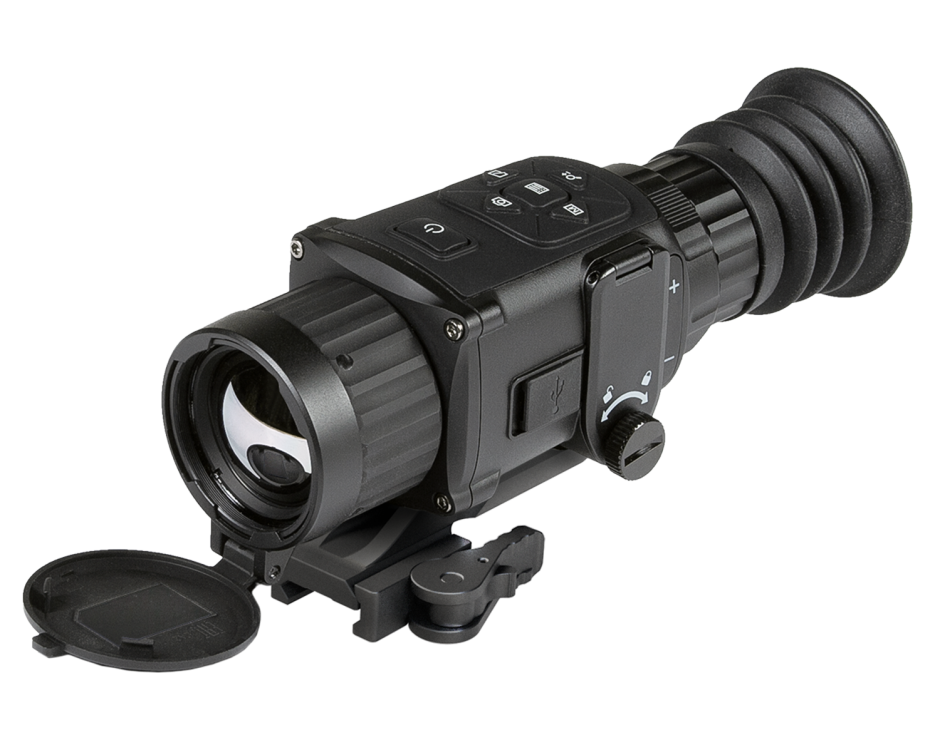

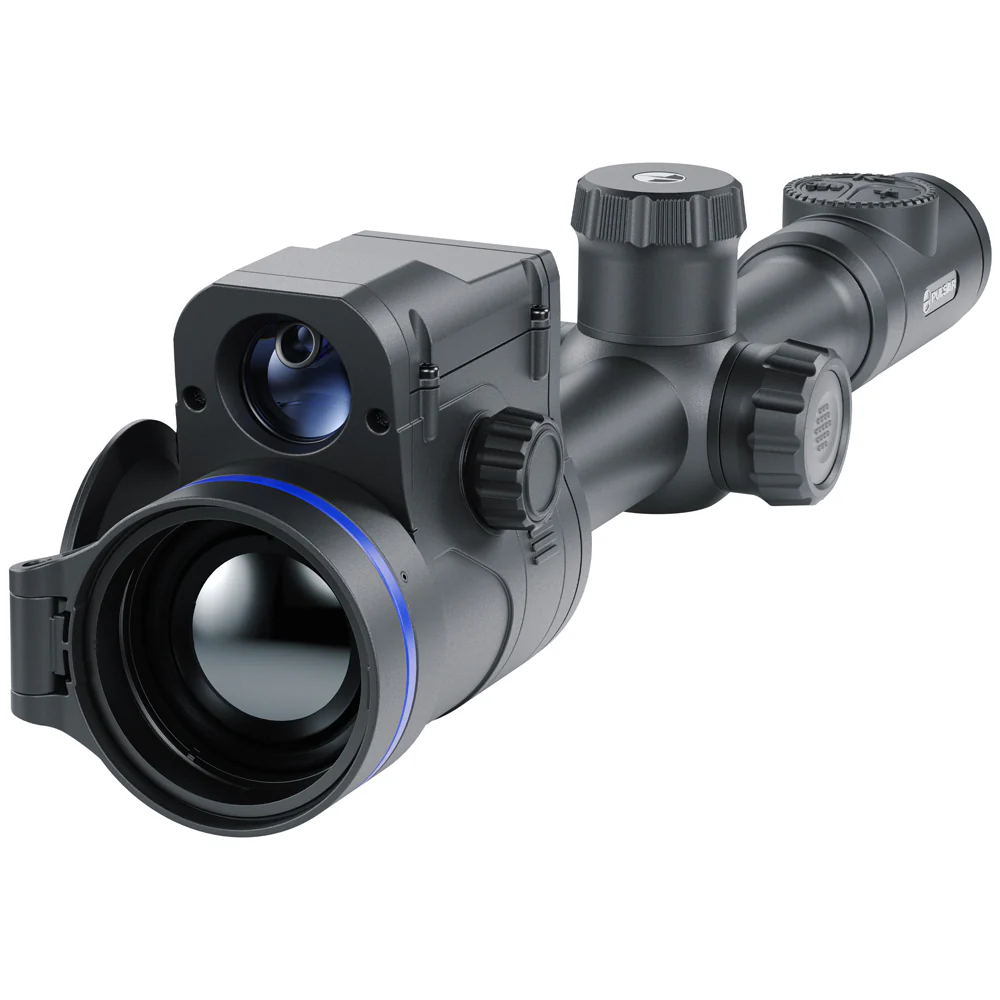
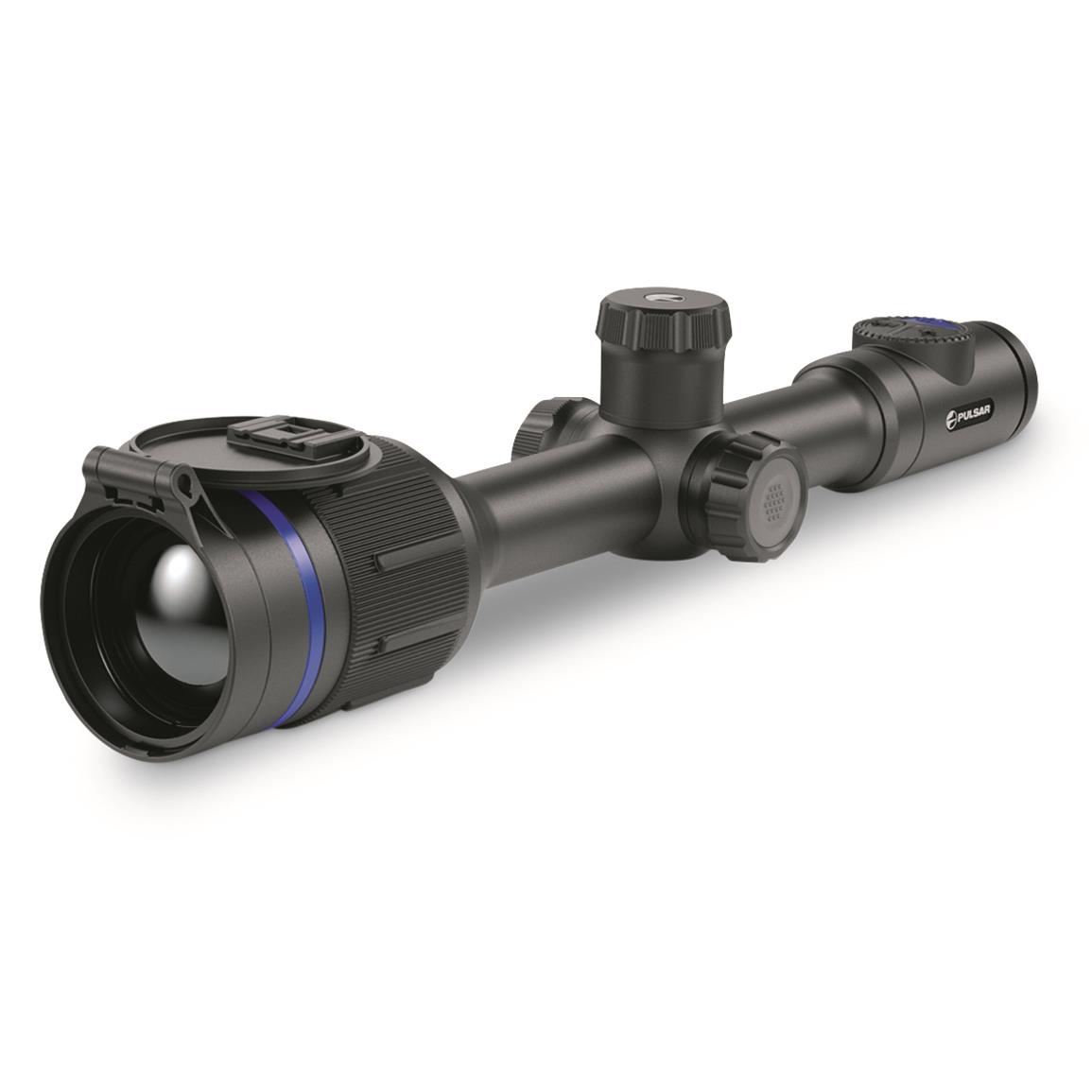

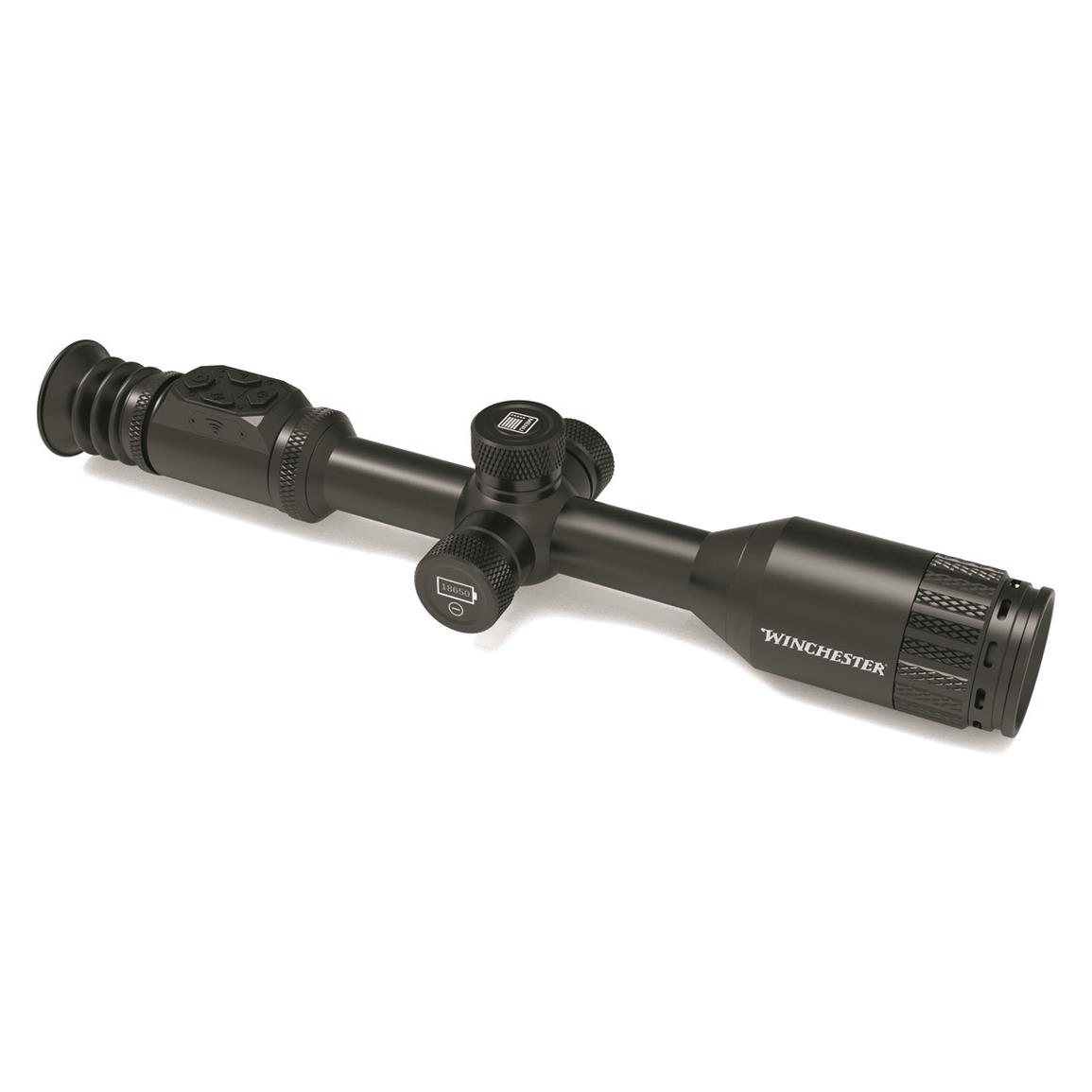

The Pulsar Thermion 2 XP50 represents the second generation of Pulsar’s flagship thermal riflescope line, bringing a 640×480 sensor and 50mm germanium lens into a package designed for serious night hunters. Priced around $5,500-$6,000, this isn’t an entry-level thermal – it competes directly with offerings from AGM, Trijicon, and iRay in the premium thermal scope market. After several months of field testing across hog hunts in Texas brush country and predator calling in open terrain, I’ve developed a clear picture of where this optic excels and where it falls short.
What sets the Thermion 2 XP50 apart from its predecessor is the improved sensor resolution, enhanced user interface, and better battery management. The XP50 designation refers to the 50mm objective lens, providing a detection range Pulsar claims reaches 1,800 meters for man-sized targets. In practical hunting scenarios, you’re more concerned with identification and ethical shot placement on game animals – a different metric entirely. This review focuses on how the Thermion 2 performs when it matters: identifying coyotes at 300 yards, navigating through timber in complete darkness, and maintaining zero through temperature swings and vehicle transport.
Pulsar Thermion 2 XP50: First Impressions & Build
The Thermion 2 XP50 arrives in a hard case with a full accessory kit including remote control, battery pack, charger, lens cloth, and manual. Out of the box, the scope feels substantial at 2.2 pounds – not featherweight, but reasonable for a thermal with this sensor size and feature set. The housing is magnesium alloy with a matte black finish that resists scratches better than some competitors. Build quality feels professional-grade, with tight tolerances and no rattles or play in the controls. The 30mm tube diameter follows traditional scope mounting standards, making ring selection straightforward.
Ergonomics present a mixed bag. The control layout places the power button and menu navigation on the top of the unit, which works well when the scope is mounted. However, the buttons are small and require deliberate presses – wearing gloves in cold weather makes menu navigation frustratingly slow. The eyepiece focuses smoothly with good resistance, holding position without creeping. One design choice I appreciate: the battery compartment is tool-free and located forward of the eyepiece, allowing battery swaps without breaking cheek weld position. The included rechargeable battery pack delivers about 7-8 hours of runtime in moderate temperatures, dropping to around 5-6 hours when hunting in sub-freezing conditions.
Optical Performance in Field Conditions
The 640×480 12-micron sensor delivers noticeably sharper thermal imagery than the older 384×288 sensors found in budget thermals. At 100 yards, you can distinguish individual branches on trees and clearly identify body features on hogs – not just heat blobs. The base magnification is 2.5x with digital zoom extending to 20x. I find myself using the 5x-10x range most often for hunting; beyond 12x, digital zoom artifacts become pronounced and image quality degrades enough that precise shot placement gets questionable. The 50mm germanium lens gathers thermal radiation efficiently, providing good contrast even in challenging conditions like fog or light rain.
Detection versus identification are two different animals with thermal optics. Yes, I’ve spotted heat signatures of deer at 800+ yards in open fields – but identifying species, sex, and shot placement at that range? Not reliably. For ethical hunting, I consider 400 yards the practical limit with the XP50 for coyote-sized game, extending to maybe 500 yards for hogs. Image refresh rate is smooth at 50Hz, eliminating the laggy, stuttering effect of cheaper thermals. Color palettes are customizable (white hot, black hot, red hot, and several others), and I’ve settled on white hot for general use and black hot when scanning near artificial light sources. One weakness: the image does show some edge distortion and softness in the outer 20% of the field of view – center sharpness is excellent, but peripheral resolution trails competitors like the Trijicon Reap-IR.
Turrets, Reticle & User Interface
The Thermion 2 uses digital reticle adjustment rather than mechanical turrets – there are no exposed turret knobs. Zeroing is accomplished through the menu system: fire a shot, use the directional buttons to move the reticle to your point of impact, confirm, and you’re zeroed. This system works reliably and eliminates concerns about turret repeatability or mechanical failure. The adjustments are in 0.1 MIL increments, offering sufficient precision for typical hunting distances. I’ve verified zero retention through several range sessions after rough vehicle transport, and the digital zero holds consistently. One caveat: you’re entirely dependent on battery power and electronics. If the unit fails, you’re done – there’s no mechanical backup.
Reticle options include multiple styles ranging from simple crosshairs to complex ranging reticles with holdover marks. I prefer the basic crosshair with a center dot for quick target acquisition on moving game. The reticle can be adjusted in brightness and color, though I find the default white works best against most backgrounds. One frustration: accessing different reticle profiles requires navigating through menus rather than a quick external control. The user interface overall is functional but not intuitive – expect to spend time with the manual. The included wireless remote helps somewhat, allowing you to control basic functions without breaking shooting position, though it’s another small item to keep track of in the field.
Real-World Use: Night Hunts & Practical Testing
I’ve mounted the Thermion 2 XP50 on both a .223 bolt gun and a suppressed .308 AR-10, and it’s handled recoil from both without issues. Over approximately 400 rounds, zero has remained consistent. The scope excels in its intended role: identifying and engaging targets in complete darkness. During hog hunts in thick brush, the thermal advantage is undeniable – spotting animals bedded in vegetation that would be invisible even with the best night vision. The detection range claims are somewhat optimistic for hunting purposes, but within 300 yards, target identification is clear enough for confident shot placement on vital zones.
Practical limitations become apparent in certain scenarios. Thermal scopes struggle with target identification in warm weather when ambient temperatures approach body temperature – contrast drops significantly. I’ve had difficulty distinguishing between hogs and cattle at distance when both are standing in 85-degree heat. Additionally, the digital zoom magnification, while useful, doesn’t provide the same crisp image quality as optical magnification in traditional scopes. For precision shooting beyond 300 yards, I’m more confident with my traditional day scope. Battery management requires planning – always carry a spare, and don’t trust the runtime estimates in cold weather. The recording feature works as advertised, capturing both video and stills to the internal memory, though file management through the app is clunky.
Performance Comparison
| Feature | Pulsar Thermion 2 XP50 | Trijicon Reap-IR 35mm | AGM Rattler TS35-384 | iRay Rico RH50 |
|---|---|---|---|---|
| Sensor Resolution | 640×480 | 640×480 | 384×288 | 640×512 |
| Base Magnification | 2.5-20x | 2.5-20x | 2.5-20x | 1.6-12.8x |
| Detection Range (claimed) | 1,800m | 1,600m | 1,200m | 1,800m |
| Weight | 2.2 lbs | 2.4 lbs | 1.9 lbs | 2.3 lbs |
| Battery Life | 7-8 hrs | 5-6 hrs | 8-10 hrs | 7 hrs |
| Price Range | $5,500-6,000 | $7,500-8,500 | $3,000-3,500 | $5,000-5,500 |
| Warranty | 3 years | Lifetime | 3 years | 3 years |
The Thermion 2 XP50 slots into the middle-upper tier of thermal riflescopes. It offers better image quality than budget options like the AGM Rattler series, but doesn’t quite match the edge-to-edge sharpness or build quality of the Trijicon Reap-IR, which costs $2,000 more. The iRay Rico RH50 offers similar sensor specs at a slightly lower price point, with comparable performance – choice between these two often comes down to personal preference on interface design. Where the Thermion 2 wins is feature set for the money: built-in recording, Wi-Fi streaming, multiple reticle options, and solid image quality at a price point below the premium tier.
Who This Optic Is For – And Who Should Look Elsewhere
The Thermion 2 XP50 makes sense for dedicated night hunters who need reliable thermal imaging for hog control, predator hunting, or property management. If you’re running regular night hunts and need to identify and engage targets in complete darkness out to 300-400 yards, this scope delivers the performance to justify its cost. It’s particularly well-suited for hunters who value features like video recording for documentation or scouting, and who don’t mind menu-driven controls. The image quality is good enough for ethical shot placement at realistic hunting distances, and the build quality should provide years of service.
However, several categories of shooters should look elsewhere. If you’re primarily a daytime hunter who wants thermal capability as an occasional tool, the $5,500+ investment is hard to justify – consider a handheld thermal monocular instead. Long-range precision shooters will find the digital magnification limiting beyond 300 yards compared to high-quality traditional optics. Budget-conscious hunters can get 80% of this performance from a $3,500 AGM Rattler, sacrificing some image clarity but saving $2,000. And if you demand the absolute best image quality regardless of price, the Trijicon Reap-IR or high-end FLIR units provide noticeably superior edge-to-edge sharpness and contrast. The Thermion 2 XP50 occupies a specific niche: serious night hunters who want very good performance without paying for the absolute best.
After extensive field testing, the Pulsar Thermion 2 XP50 proves to be a capable thermal riflescope that delivers on its core promises. Image quality from the 640×480 sensor provides clear target identification at ethical hunting distances, the build quality inspires confidence in durability, and the feature set – including recording and wireless connectivity – adds genuine utility. The digital zeroing system works reliably, and battery life is adequate with proper planning. It’s not without compromises: the user interface requires patience, edge sharpness trails premium competitors, and the price point puts it out of reach for casual users.
For hunters who operate regularly in darkness and need thermal capability as a primary tool rather than an occasional luxury, the Thermion 2 XP50 represents solid value in the premium thermal category. It won’t disappoint shooters with realistic expectations about thermal technology’s capabilities and limitations. Just understand what you’re buying: a specialized tool optimized for night hunting within 400 yards, not a do-everything optic. Match your use case to its strengths, and the Thermion 2 XP50 will serve you well. If your needs fall outside that scope, save your money or spend more for a true top-tier unit.