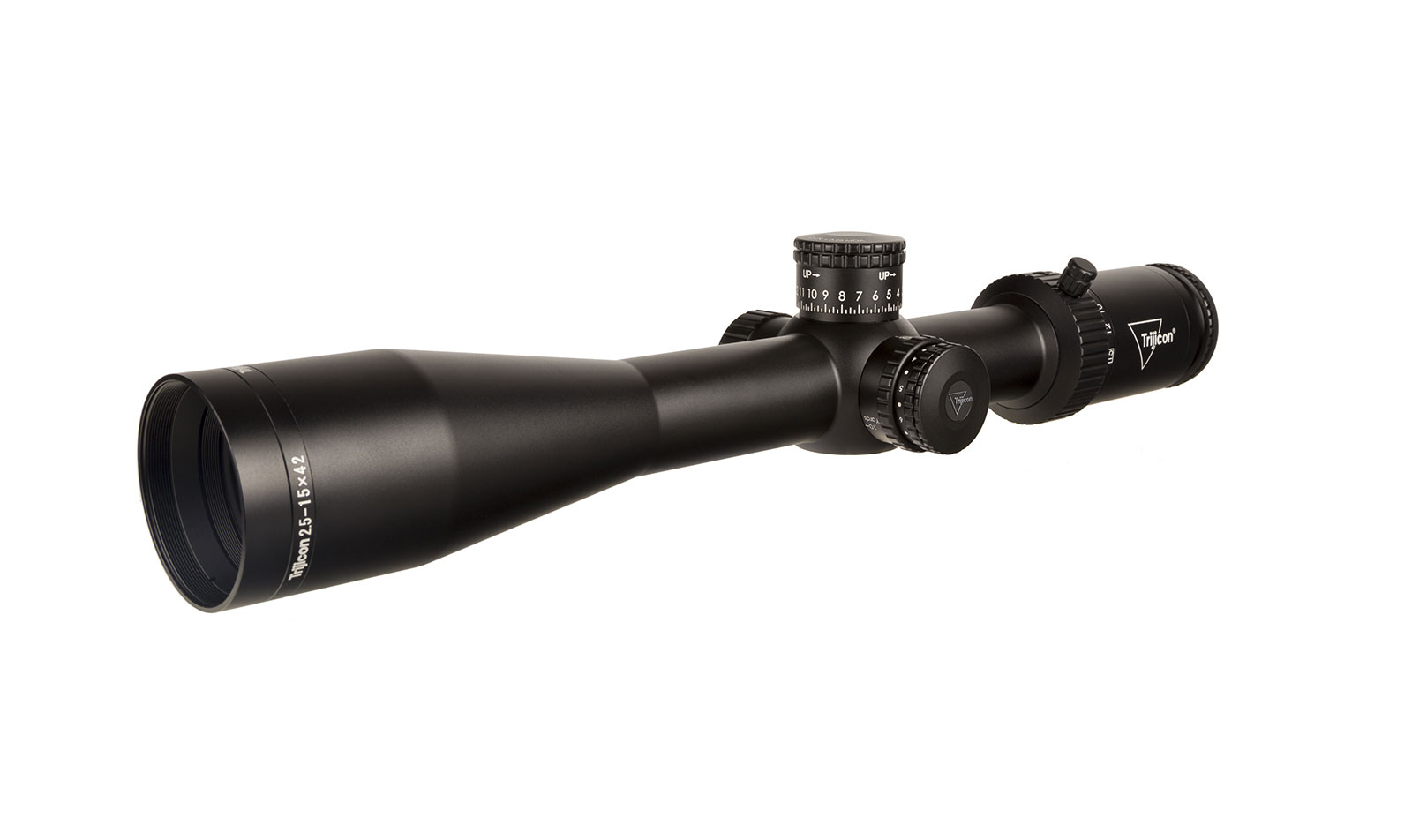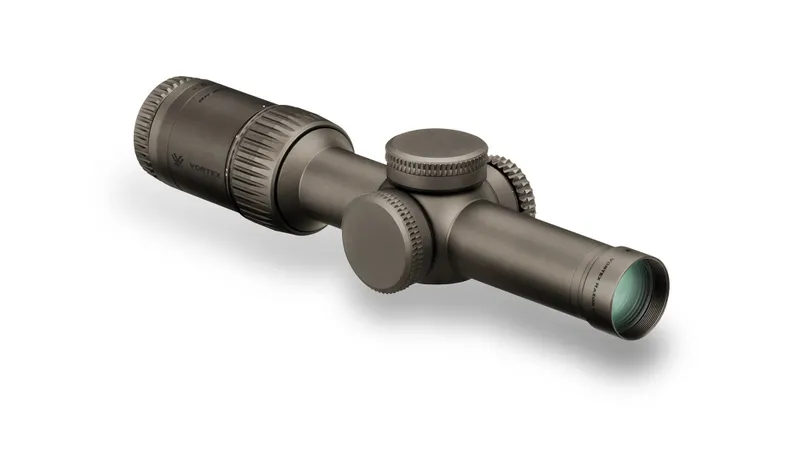

First Impressions & Build Quality
The Nightforce SHV 5-20×56 arrives with the kind of no-nonsense construction you’d expect from a brand known for military and competition pedigree, but at a price point that makes it accessible to serious hunters and precision shooters who don’t need all the bells and whistles. The SHV 5-20×56 weighs in at 30 ounces, which is substantial but not unreasonable for a 56mm objective tube scope with this magnification range. The matte black finish feels durable rather than decorative, and the turret caps thread on smoothly with satisfying clicks that suggest proper tolerances. This isn’t a scope trying to impress you with unnecessary features – it’s built to work.
Handling the scope reveals a robust one-piece 30mm main tube that inspires confidence in tracking and return-to-zero reliability. The oversized objective bell houses quality Japanese glass, and the ocular housing is generously sized for quick target acquisition. The fast-focus eyepiece locks firmly once adjusted, and the magnification ring turns with consistent, moderate resistance that won’t shift accidentally in a pack but doesn’t require excessive force during target transitions. Build quality feels like you’re getting 90% of what a top-tier NXS offers at roughly 60% of the cost, which positions this scope exactly where Nightforce intended it.
Optical Performance in the Field
Glass clarity on the Nightforce SHV 5-20×56 delivers the kind of edge-to-edge sharpness that separates serious optics from budget alternatives, particularly noticeable when glassing at distance or in challenging light conditions. During extended field sessions at dawn and dusk, the 56mm objective pulls in enough light to maintain usable resolution well into shooting hours where smaller objectives start to struggle. Color rendition leans slightly cool but remains neutral enough for accurate target identification, and chromatic aberration is well-controlled across the magnification range – you’ll see minimal purple fringing even when glassing high-contrast edges like treelines against bright skies.
The scope’s resolving power at maximum magnification proved genuinely useful rather than just a spec sheet number. At 20x, I could consistently identify bullet holes on paper at 300 yards and distinguish antler points at ranges where naked-eye identification was impossible. The image does soften slightly at the extreme edges when cranked to 20x, but the central 80% of the field of view maintains clarity that’s competitive with optics costing significantly more. Low-light performance is a legitimate strength here – the combination of quality coatings and that large objective means you’re still seeing detail 15-20 minutes longer than you would with a 44mm scope of similar quality.
Turrets & Reticle Functionality
The capped turrets on the SHV 5-20×56 represent a deliberate design choice that makes this scope better suited to hunters and field shooters than tactical competitors who need rapid elevation adjustments. Each click delivers 0.25 MOA of adjustment with tactile and audible feedback that’s clear even with gloves, though the clicks feel slightly softer than those on Nightforce’s premium NXS line. The turrets track reliably – I ran multiple box tests and tall target tests over several months, and return-to-zero was consistent within the mechanical tolerance you’d expect from this price class. The caps thread on securely and haven’t loosened during transport, though they’re plastic rather than metal.
The MOAR reticle (my test model’s configuration) provides a clean, uncluttered sight picture with hash marks at 1 MOA intervals that make holdovers straightforward without overwhelming the view. The reticle sits in the second focal plane, meaning it doesn’t change size with magnification – this keeps it visible and usable at low power for quick shots but means your holdover calculations only work at maximum magnification. Illumination (available on some models) offers multiple brightness settings that work well in transitional light without washing out the target, though I found myself rarely using it given the reticle’s visibility. The windage turret is also capped, reinforcing that this scope is designed for dialing elevation when needed but primarily using holdovers for wind and rapid engagement scenarios.
Real-World Use Across Conditions
After several months of field use across western hunting terrain and multiple precision shooting sessions, the Nightforce SHV 5-20×56 proved itself as a workhorse optic that handles environmental variables without drama. I carried this scope through rain, snow, temperature swings from single digits to 80+ degrees, and dusty high-desert conditions – the seals held perfectly with zero fogging and no moisture intrusion. The larger objective does catch more glare than smaller scopes when the sun hits it wrong, but the included sunshade mitigates this effectively. Weight becomes noticeable on long backcountry stalks, but the optical performance justifies the extra ounces when shooting opportunities present themselves at extended range.
The eye box is forgiving enough for field shooting positions but not as generous as some European alpha glass – you’ll need reasonably consistent cheek weld to maintain a full sight picture, particularly above 15x magnification. I found the 5x on the low end adequate for most hunting scenarios within 200 yards, though it’s not quite as instinctive as a true 3-15x configuration for quick shots in timber. At distance, the scope excels – I regularly made first-round hits on 12-inch steel at 600 yards, and the glass quality made wind call evaluation significantly easier than it would be with lesser optics. This scope handles the conditions you’ll actually encounter in the field rather than just looking good in the gun safe.
How It Compares to Rivals
| Feature | Nightforce SHV 5-20×56 | Vortex Viper PST II 5-25×50 | Leupold VX-5HD 3-15×56 |
|---|---|---|---|
| Weight | 30 oz | 31 oz | 25.4 oz |
| Glass Quality | Excellent | Very Good | Excellent |
| Turret Style | Capped, 0.25 MOA | Exposed, 0.1 MRAD | Capped, 0.25 MOA |
| Focal Plane | Second | First | Second |
| Price Range | $1,100-$1,300 | $900-$1,100 | $1,200-$1,400 |
The Vortex Viper PST II 5-25×50 offers more magnification and exposed turrets for less money, making it the better choice for pure long-range precision work where you’re dialing every shot. However, the Nightforce delivers noticeably better glass quality and a more robust build that inspires greater confidence in harsh conditions. If you’re shooting primarily from a bench or prone position and want tactical features, the Vortex makes sense – but for hunting applications where the scope takes abuse and you need optical clarity in marginal light, the SHV justifies its premium.
The Leupold VX-5HD 3-15×56 represents the closest direct competitor, offering similar glass quality in a lighter package with a more versatile magnification range for general hunting. The Leupold’s lower weight (nearly 5 ounces less) makes it more packable for mountain hunting, and the 3x low end is noticeably faster for close-range work. The Nightforce counters with superior build quality, more reliable tracking for long-range work, and better performance at the top end of the magnification range. If you’re primarily a hunter who occasionally shoots long range, the Leupold might be the better fit. If you’re a precision shooter who also hunts, the Nightforce makes more sense.
Common Mistakes When Using This Scope
The most frequent error I see with the SHV 5-20×56 is shooters treating it like a tactical scope and getting frustrated by the capped turrets and second focal plane reticle – this optic was designed for hunters and field shooters who need reliability and clarity over rapid dialing capability. If you’re planning to dial elevation for every shot in a PRS-style competition, you’ve chosen the wrong tool. The capped turrets are deliberate, not a cost-cutting measure, and they protect your zero during the kind of rough handling that happens during mountain hunts or backcountry travel. Learn your holdovers at maximum magnification, verify your zero before season, and use the turrets for significant elevation changes rather than constant adjustment.
Another common mistake is mounting this scope too far forward or too far back without properly accounting for eye relief, which runs approximately 3.5-3.9 inches depending on magnification. The eye box tightens up considerably above 15x, and if your scope position isn’t optimized, you’ll fight for a full sight picture when you need it most. Take the time during mounting to ensure you can achieve proper eye relief across your most commonly used magnification range while maintaining a consistent cheek weld from various shooting positions. Additionally, some shooters overlook the importance of the sunshade in bright conditions – the large 56mm objective is a light-gathering advantage in low light but becomes a liability in direct sun without proper shading. Keep the sunshade accessible and use it whenever you’re glassing into bright backgrounds.