
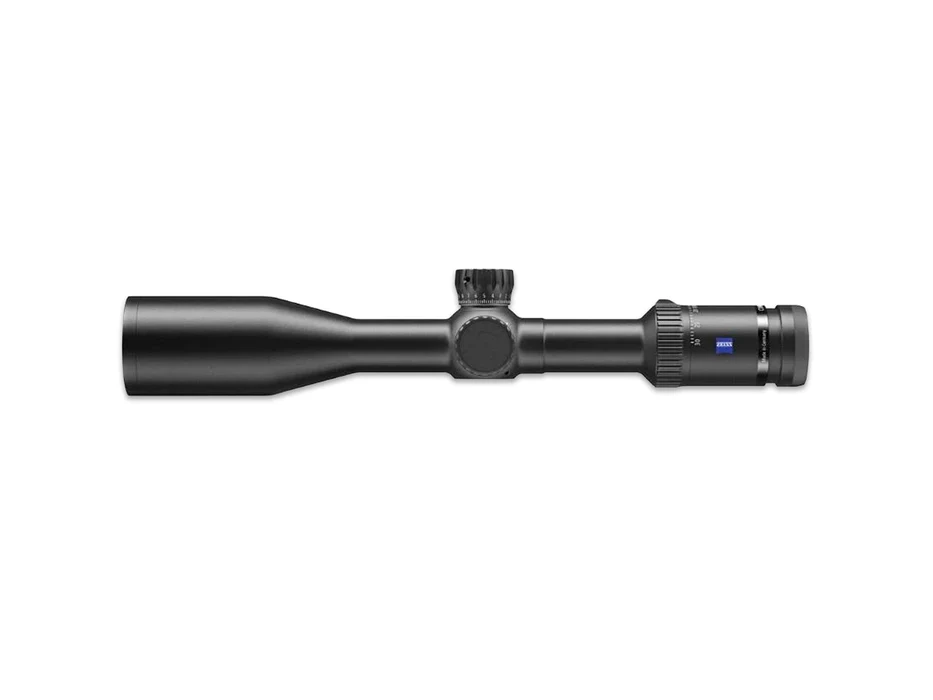
The Zeiss Conquest V6 5-30×50 sits in an interesting middle ground – premium European glass at a price point that won’t require selling a kidney. With a 6x magnification range and 30-mil turrets, it’s positioned as a crossover scope for hunters who occasionally stretch distance and precision shooters who need optical quality above all else. After extensive field use across mountain hunts and range sessions out to 1,200 yards, this review cuts through the marketing to reveal what this optic actually delivers when conditions get tough.
Optical Performance: Glass Quality & Low-Light
The V6’s optical system is where Zeiss justifies its reputation. The glass is genuinely excellent – not quite in the Alpha-class territory of the Victory line, but closer than the price suggests. Edge-to-edge sharpness remains consistent across the magnification range, with minimal chromatic aberration even when glassing into shadowed timber at last light. Color rendition is neutral and accurate, which matters more than most realize when identifying game against complex backgrounds. The 50mm objective paired with Zeiss’s T* coatings delivers usable light transmission well into civil twilight, though it doesn’t quite match the supernatural performance of scopes costing twice as much.
Where this scope excels is resolving detail at distance in variable light. Testing at 25x magnification during overcast conditions, I could clearly distinguish individual branches at 800 yards that became muddy blobs through competing scopes in the same price bracket. The eyebox tightens considerably above 20x – this is a known characteristic of high-ratio scopes – but it’s manageable with proper cheek weld discipline. In practical hunting scenarios under heavy timber canopy, the glass pulled enough light to confidently identify a legal buck at 380 yards forty minutes after sunset, which is the real-world test that matters.
Turrets & Reticle: Tracking and Holdovers
The V6 features Zeiss’s Ballistic Turret (BT) system with 30 mils of total elevation adjustment—15 mils per revolution with a locking turret design. The clicks are tactile and audible with 0.1-mil adjustments, though they lack the mechanical authority you’d find in a Nightforce or Schmidt & Bender. During box tests and tracking verification, the turret returned to zero consistently across multiple sessions, but the feel is slightly mushy compared to true tactical-grade turrets. This isn’t a scope built for constant dialing under time pressure; it’s designed for hunters who zero, verify, and then rely primarily on reticle holdovers for field shooting.
The ZMOA-2 reticle (in my test unit) is a floating center dot design with hash marks suitable for ranging and wind holds. It’s clean and uncluttered – perhaps too much so for precision shooters accustomed to Christmas-tree style reticles with dense holdover references. The illumination is daylight-bright when maxed out and has enough dimmer settings for low-light use without washing out your night vision. Reticle subtensions are accurate and the thin lines don’t obscure targets even at extended range. The windage turret is capped, which makes sense for this scope’s intended use – most shooters will hold wind rather than dial it. If you’re planning to compete in PRS-style matches, this reticle and turret system will feel limiting; for field shooting where you need one good shot, it’s entirely adequate.
Real-World Use: Field Testing Results
I mounted this scope on a 6.5 PRC built for mountain hunting and long-range practice, subjecting it to pack-in hunts above 9,000 feet and regular range work in temperatures from 15°F to 95°F. The scope held zero through repeated temperature swings, altitude changes, and the inevitable bumps that come with backcountry hunting. Weight is reasonable at 25.9 ounces – not featherweight, but acceptable for a 30x scope with a 50mm objective. The fast-focus eyepiece worked well once properly set, though it requires more frequent adjustment than I’d prefer when transitioning between magnifications.
During a Colorado mule deer hunt, the V6 proved its worth on a 520-yard shot across a canyon at dusk. The glass clarity allowed confident animal identification and shot placement, while the reticle remained visible against the darkening hillside without illumination. The turret tracked perfectly for the elevation adjustment. However, the scope showed its limitations during a high-volume prairie dog session – after 80+ rounds and constant magnification changes in direct sunlight, the eyebox’s sensitivity became frustrating. This isn’t a run-and-gun optic. It’s a deliberate shooter’s tool that rewards patience and proper technique. The parallax adjustment is stiff when new but smoothed out after break-in, though it requires attention at closer ranges where it becomes more critical.
How It Compares: Value Against Rivals
| Scope | Magnification | Weight | Turrets | Glass Tier | Street Price |
|---|---|---|---|---|---|
| Zeiss Conquest V6 5-30×50 | 5-30x | 25.9 oz | 0.1-mil, 30 mil travel | Excellent | ~$2,000 |
| Nightforce SHV 5-20×56 | 5-20x | 30.2 oz | 0.25 MOA, capped | Very Good | ~$1,400 |
| Leupold Mark 5HD 5-25×56 | 5-25x | 25 oz | 0.1-mil, tactical | Very Good | ~$2,100 |
| Vortex Razor HD LHT 4.5-22×50 | 4.5-22x | 21 oz | 0.1-mil, 23 mil travel | Very Good | ~$1,700 |
Against direct competitors, the V6 trades some mechanical refinement for superior glass quality. The Nightforce SHV offers bombproof reliability and better turret feedback but can’t match the V6’s optical resolution or low-light performance. The Leupold Mark 5HD is the closest competitor – similar weight, better turret system, and excellent glass – but some shooters find the Zeiss image slightly more natural in color rendition. The Vortex Razor LHT undercuts on price and weight while delivering impressive performance, though the glass falls short of the Zeiss in direct comparison and the magnification range is more limited.
The V6 makes most sense for the hunter who values optical quality above all else and occasionally shoots long range, or the precision shooter who prioritizes glass over tactical features. If you’re primarily dialing elevation and need absolute turret reliability under stress, the Nightforce or Leupold makes more sense. If weight is critical for backcountry work, the Vortex LHT deserves consideration despite its optical compromises. The Zeiss occupies a specific niche: shooters who can afford premium glass but not Alpha-tier pricing, who shoot deliberately rather than rapidly, and who operate frequently in marginal light conditions where that glass quality translates directly to performance.
The Zeiss Conquest V6 5-30×50 is a specialist tool that excels within its design parameters. The glass punches above its price class, delivering clarity and low-light performance that justifies the Zeiss name. The turrets are adequate rather than exceptional – reliable enough for field use but lacking the precision feel that competitive shooters demand. This scope rewards deliberate shooting technique and proper fundamentals; it won’t forgive sloppy form or rushed shots. For mountain hunters who need to verify distant game in failing light, or precision shooters who value seeing their target clearly above rapid target transitions, the V6 delivers genuine performance. But if your shooting involves frequent dialing, time pressure, or run-and-gun scenarios, look elsewhere. This is a glass-first optic that asks you to slow down and shoot well – and if that matches your style, it’s a compelling option that delivers tangible performance where it counts most.