
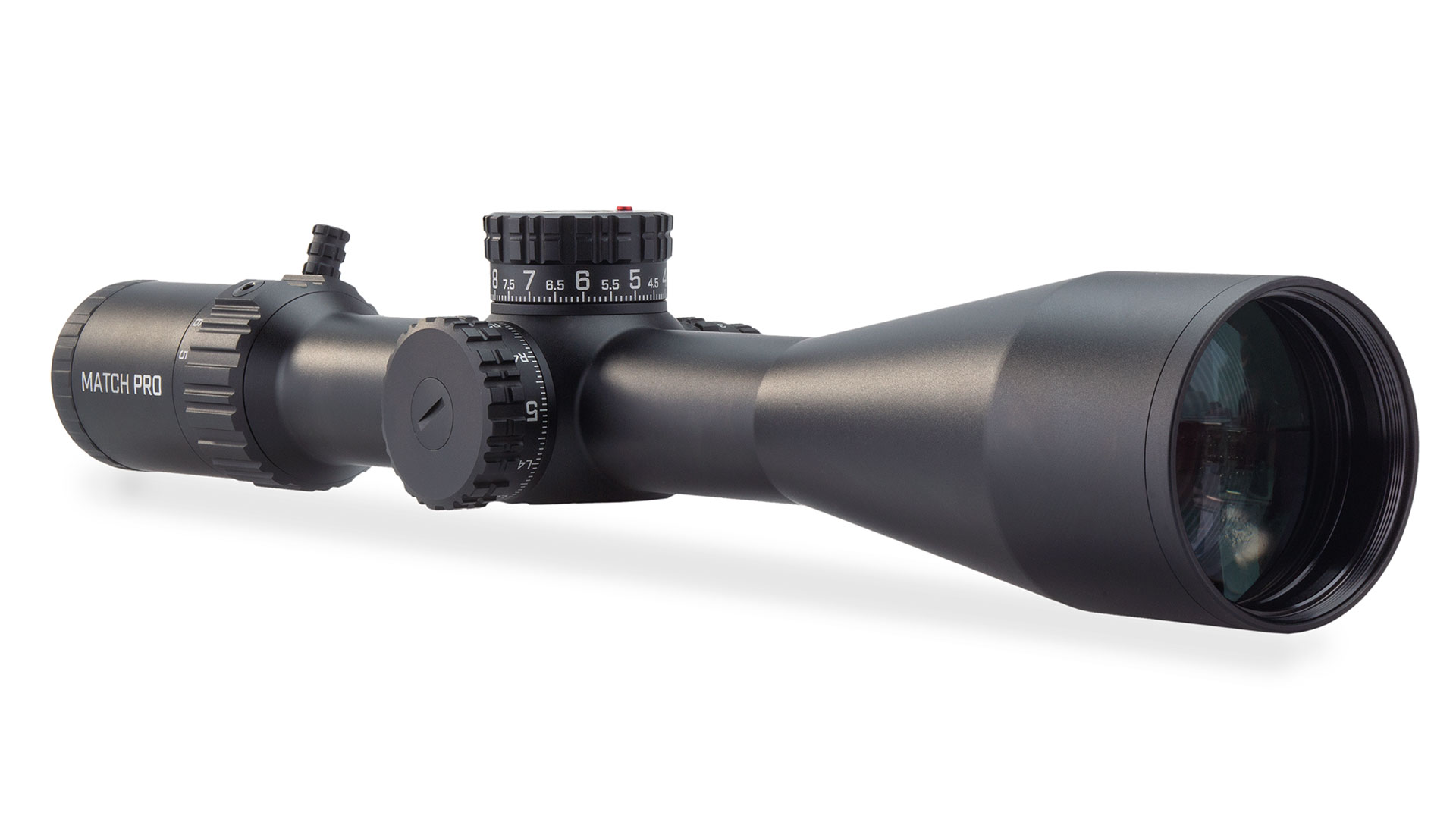
After spending several months behind the Bushnell Match Pro 5-30×56 mm at both the range and in field conditions, I’ve developed a clear picture of where this optic excels and where it makes compromises. Bushnell positioned this scope squarely in the competitive precision rifle market, and it shows in nearly every design decision – from the oversized turrets to the first focal plane reticle options. The $1,400-1,600 price point puts it in an interesting position: undercutting premium competition while attempting to deliver many of the same features serious shooters demand.
This isn’t Bushnell’s first rodeo in the precision optics world. The Match Pro sits between their Elite Tactical line and the discontinued XRS II, borrowing elements from both while carving out its own identity. The 34mm main tube and 56mm objective lens give it a substantial presence on any rifle, and the weight – just over 32 ounces without rings – means you’ll know it’s there. For competitors running barricade drills or hunters hiking into the backcountry, that weight becomes a real consideration worth thinking through before mounting.
First Impressions & Build Quality
Unboxing the Match Pro reveals a scope that feels substantial without crossing into excessive territory. The anodizing is even and smooth, with a matte finish that resists glare well under harsh sunlight. Bushnell used aircraft-grade aluminum for the 34mm tube, and the construction feels solid when you handle it – no creaks, no play in the magnification ring or turrets. The oversized parallax adjustment knob on the left side operates smoothly, though it’s positioned close enough to the objective bell that gloved operation in winter can feel slightly cramped.
The scope ships with flip-up lens covers that work adequately but aren’t remarkable. They’re the weak point in an otherwise well-thought-out package. I replaced mine with aftermarket Tenebraex covers within the first month. The sunshade threads on cleanly and adds about two inches to the overall length – helpful in bright conditions but unnecessary bulk when shooting in overcast weather or wooded environments. Bushnell rates the Match Pro as waterproof and shockproof, and after exposure to heavy rain, temperature swings from 15°F to 95°F, and the recoil from a 6.5 Creedmoor over several hundred rounds, I haven’t seen any internal fogging or tracking issues.
Optical Performance in Competition Settings
The glass quality in the Match Pro represents solid mid-tier performance. Edge-to-edge clarity is good at lower magnifications and acceptable at full 30x power, though you’ll notice some softening in the outer 15-20% of the image at maximum zoom. Color rendition leans slightly cool but remains natural enough that target identification isn’t compromised. I’ve used this scope in early morning PRS matches where light was marginal, and the 56mm objective gathered enough light to keep targets visible, though premium glass from Zeiss or Nightforce offers a noticeable advantage in those low-light situations.
Glare control is where Bushnell made real improvements over their older models. The lens coatings handle direct sunlight better than the XRS II ever did, and I rarely found myself needing the sunshade during midday shooting sessions. Resolution at distance is sufficient for identifying .30-caliber holes in white paper at 300 yards on 20x magnification—adequate for most competitive shooting needs. That said, when comparing directly against a Nightforce ATACR or Vortex Razor Gen III at the same magnification, the Match Pro shows slightly less contrast and fine detail resolution. It’s not a deal-breaker for most applications, but competitive shooters who can afford premium glass will notice the difference.
Turrets & Reticle Options Explained
The turrets are where the Match Pro earns its keep. Bushnell designed tall, exposed knobs with pronounced tactile clicks that you can both feel and hear clearly, even with hearing protection. Each click represents 0.1 MRAD (or 0.25 MOA depending on which model you choose), and I’ve found them to track reliably across the full elevation range. I ran a tall target test three times over the course of testing, and each time the scope returned to zero within 0.1 MRAD—that’s the kind of consistency competitive work demands. The zero stop engages firmly and resets without tools, though the process requires removing the turret cap and following a straightforward procedure outlined in the manual.
Bushnell offers the Match Pro with either their Deploy MOA or EXO Barrier MRAD reticle, both in first focal plane configuration. I tested the MRAD version, which features a floating center dot with Christmas tree-style wind holds below and hash marks for ranging. The reticle thickness strikes a good balance – visible at low power without obscuring small targets, and fine enough at high magnification for precise holds. One quirk: the illumination has 11 settings, but I found myself using only positions 3-5 in most conditions. The highest settings wash out in daylight, and the lowest settings are barely visible even in darkness. The illumination knob is positioned on the left side near the parallax dial, which some shooters prefer and others find crowded – it’s a personal preference issue.
Real-World Use: Range to Field Testing
On the precision rifle range, the Match Pro performs its intended role competently. I mounted it on a Bergara B-14 HMR in 6.5 Creedmoor and ran through several competitive-style drills involving transitions between multiple targets from 100 to 800 yards. The magnification ring has enough resistance to stay put during movement but turns easily enough for quick adjustments. The scope’s weight balance slightly favors the objective end, which can make unsupported shooting positions feel front-heavy on lighter rifles. With a proper bipod or bag setup, this isn’t an issue, but it’s worth considering if you’re planning to mount this on a hunting rifle that sees field carry.
Taking the Match Pro into actual field conditions revealed some limitations. On a late-season mule deer hunt in Colorado, the scope performed adequately for glassing and shot execution, but the 32-ounce weight and 16.5-inch length felt excessive on a hunting rifle designed for mountain carry. The low-light performance at dawn and dusk was functional but not exceptional – I could identify deer clearly at 400 yards in the last 15 minutes of shooting light, but fine antler details that would help with field judging were harder to discern than through my hunting partner’s Leupold VX-6HD. For shooters who primarily compete and occasionally hunt from fixed positions, the Match Pro works fine. For dedicated hunters who want one do-everything scope, lighter options with better low-light glass make more sense.
Comparison with Competition
| Feature | Bushnell Match Pro | Athlon Ares ETR | Nightforce NX8 4-32×50 | Vortex PST Gen II 5-25×50 |
|---|---|---|---|---|
| Price | $1,400-1,600 | $1,400 | $2,100 | $1,100 |
| Weight | 32 oz | 30 oz | 29 oz | 31 oz |
| Tube Diameter | 34mm | 34mm | 30mm | 30mm |
| Glass Quality | Good | Good | Excellent | Good |
| Turret Feel | Excellent | Very Good | Excellent | Good |
| Low Light | Good | Good | Very Good | Fair |
Against direct competitors, the Match Pro holds its ground. The Athlon Ares ETR offers similar glass quality and slightly lighter weight at a comparable price, though I prefer Bushnell’s turret feel and zero stop implementation. Nightforce’s NX8 delivers noticeably better optical performance and slightly lighter weight, but costs $500-700 more – money well spent if you’re serious about competition, but hard to justify for recreational shooters. The Vortex PST Gen II comes in cheaper and offers Vortex’s excellent warranty, but the Match Pro edges it out in turret quality and glass clarity.
The Match Pro’s real competition comes from within Bushnell’s own lineup. The Elite Tactical XRS III offers premium Japanese glass and better low-light performance for about $800 more. If you’re primarily shooting competitions where conditions are favorable and you’re working within a budget, the Match Pro delivers 85% of the performance for significantly less money. That final 15% matters more to some shooters than others – understanding where you fall on that spectrum determines whether the Match Pro or its pricier sibling makes more sense.
Accessories Worth Considering
Mounting the Match Pro requires 34mm rings with enough height to clear the 56mm objective – I used Seekins Precision 1.26″ medium height rings on a 20 MOA rail, which provided proper clearance and scope alignment. The scope’s weight and length mean ring quality matters; cheap aluminum rings will eventually show witness marks from the scope shifting under recoil. I’d budget $100-150 for quality rings from Seekins, Badger Ordnance, or Vortex Pro series.
As mentioned earlier, the factory lens covers are forgettable. Tenebraex makes flip-cap covers specifically sized for this scope that seal better and operate more positively – worth the $60-70 investment. The included sunshade works adequately, but I found myself leaving it off unless conditions were particularly bright. A good lens cloth and cleaning kit matters more than most accessories, as the objective lens seems to attract dust and fingerprints readily. Butler Creek also makes flip-open covers that work if you prefer that style, though they add a bit more bulk than the Tenebraex caps.
Who Should Buy the Match Pro
The ideal buyer for the Bushnell Match Pro is a competitive precision rifle shooter working within a $1,500 scope budget who prioritizes reliable tracking and solid turrets over absolute optical perfection. If you’re shooting PRS, NRL, or local club matches where most engagement distances fall between 100 and 1,000 yards in decent lighting conditions, this scope delivers what you need without breaking into premium price territory. The Match Pro also suits recreational long-range shooters who want competition-level features for range work without spending Nightforce or Kahles money.
This scope isn’t ideal for several shooting applications, though. Dedicated hunters who prioritize low-light performance and weight savings should look at options like the Leupold VX-5HD or Zeiss V4. Shooters who can stretch their budget another $500-800 will find noticeably better glass in the Nightforce NX8 or Bushnell’s own Elite Tactical line. If you’re primarily shooting inside 500 yards or in wooded environments where magnification above 15x rarely gets used, you’re paying for features you don’t need – a quality 3-15x or 4-16x scope would serve you better and save weight. Finally, if you’re mounting this on a lightweight mountain rifle, the Match Pro’s bulk and weight work against the platform’s intended purpose.
The Bushnell Match Pro 5-30x56mm occupies a useful middle ground in the precision optics market. It delivers competition-ready features – reliable tracking, quality turrets, and adequate optical performance – at a price point that doesn’t require a second mortgage. After extensive testing, I’d mount this scope on a competition rifle without hesitation, understanding that I’m getting very good performance rather than exceptional glass quality. The scope does exactly what Bushnell designed it to do: give serious competitive shooters the tools they need to compete effectively without paying premium prices.
For the shooter considering this scope, ask yourself honestly about your priorities and use case. If reliable mechanical performance and clear-enough glass for target work matter more than the last word in optical quality, the Match Pro deserves serious consideration. If you’re chasing every advantage in low-light conditions or want bragging-rights glass, save longer and step up to premium options. The Match Pro won’t disappoint shooters with realistic expectations, but it won’t exceed them either – and sometimes that honest competence is exactly what the situation requires.