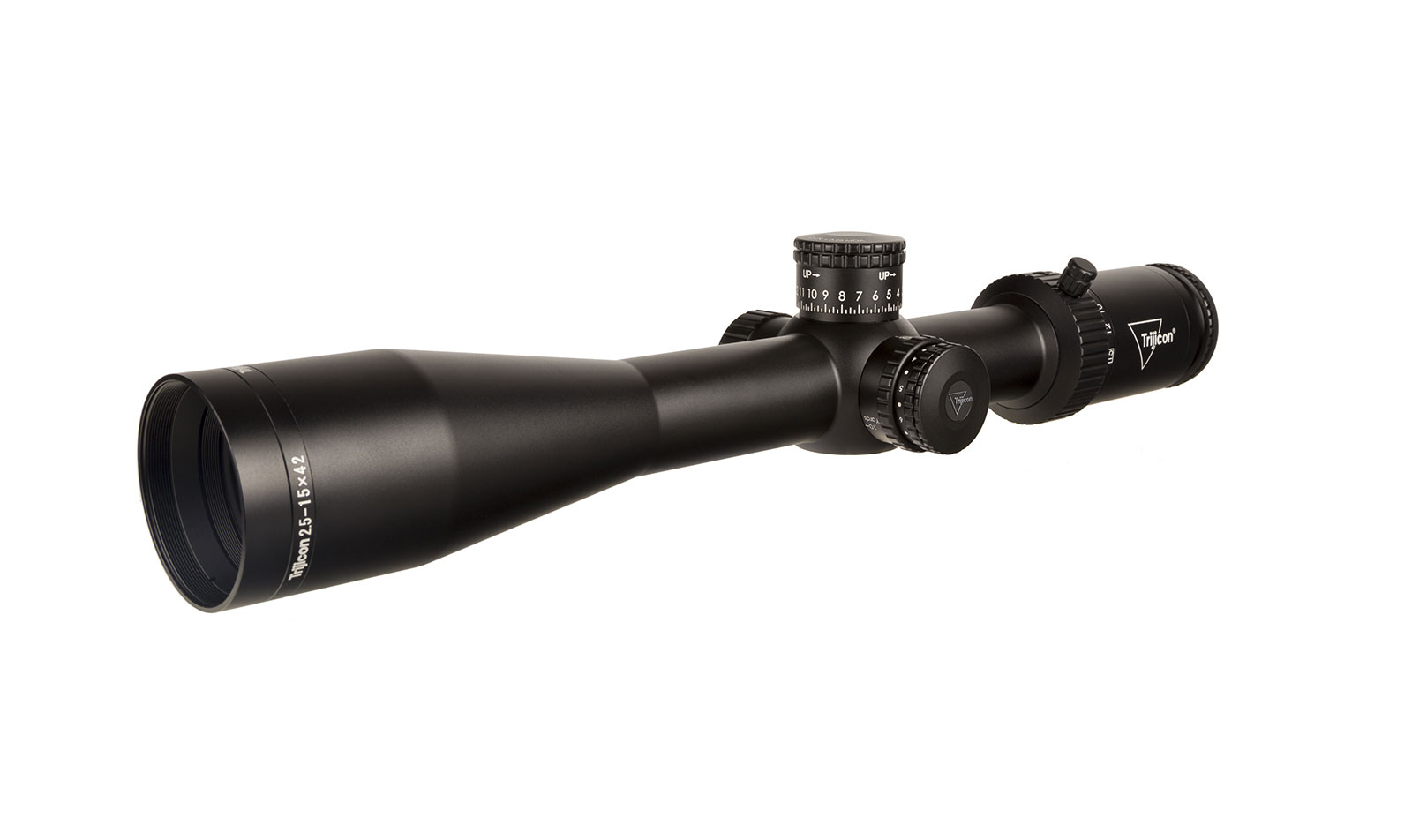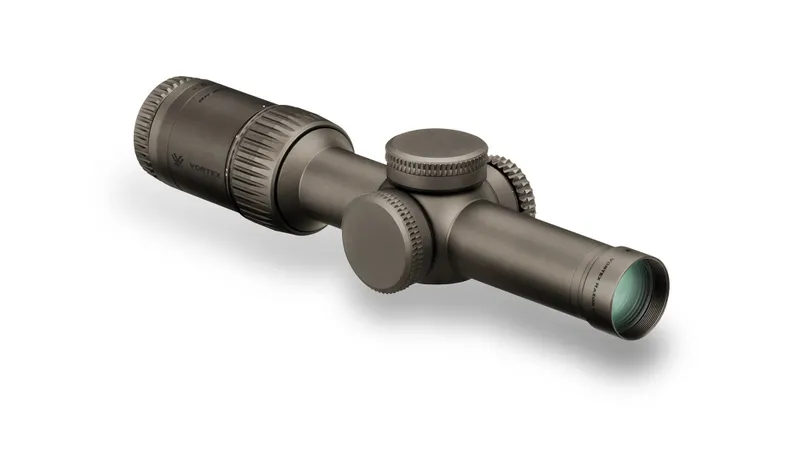

The Leupold VX-5HD 4-20×52 sits in an interesting space – it’s a high-magnification hunting scope that bridges traditional timber hunting and longer-range precision work. With a 52mm objective, 4x magnification range, and Leupold’s Twilight Max HD glass, it promises low-light performance and versatility. I’ve run this optic through multiple seasons across mountain hunts, prairie shooting, and precision rifle practice to see whether it delivers on those promises or falls into the trap of trying to do too much at once.
At roughly $1,200-$1,400 street price, the VX-5HD competes directly with Zeiss V4, Vortex Razor LHT, and Tract Toric scopes. It’s positioned as a premium American-made hunting optic with enough adjustment range for long-range work. The question isn’t whether it’s well-made – Leupold’s build quality is proven – but whether the optical performance and feature set justify the price tag when stacked against increasingly capable competitors.
First Impressions & Build Quality
The VX-5HD feels immediately familiar if you’ve handled Leupolds before. The 30mm main tube has a matte finish that resists glare without being overly textured, and the machining is clean with tight tolerances. At 21.6 ounces, it’s noticeably lighter than many scopes in this magnification range – the Nightforce NX8 4-32×50 weighs 28 ounces, for reference. That weight savings matters on a mountain rifle, though it’s achieved partly through an aluminum housing rather than steel. The flip-up lens covers are functional but basic; they work, but don’t inspire confidence like the integrated systems on European scopes.
The eyepiece focus is smooth with positive detents, though it requires more rotation than I’d prefer to go from minimum to maximum diopter adjustment. The magnification ring turns with moderate resistance – enough to prevent accidental changes but not so stiff it’s difficult with gloves. The side focus parallax adjustment is well-damped and clearly marked from 50 yards to infinity, with accurate calibration in my testing. Build quality is solid without feeling overbuilt; this is a hunting scope designed to be carried, not a tactical brick meant to survive vehicle rollovers.
Optical Performance in the Field
Glass clarity is where the VX-5HD shows its worth. Edge-to-edge sharpness is excellent at lower magnifications (4-12x), with only minor softening at the periphery when cranked to 20x. Color rendition is neutral with good contrast – not quite the warm, rich image of a Zeiss V6, but clearer and more neutral than budget-tier glass. Chromatic aberration is well-controlled; I noticed minimal purple fringing even when glassing white snow against dark timber, a scenario that exposes mediocre glass immediately. Resolution is good enough to distinguish individual pine needles at 400 yards on 20x, which is more than adequate for hunting applications.
Low-light performance is genuinely impressive, though not quite matching the hype around Twilight Max HD. During last light conditions – that critical 15 minutes after legal shooting hours when elk emerge – the VX-5HD transmitted enough light to clearly identify animals and assess shot placement. It’s noticeably brighter than a standard Vortex Diamondback Tactical but falls slightly behind a Zeiss V4 6-24×50 in direct comparison during the same twilight session. The 52mm objective helps, but you’re not getting alpha-glass performance here. For most hunting scenarios, including timber hunting and glassing at dawn, it’s more than sufficient. Eye box is forgiving at lower magnifications but tightens up predictably at 20x – expect to spend a moment finding the sweet spot when dialing up for longer shots.
Turrets, Reticle, and Tracking Accuracy
The capped windage and elevation turrets are a clear indication this scope is hunting-first. They’re low-profile, finger-adjustable, and feature 1/4 MOA clicks that are audible and tactile enough to count reliably. I prefer this design for mountain hunting where I’m not dialing constantly; the caps protect against accidental adjustments when the rifle is slung or in a scabbard. Total elevation adjustment is 75 MOA, which provides adequate range for most hunting scenarios but limits extreme long-range use compared to dedicated tactical scopes. Turret tracking proved accurate during box tests – I shot multiple 10 MOA squares at 100 yards and returned to zero consistently.
The reticle options include Leupold’s Firedot duplex and various MOA-based designs. I tested the Firedot, which features a simple duplex with an illuminated center dot. The illumination system uses a side-mounted dial with 11 settings, including several daylight-bright options. The dot is clean and doesn’t bloom excessively, though it’s not as crisp as an etched-glass illumination system. Reticle subtensions are usable for holdovers if you memorize the gaps, but this isn’t a Christmas-tree reticle designed for PRS shooting. For hunting, the simplicity is an advantage – fast target acquisition without clutter. For precision work beyond 600 yards, you’ll want more detailed holdover references. The reticle remains visible on low magnification for close shots in timber, a key consideration for versatile mountain rifles.
Real-World Use: Hunting and Precision Shooting
On hunting rifles chambered in 6.5 Creedmoor and .280 Ackley Improved, the VX-5HD proved its worth as a do-it-all mountain optic. The light weight balanced well on a Kimber Montana, and the magnification range covered everything from 40-yard timber shots (on 4x) to 450-yard prairie antelope (dialed to 18x). The low-light performance came into play during a Colorado elk hunt when a bull appeared in heavy timber 20 minutes before dark – I could clearly see vitals and make an ethical shot at 220 yards. That’s the scenario this scope is designed for, and it excels there.
For precision shooting applications, the VX-5HD is adequate but not optimized. I used it for load development and practice sessions out to 800 yards, and while it’s certainly capable, the limitations become apparent. The capped turrets slow down rapid dialing, and the reticle lacks the detailed holdover references that make wind calls easier. Tracking remained reliable through hundreds of rounds, but I found myself wishing for an exposed elevation turret and a more feature-rich reticle when shooting steel. If your primary use is precision rifle competition or regular shooting beyond 600 yards, scopes like the Burris XTR III or Athlon Ares ETR offer better feature sets at similar prices. The VX-5HD shines when hunting is the priority and precision shooting is secondary.
Comparison Table
| Feature | Leupold VX-5HD 4-20×52 | Zeiss V4 6-24×50 | Vortex Razor LHT 4.5-22×50 | Nightforce NX8 4-32×50 |
|---|---|---|---|---|
| Weight | 21.6 oz | 22.9 oz | 21 oz | 28 oz |
| Price | $1,200-$1,400 | $1,100-$1,300 | $1,300-$1,500 | $1,900-$2,100 |
| Turrets | Capped, 1/4 MOA | Capped, 1/4 MOA | Exposed, 1/4 MOA | Exposed, .25 MOA |
| Elevation Travel | 75 MOA | 80 MOA | 70 MOA | 70 MOA |
| Low-Light | Excellent | Outstanding | Very Good | Very Good |
| Best For | Versatile hunting | European-style hunting | Lightweight mountain rifles | Tactical/long-range hunting hybrid |
Who Should Buy This Scope – And Who Shouldn’t
The VX-5HD 4-20×52 is ideal for hunters who need one optic to cover varied terrain and shot distances. If you’re hunting mule deer in timber one day and glassing open basins the next, this scope handles both scenarios competently. The light weight makes it suitable for mountain rifles where every ounce matters, and the low-light performance extends your effective shooting window during prime game movement times. Hunters who prioritize American manufacturing and Leupold’s warranty service will appreciate the peace of mind that comes with the brand.
This scope is not the right choice if you’re primarily a precision shooter who occasionally hunts, or if you need maximum magnification for extreme long-range work. The capped turrets and hunting-oriented reticle will frustrate you during practice sessions, and the 20x top-end magnification limits utility beyond 700 yards. Similarly, if low-light performance is your absolute top priority – say, for driven boar hunts in thick European forests – the Zeiss V4 or a Swarovski Z5 will give you a noticeable edge during those final minutes of legal light. The VX-5HD is very good at many things but doesn’t dominate any single category. For hunters seeking a reliable, versatile workhorse at a reasonable price, that’s exactly what’s needed.
After extensive field use, the Leupold VX-5HD 4-20×52 proves itself as a thoughtfully designed hunting scope with enough capability for occasional precision work. Its strengths – light weight, good glass, reliable tracking, and genuine low-light performance – align well with mountain hunting and variable-range shooting. The weaknesses – capped turrets, limited extreme-range features, and glass that’s excellent but not exceptional – are acceptable trade-offs for the intended use case. At its price point, it competes effectively against European and Asian imports while offering American manufacturing and Leupold’s lifetime guarantee. This isn’t a scope that will wow you with any single attribute, but it will quietly perform across a wide range of hunting scenarios without complaint. For hunters who value versatility and reliability over specialized features, the VX-5HD deserves serious consideration.