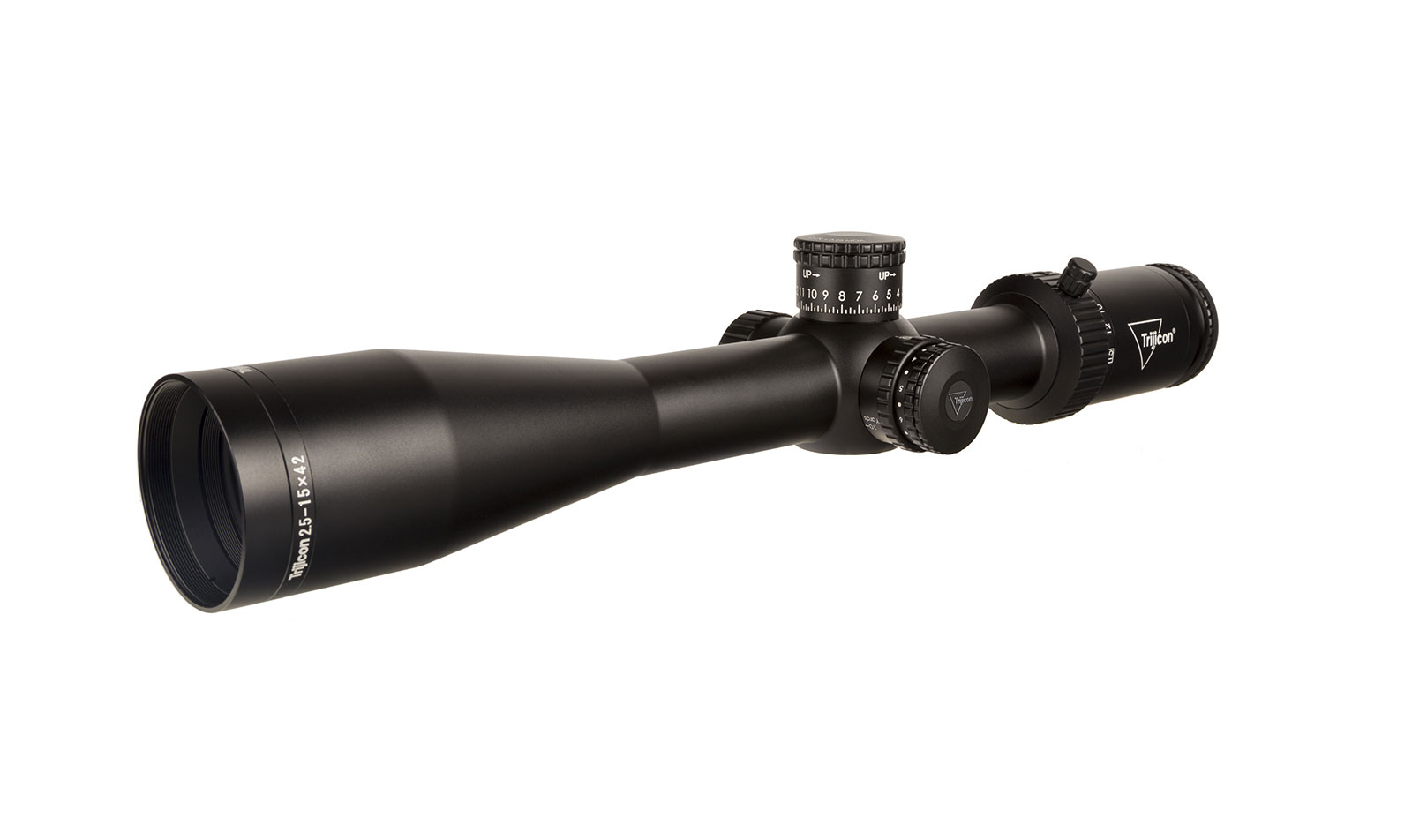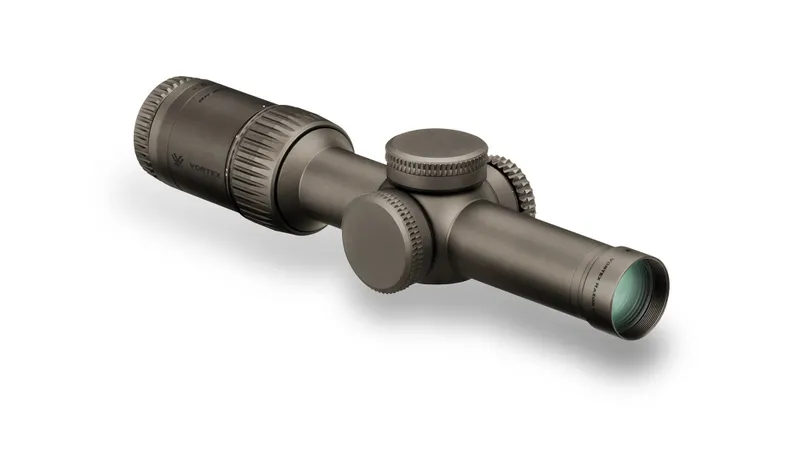

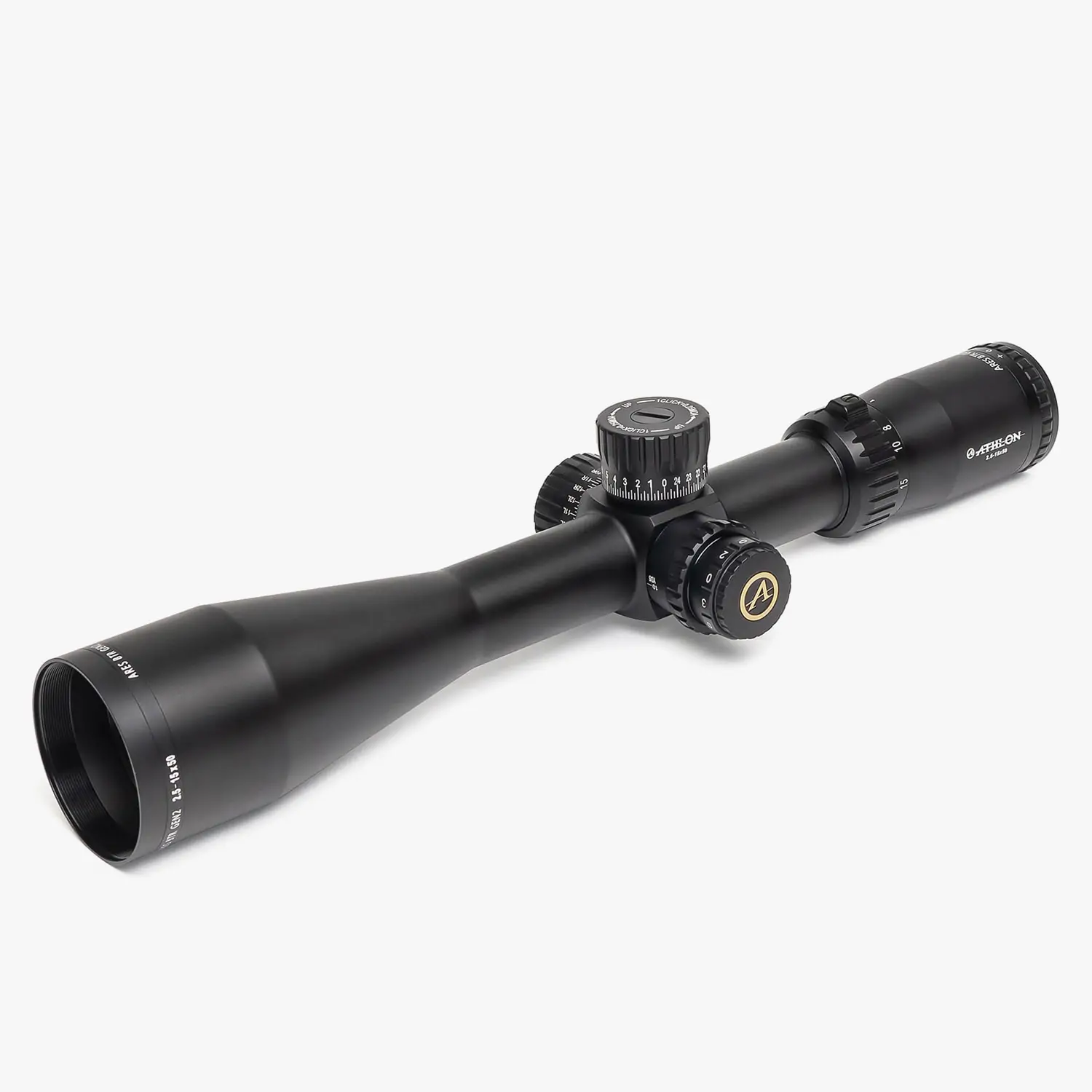
The Athlon Ares BTR 2.5-15×50 arrives with a purposeful, utilitarian aesthetic that immediately signals its tactical roots adapted for hunting applications. At 31 ounces, it sits in the middle ground between ultralight mountain optics and heavyweight precision scopes – heavy enough to inspire confidence in durability, but not so burdensome that it transforms a hunting rifle into a boat anchor. The 34mm main tube and substantial turret housing dominate the visual profile, while the 50mm objective provides generous light-gathering capability without excessive bulk. Machined from 6061-T6 aluminum with a matte anodized finish, the Athlon Ares BTR 2.5-15×50 feels dense and rigid in hand, with no detectable flex or play in any component.
Build quality reflects Athlon’s positioning as a value-oriented brand punching above its price point. The turrets exhibit crisp, tactile clicks with zero mushiness, though the windage cap requires deliberate effort to remove – a minor annoyance during zeroing sessions. Magnification ring rotation is smooth but slightly stiff out of the box, requiring a break-in period before achieving optimal fluidity. The fast-focus eyepiece locks securely without drift, and the side parallax adjustment moves with appropriate resistance. Sealing appears comprehensive, with o-rings visible at all junction points, and Athlon’s argon purging has proven reliable in my testing across humid and temperature-variable conditions.
Optical performance in varied conditions
Glass clarity in the Ares BTR 2.5-15×50 delivers what I’d characterize as very good performance for its price bracket, though not exceptional by premium standards. Edge-to-edge sharpness remains respectable through mid-magnification ranges, with the sweet spot between 6x and 10x producing notably crisp images. Push beyond 12x, and you’ll notice some edge softness creeping in – not debilitating, but present enough that glassing distant terrain requires centering subjects in the middle third of the field of view. Color rendition leans neutral with perhaps a hint of warmth, avoiding the cool blue cast that plagues budget optics while not quite matching the vivid color saturation of alpha-tier glass.
Low-light performance represents a genuine strength for this scope, where the 50mm objective and Athlon’s XPL coating earn their keep during dawn and dusk hunting windows. I’ve successfully identified antler configurations and evaluated shot opportunities 20-25 minutes past legal shooting light, with usable brightness extending nearly to the edge of the image circle. Chromatic aberration remains well-controlled in high-contrast scenarios – backlit subjects against bright skies show minimal purple fringing, though it’s not entirely absent. Glare resistance proves adequate rather than outstanding; direct sunlight at oblique angles can wash out contrast, requiring minor positioning adjustments. The scope’s performance ceiling becomes apparent when compared side-by-side with premium European glass, but for practical hunting applications in the field, the optical package delivers consistent, reliable performance.
Turrets & reticle functionality
The Ares BTR’s exposed tactical turrets represent both its primary appeal and potential limitation, depending on your hunting style. Each click delivers a positive, audible detent with 0.1 mil adjustments – fine enough for precise dialing without excessive rotation for longer shots. The turrets track reliably; my box tests at 100 yards returned to zero consistently across multiple iterations, and field confirmations at extended ranges matched ballistic predictions within expected tolerances. The zero-stop mechanism functions as advertised, though installation requires removing the turret and setting the stop manually – a straightforward process, but one that demands attention to detail during initial setup.
The APLR2 FFP reticle strikes a practical balance between minimalism and functionality, with a floating center dot, Christmas tree-style wind holds, and ranging marks that remain usable across the magnification range. At 2.5x, the reticle is visible but delicate – adequate for close-range target acquisition but not ideal for snap shooting in thick cover. At 15x, the reticle subtensions become appropriately sized for precision work, with the center dot measuring 0.08 mils – small enough for precise aiming without obscuring vital zones at distance. The first focal plane design means your holdovers remain accurate at any magnification, critical for dialing-averse shooters who prefer reticle holds. Illumination offers 11 brightness levels with an off position between each setting, though daylight visibility requires near-maximum settings, and the battery compartment’s top-mounted position can interfere with some mounting configurations.
Real-world use across hunting scenarios
I’ve fielded the Ares BTR 2.5-15×50 across whitetail stands, western mule deer hunts, and precision rifle practice sessions spanning 18 months, accumulating experience in conditions ranging from humid southern timber to arid high-desert terrain. For stationary setups where weight matters less – box blinds, elevated stands, or prone positions – this scope excels. The magnification range handles everything from 75-yard timber shots at minimum power to 600-yard antelope evaluations at full magnification. The generous eye box at lower powers forgives head position variations, though it tightens noticeably above 12x, requiring more deliberate cheek weld consistency.
Where this scope stumbles is dynamic hunting situations requiring rapid target acquisition and frequent positional changes. The 31-ounce weight transforms a nimble 7-pound rifle into a front-heavy 8-pound package that fatigues shoulders during all-day spot-and-stalk pursuits. The tactical aesthetic and exposed turrets, while functionally sound, attract brush and debris during mountain hunts – I’ve learned to keep turret caps installed except when actively dialing. The 2.5x low end, while adequate, doesn’t provide the true both-eyes-open situational awareness of genuine 1-4x or 1-6x optics, limiting its utility for driven hunts or dangerous game applications. This scope finds its natural home on dedicated long-range hunting rifles, precision bolt guns that rarely leave the truck except for deliberate shots, or rifles serving dual duty between hunting and PRS-style competitions.
How it compares to direct competitors
| Scope | Weight | Glass Quality | Turret Performance | Low Light | Price Range |
|---|---|---|---|---|---|
| Athlon Ares BTR 2.5-15×50 | 31 oz | Very Good | Excellent | Excellent | $450-550 |
| Vortex Viper PST Gen II 3-15×44 | 28 oz | Very Good | Excellent | Very Good | $600-700 |
| Bushnell LRHS 3-12×44 | 21 oz | Good | Very Good | Good | $550-650 |
| Nightforce SHV 3-10×42 | 20.5 oz | Excellent | Excellent | Very Good | $1000-1200 |
Against the Vortex Viper PST Gen II 3-15×44, the Ares BTR trades three ounces of additional weight for superior low-light performance from its larger objective. Glass quality between these two sits in the same tier – indistinguishable in practical field use – while both offer reliable turret tracking. The Vortex carries a slightly higher street price and includes Vortex’s legendary warranty, though Athlon’s lifetime guarantee has proven equally responsive in my limited experience with their customer service. The PST Gen II’s lighter weight makes it more versatile for varied hunting styles, while the Ares BTR’s extra light transmission justifies itself for hunters prioritizing dawn and dusk performance.
The Bushnell LRHS 3-12×44 undercuts both on weight at just 21 ounces, making it genuinely packable for mountain hunting, but sacrifices optical quality and low-light capability in the process. Its narrower magnification range also limits flexibility for shooters wanting both close-range capability and long-distance precision. The Nightforce SHV 3-10×42 represents the premium alternative – noticeably superior glass, bombproof reliability, and mountain-friendly weight, but at double the price. The SHV’s capped turrets also signal a different design philosophy, prioritizing set-and-forget zeroing over frequent dialing. For hunters whose budgets stretch to $1000-plus, the Nightforce delivers tangible optical improvements. For those working within tighter constraints, the Ares BTR provides 80-85% of the performance at half the cost.
Common mistakes when setting up this scope
The most frequent setup error I’ve observed involves mounting height selection, particularly on AR-platform rifles or bolt guns with larger-diameter actions. The 50mm objective requires sufficient clearance, and many shooters underestimate the ring height needed, resulting in the objective bell contacting the barrel during magnification changes or recoil. For standard bolt actions, medium to medium-high rings typically suffice, but verify clearance with the specific rifle before permanently mounting. The 34mm tube also demands compatible rings – don’t assume your existing 30mm rings will work, as this mistake wastes time and risks damaging both scope and rings.
Zero-stop installation represents another common stumbling point, with shooters either skipping this step entirely or incorrectly setting the stop position. Take time during initial zeroing to properly establish your zero-stop following Athlon’s instructions – it requires removing the elevation turret, rotating the stop mechanism to the appropriate position, and reassembling. Rushing this process or eyeballing the adjustment leads to a zero-stop that engages above or below your actual zero, negating its utility. Finally, many shooters overlook proper diopter adjustment on the fast-focus eyepiece, instead compensating with the parallax knob. Set your diopter first – aim at a blank wall or sky, adjust the eyepiece until the reticle appears crisp, then use parallax adjustment as intended for target focus. This simple sequence prevents eye strain and ensures optimal optical performance across all magnifications.