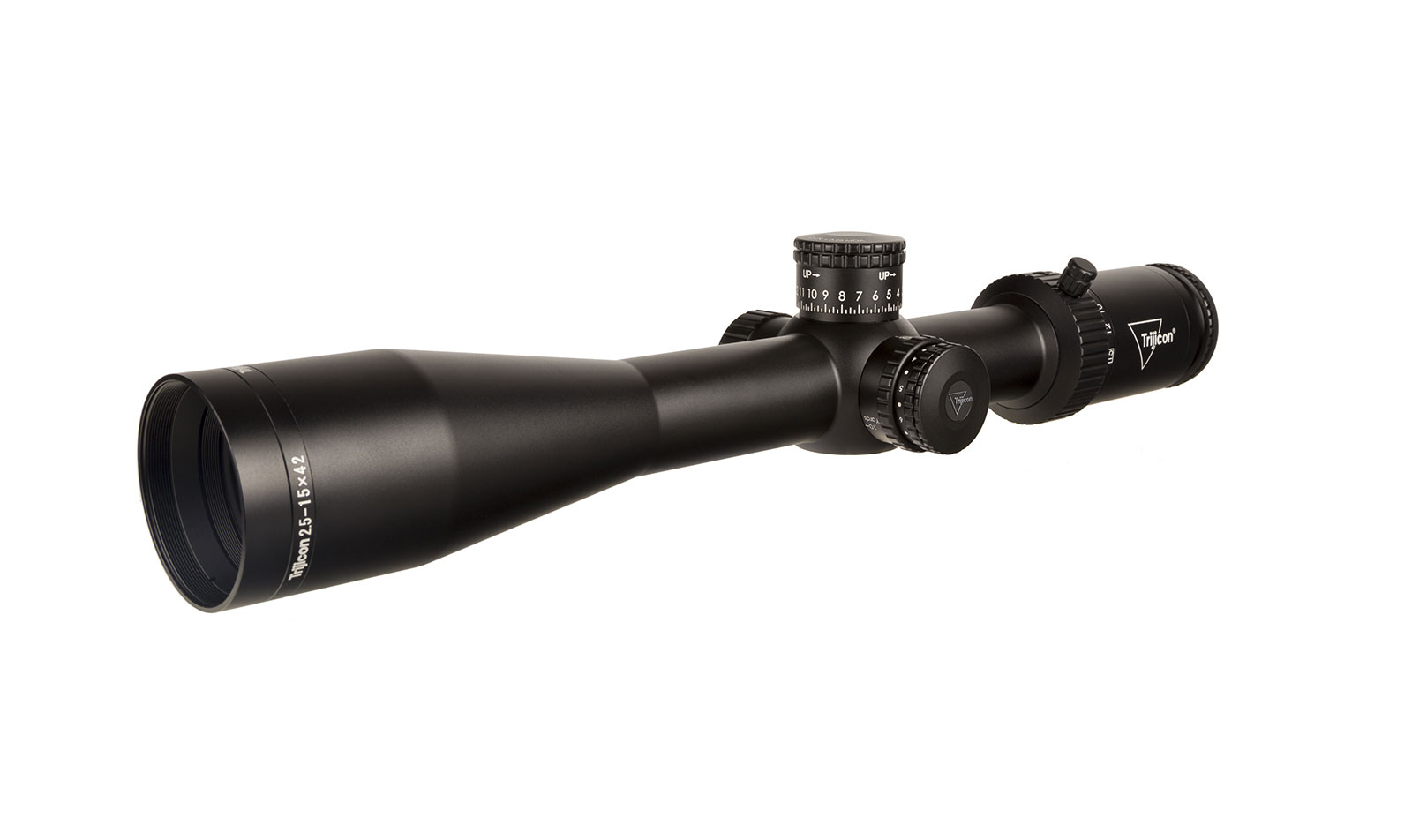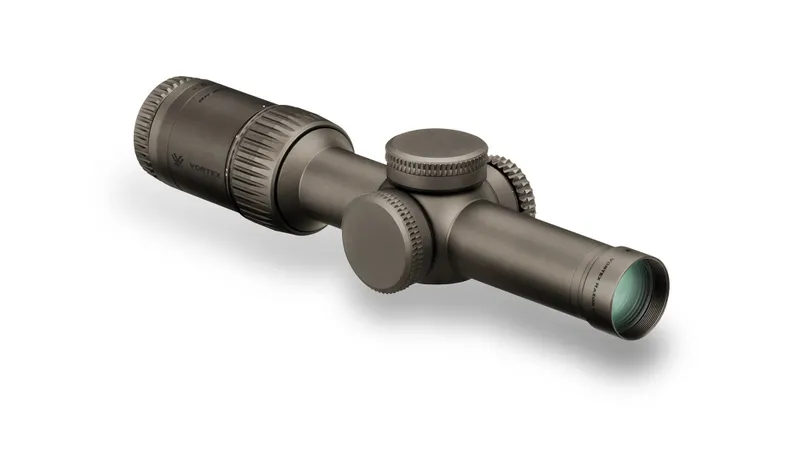

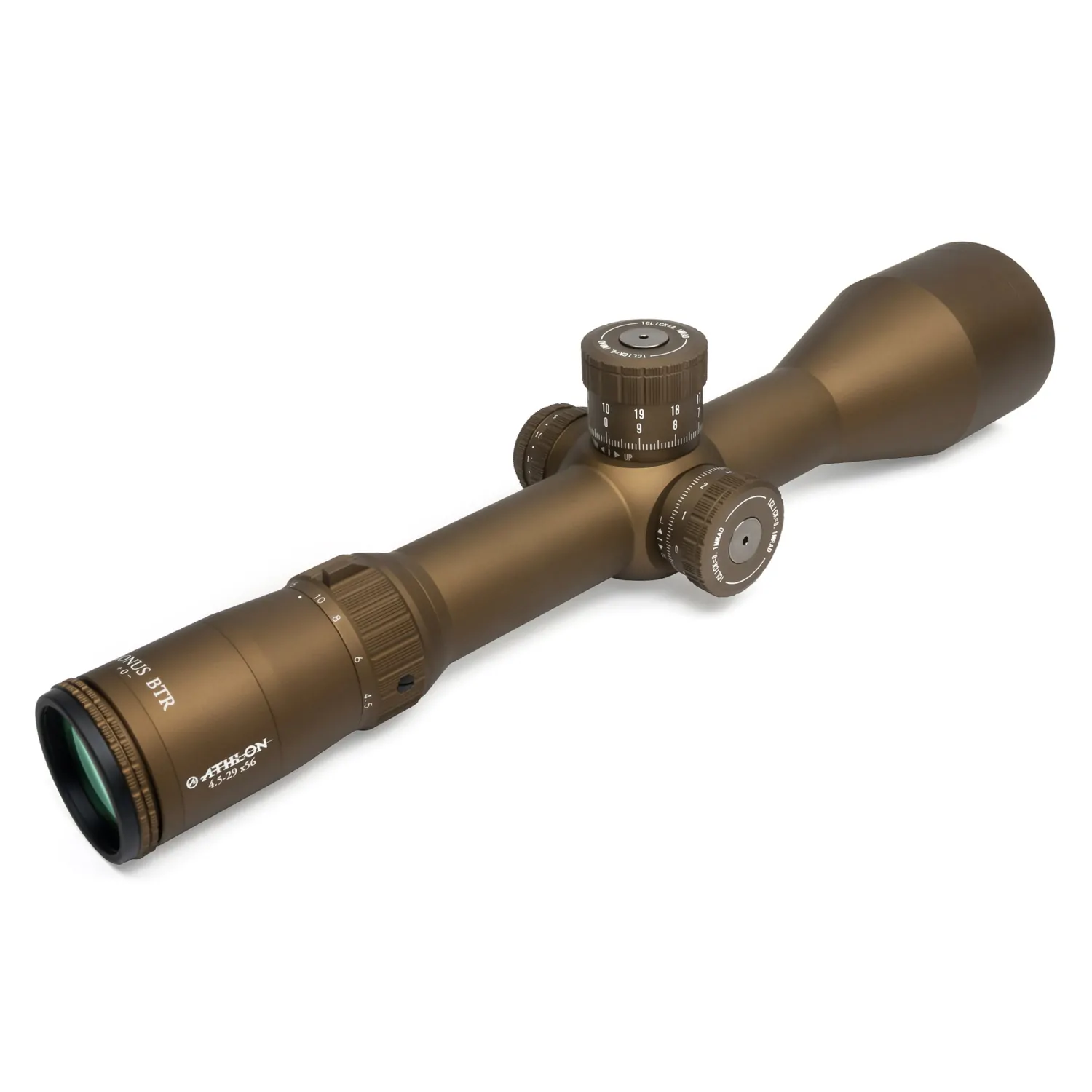
The Athlon Cronus BTR 4.5-29×56 arrives with a presence that immediately signals serious intent. Weighing in at 38 ounces and stretching 15.3 inches, this isn’t a scope you mount on a lightweight mountain rifle without accepting the trade-off. The machining is clean, with sharp but not excessive edges on the turrets and a matte finish that resists glare effectively. The 56mm objective bell dominates the visual profile, and while some find it imposing, it’s purposeful – this scope was designed for light gathering first, portability second. The included throw lever, sunshade, and lens covers feel appropriate for the price point, though not premium.
Build quality reflects Athlon’s positioning as a value-oriented brand that competes above its price class. The tube is 34mm, providing ample adjustment range (27 mils elevation, 14 mils windage), and the construction feels robust without crossing into tank-like territory. The parallax adjustment knob turns smoothly from 25 yards to infinity, though it requires more rotation than some competitors. The magnification ring has appropriate resistance – enough to prevent accidental adjustment but not so stiff that gloved operation becomes frustrating. The scope’s Japanese glass and Philippine assembly represent Athlon’s strategy of sourcing quality components while maintaining competitive pricing.
Optical performance in varied conditions
Glass clarity in the Athlon Cronus BTR 4.5-29×56 is where this scope earns its reputation. Edge-to-edge sharpness at mid-magnifications (10-18x) is genuinely impressive, rivaling optics costing several hundred dollars more. Color rendition leans neutral with a slight warmth, and chromatic aberration is well-controlled across most of the magnification range. At maximum power (29x), you’ll notice some softness creeping into the outer 15-20% of the image, which is typical for this magnification range in this price bracket. The ED glass does its job – purple fringing around high-contrast edges is minimal unless you’re actively hunting for it.
Low-light performance justifies that 56mm objective, though with caveats. During the last 20 minutes of legal shooting light, the scope delivers a noticeably brighter image than 44mm competitors, making target identification easier in timber or shadowed terrain. However, the eyebox tightens considerably above 20x magnification, requiring precise head positioning that can be frustrating in rushed shooting scenarios. In bright midday conditions, the scope excels – mirage becomes visible but manageable, and the resolution remains sharp enough for precision work at extended ranges. I’ve used this scope in everything from foggy Pacific Northwest mornings to high-desert heat, and it handles variable weather without significant performance degradation, though the large objective does collect condensation more readily than smaller scopes.
Turrets & reticle functionality
The turrets on the Athlon Cronus BTR 4.5-29×56 are tactile and distinct, with 0.1 mil clicks that provide both audible and physical feedback. Each revolution offers 10 mils of adjustment, and the turrets feature a tool-less zero reset that works reliably after hundreds of adjustments. The clicks aren’t quite as crisp as those on a Nightforce or Kahles, but they’re far from mushy – you can count clicks by feel even with gloves, and I’ve never had one fail to register during field use. The exposed turret design invites concern about accidental adjustment, but the tension is calibrated well enough that I haven’t experienced unintended shifts during typical hunting or range work. Tracking has proven accurate across multiple box tests, returning to zero consistently.
The APLR3 FFP MOA reticle (or MIL version, depending on configuration) is functional but not inspired. The Christmas tree holdover section provides plenty of aiming points for wind and elevation holds, and the reticle thickness is appropriate for a first focal plane design – visible but not obtrusive at low power, detailed but not cluttered at high magnification. Illumination offers 11 brightness levels, with settings 3-5 being most useful for low-light hunting scenarios. The reticle doesn’t wash out in daylight, which is a common failing in budget-tier scopes. My primary criticism is the somewhat busy appearance when dialed to maximum magnification – there’s a lot of visual information competing for attention, which can slow target acquisition in dynamic shooting situations. For deliberate precision work, it’s excellent. For rapid engagement, simpler reticles prove faster.
Real-world use across shooting disciplines
I’ve mounted the Athlon Cronus BTR 4.5-29×56 on three different platforms over 18 months: a 6.5 Creedmoor bolt gun for PRS-style matches, a .308 Winchester for western big game hunting, and briefly on a .223 Remington for varmint work. In competition, the scope performs admirably – the magnification range handles everything from close barricade work at 4.5x to distant steel at 29x, and the turrets track reliably through rapid adjustments. The weight becomes noticeable during stages requiring positional shifts, but it’s manageable. For precision rifle applications where the rifle stays mostly stationary, this scope delivers performance that punches well above its price point.
Hunting applications reveal both strengths and limitations. The low-end 4.5x magnification works adequately for timber hunting, though I’d prefer a true 3x or 4x for close brush work. The scope truly shines in open country where shots extend beyond 300 yards – the optical quality and adjustment range make long-distance ethical shooting entirely feasible. However, that 38-ounce weight becomes burdensome on multi-mile stalks, and the large objective can snag on pack straps or vegetation. For hunters who shoot from vehicles, blinds, or fixed positions, the weight penalty is irrelevant and the optical benefits are substantial. For backcountry hunters covering serious elevation, lighter alternatives deserve consideration. Varmint hunting represents perhaps the ideal application – the rifle remains mostly stationary, the magnification range accommodates varying distances, and the tracking precision supports quick adjustments between targets.
How it compares to direct competitors
| Feature | Athlon Cronus BTR 4.5-29×56 | Vortex Razor HD Gen II 4.5-27×56 | Nightforce ATACR 5-25×56 |
|---|---|---|---|
| Street Price | $1,400 | $2,100 | $2,800 |
| Weight | 38 oz | 48 oz | 38 oz |
| Adjustment Range | 27 mils | 23 mils | 30 mils |
| Glass Quality | Very Good | Excellent | Excellent |
| Turret Feel | Good | Very Good | Excellent |
| Warranty | Lifetime | Lifetime | Lifetime |
Against the Vortex Razor HD Gen II 4.5-27×56, the Athlon delivers 85% of the performance at roughly 65% of the price. The Razor’s glass shows slightly better edge clarity and the turrets feel more refined, but you’re paying $700 more for incremental improvements. The Vortex also carries 10 additional ounces, making the Athlon the lighter choice – an unusual position for a budget-oriented scope. For shooters who can afford the Razor, it’s the better optic. For those stretching budgets, the Athlon doesn’t feel like a compromise.
The Nightforce ATACR 5-25×56 operates in a different performance tier entirely. The glass is noticeably superior, with better contrast and resolution at all magnifications. Turrets are more precise, the eyebox is more forgiving, and the overall build inspires confidence that the Athlon can’t quite match. However, you’re paying double the Athlon’s price for that performance. The Nightforce makes sense for professionals or serious competitors where equipment failure isn’t acceptable. The Athlon serves well for dedicated amateurs and hunters who need excellent performance without professional-grade pricing. A closer competitor is the Burris XTR III 5.5-30×56, which offers similar glass quality and slightly better turrets at a comparable price point, though with less magnification range on the low end.
Common mistakes when setting up this scope
The most frequent error I’ve observed involves mounting height selection. The 56mm objective requires higher rings than shooters accustomed to 44mm scopes anticipate. Medium-height rings often result in the objective bell contacting the barrel, particularly on rifles with slender contours or aggressive stock designs. I’ve found that high rings (1.4-1.5 inches) provide adequate clearance on most platforms while maintaining a reasonable cheek weld. Test fit before permanently mounting – the objective bell’s diameter catches people off guard, and discovering clearance issues after lapping rings and applying Loctite is frustrating.
The second common mistake involves parallax adjustment expectations. This scope’s parallax knob requires more rotation than many competitors, and the markings don’t always align perfectly with actual parallax-free distances – not uncommon in this price range, but it surprises shooters transitioning from higher-end optics. Don’t trust the yardage markings blindly. Instead, adjust while observing the target until the reticle remains stationary when you shift your eye position. I’ve also seen shooters over-torque the turret cap screws during zero reset procedures, stripping the relatively soft metal. Finger-tight plus a quarter turn is sufficient – this isn’t a scope that requires gorilla strength during setup. Finally, some users mount the throw lever in positions that interfere with the turrets or create snagging points. Test the lever position through the full magnification range before committing to its placement.