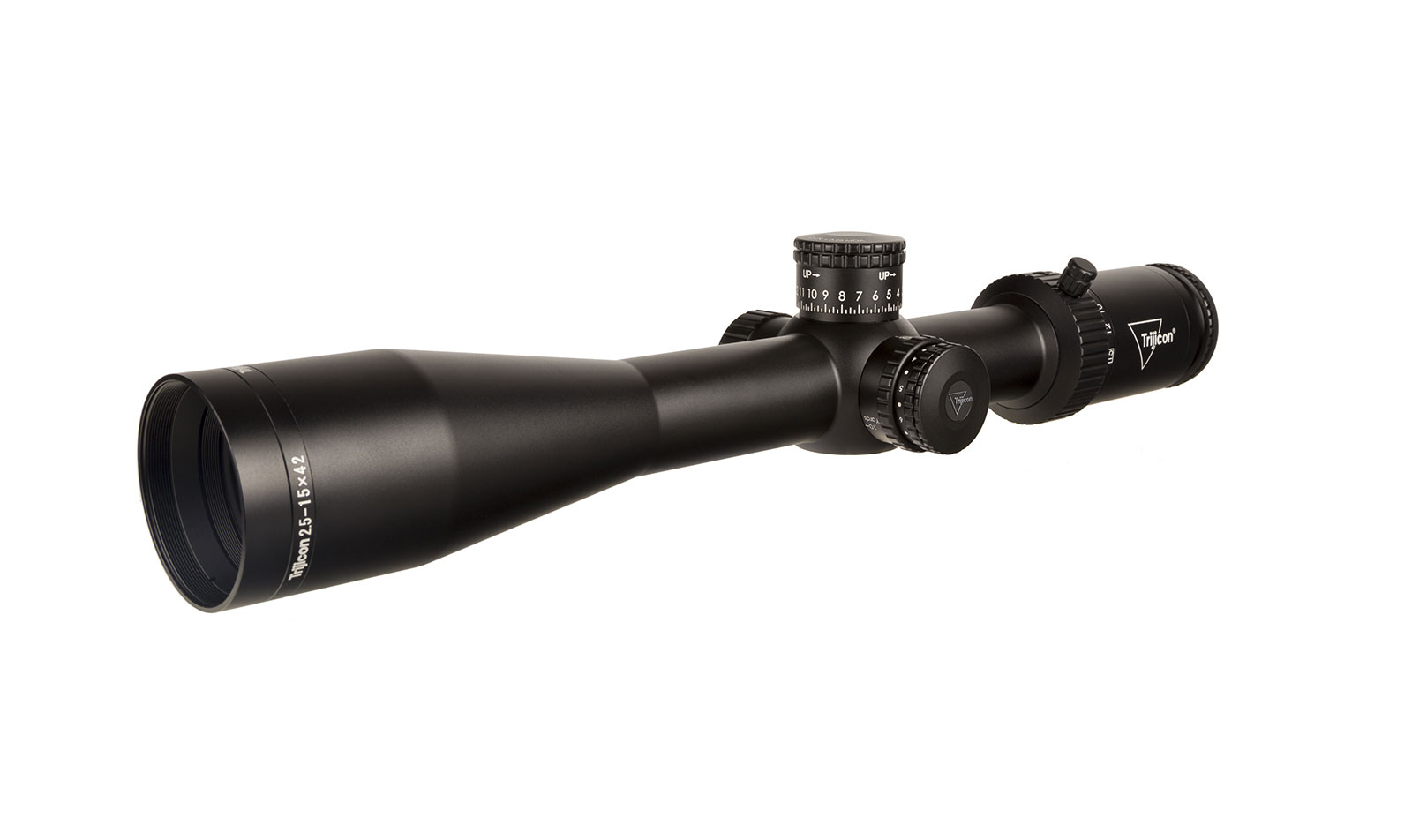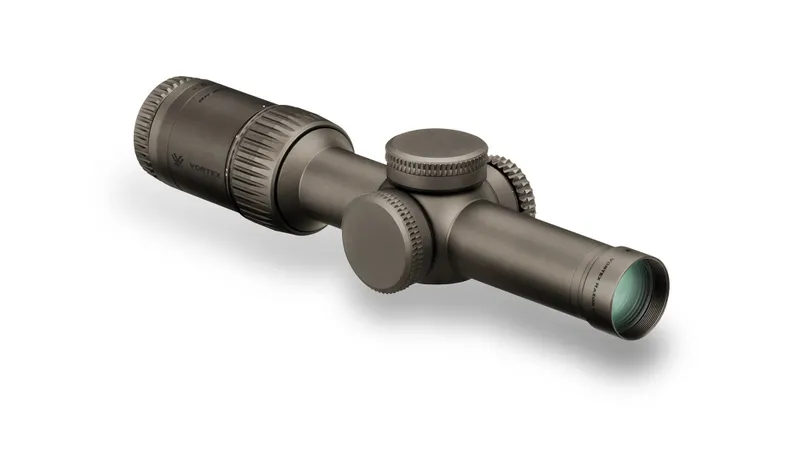

Bushnell Match Pro 6-24×50
First Impressions & Build Quality
The Bushnell Match Pro 6-24×50 arrives with a no-nonsense presentation that immediately signals its intended market – precision shooters and competitive rifle disciplines rather than traditional hunting. The scope’s 30mm main tube is machined from a single piece of aircraft-grade aluminum, and the finish is a matte black that resists glare without feeling overly tactical. At 25.6 ounces, the Bushnell Match Pro 6-24×50 sits in a comfortable middle ground – substantial enough to feel robust but not punishing on a rifle you’ll carry any distance. The turrets are exposed and feature tool-free zero reset, while the side parallax adjustment moves with consistent resistance from 10 yards to infinity.
Build quality reflects Bushnell’s recent push upmarket, though you’ll notice this isn’t quite at the level of European glass in the same price bracket. The machining is clean with tight tolerances, and the anodizing appears durable after several months of use. The ocular bell houses a fast-focus eyepiece that locks firmly once set, and the magnification ring turns smoothly with clear detents at whole-number magnifications. Weatherproofing is handled through O-ring seals and argon purging, which has proven reliable through rain and temperature swings from 20°F to 95°F. The flip-up lens covers included are functional but basic – you’ll likely upgrade them if you’re particular about such things.
Optical Performance in Field Conditions
Glass clarity in the Bushnell Match Pro 6-24×50 is good but not exceptional, which is the honest assessment after extended field use. Edge-to-edge sharpness at lower magnifications is quite respectable, with only minor softening in the outer 15% of the image at 6x. Push it to 24x, and you’ll see more pronounced edge distortion – acceptable for target work where you’re focused on the center reticle anyway, but noticeable if you’re glassing for game. Color rendition is neutral without the warm cast some budget optics exhibit, and resolution is sufficient to distinguish .22 caliber holes at 100 yards on white paper when conditions cooperate. Chromatic aberration is well-controlled in the center two-thirds of the image but becomes visible as purple fringing against high-contrast backgrounds near the edges at higher magnifications.
Low-light performance is where this scope shows its price point most clearly. Twilight usability is adequate but trails behind competitors using ED glass or better lens coatings. In the final 20 minutes of legal shooting light, you’ll find yourself wishing for more transmission – the image dims noticeably compared to optics in the $800-plus range. The 50mm objective helps, but the glass itself is the limiting factor. In bright to moderate light, the scope performs admirably for precision shooting tasks. I’ve used it extensively from 300 to 800 yards, and target resolution remains sharp enough for reliable shot placement when atmospheric conditions are decent. For PRS-style competition or range work, the optical package delivers what you need. For hunting in variable light or thick timber, you’d benefit from something with better glass.
Turrets & Reticle Functionality
The turrets on the Bushnell Match Pro 6-24×50 are where this scope earns its keep. Both windage and elevation adjustments are 0.1 mil clicks with pronounced tactile and audible feedback – you’ll never question whether a click registered. Each revolution provides 10 mils of adjustment, with a visual and tactile indicator showing which revolution you’re on. The zero-stop function works reliably: loosen the top cap’s set screws, dial to zero, retighten, and you’re set. I’ve tracked these turrets through over 400 rounds of 6.5 Creedmoor, dialing for drops from 300 to 900 yards, and return-to-zero has been consistent within 0.1 mil every time. The turret caps are tall enough to grip with gloves, and the numbers are laser-etched rather than printed, so they won’t wear off.
The Deploy MOA reticle (one of several options) uses a floating center dot with hash marks for holdovers and wind calls – functional but not groundbreaking. The reticle is first focal plane, so it scales with magnification, which is essential for this type of shooting. Illumination offers 11 brightness settings controlled by a side-mounted dial, with off positions between each setting. Daylight-bright it is not – even at maximum, the illumination is better suited for low-light conditions than bright sun. That said, the reticle’s design is visible without illumination in most conditions. Parallax adjustment requires attention; I’ve found the markings to be approximate at best, and you’ll need to dial by looking at the image rather than trusting the yardage indicators. Once set correctly, though, parallax error is eliminated effectively across the magnification range.
Real-World Use: Range to Field Testing
On the range, the Bushnell Match Pro 6-24×50 performs exactly as its design suggests – this is a precision instrument for known-distance shooting. I’ve run it primarily on a Bergara B-14 HMR in 6.5 Creedmoor, and the scope complements that platform well. Tracking is reliable and repeatable, which is the baseline requirement for any scope in this category. At 600 yards, dialing 3.6 mils of elevation puts rounds on a 10-inch plate consistently, and returning to zero brings you back to a 100-yard zero without fuss. The eye box is forgiving enough for prone shooting but tightens up noticeably above 18x, requiring more deliberate head placement. For PRS or NRL-style competition where you’re shooting from awkward positions, this can slow you down compared to scopes with more generous eye relief.
Field testing revealed the scope’s limitations outside its primary mission. I took it on two whitetail hunts in November, and while it’s certainly capable of taking game, it’s not optimized for that role. The weight is manageable, but the magnification range starts too high for quick shots inside 100 yards – 6x minimum means you’re looking at a smaller field of view when a deer steps out at 40 yards. The scope excels when you have time to set up, dial your dope, and make a deliberate shot. On a ridge overlooking a canyon where shots ranged from 350 to 500 yards, it performed beautifully. In a treestand or still-hunting timber, you’d be better served by a 3-15x or 4-16x scope with better low-light glass. After a rainstorm, water beaded well on the lenses thanks to decent coatings, and the scope held zero despite being thoroughly soaked. Durability hasn’t been an issue across several months of transport in a hard case and soft case.
How It Compares to Direct Competitors
The Bushnell Match Pro 6-24×50 sits in a crowded field of sub-$600 precision scopes, and the comparison reveals both strengths and compromises. Against the Athlon Midas TAC HD 6-24×50, the Bushnell offers slightly better turret feel and more positive clicks, but the Athlon edges it out in glass clarity and low-light performance. The Athlon’s reticle options are also more varied and refined for long-range work. Price-wise, they trade positions depending on sales, typically landing within $50 of each other. If optical quality is your priority, the Athlon gets the nod; if you value turret reliability and a proven warranty, Bushnell’s customer service gives it an edge.
Compared to the Vortex Diamondback Tactical 6-24×50, the Bushnell feels like a step up in build quality and turret precision. The Vortex costs about $100 less, and you can feel that difference in the slightly mushier clicks and less refined machining. Both scopes track reliably, but the Bushnell inspires more confidence in its mechanical components. Against the Arken SH4 Gen 2 6-24×50, you’re looking at similar pricing with different trade-offs – the Arken offers an illuminated reticle with better daylight brightness and arguably better glass for the money, but Bushnell’s established reputation and warranty network provide peace of mind that a newer brand can’t match. For someone buying their first precision scope, the Bushnell represents a safer bet with proven long-term support.
| Feature | Bushnell Match Pro 6-24×50 | Athlon Midas TAC HD 6-24×50 | Vortex Diamondback Tactical 6-24×50 |
|---|---|---|---|
| Weight | 25.6 oz | 27.9 oz | 23.3 oz |
| Turret Clicks | 0.1 mil, excellent | 0.1 mil, very good | 0.1 mil, good |
| Glass Quality | Good | Very good | Good |
| Low Light | Adequate | Good | Adequate |
| Price Range | $450-550 | $500-600 | $350-450 |
Common Mistakes When Using This Scope
The most frequent error I see with the Bushnell Match Pro 6-24×50 is mounting it too far forward on the rail. The eye relief is listed at 3.7 inches, and that’s accurate, but the scope’s length and eyepiece design mean you need to position it carefully to achieve a full sight picture without scope shadow. Mount it where it feels natural with your cheek weld first, then adjust your rings accordingly – don’t just center it on the rail and hope. I initially mounted mine a half-inch too far forward and spent the first range session fighting a narrow eye box. Moving it back transformed the usability. Another common mistake is trusting the parallax markings literally. The yardage indicators are approximations; always dial parallax by looking at the target and adjusting until the reticle doesn’t shift when you move your eye, rather than setting it to a number and assuming you’re good.
Many shooters also underestimate how much this scope’s performance depends on proper magnification selection for the task. Running it at 24x for every shot is tempting but unnecessary and counterproductive. At maximum magnification, mirage becomes a real problem on hot days, and the eye box tightens considerably. For most practical shooting inside 600 yards, 12-18x provides better field of view, more forgiving eye relief, and a clearer image through atmospheric distortion. Save 24x for calm days and long shots where you need every bit of resolution. Finally, some users neglect to properly set the zero-stop, either skipping it entirely or setting it incorrectly, which defeats one of the scope’s best features. Take the ten minutes to set it right after zeroing – loosen the screws on the elevation turret cap, lift and rotate the turret body to align zero with the indicator line, then retighten. It’s a simple process that prevents dialing below zero and losing your reference point.