
The Leupold VX-3HD 2.5-10×42 sits in an interesting position within Leupold’s lineup – above the entry-level Freedom series but below the premium VX-5HD and VX-6HD models. This scope targets hunters who need a versatile magnification range without breaking the bank, and after several months of field use across whitetail woods, open country mule deer hunts, and variable weather conditions, I’ve developed a clear picture of where this optic excels and where it shows its compromises. The Leupold VX-3HD 2.5-10×42 carries a street price around $500-600, positioning it against serious competition from European and Asian manufacturers who’ve dramatically improved their mid-tier offerings in recent years.
What makes the Leupold VX-3HD 2.5-10×42 appealing on paper is its combination of a forgiving low-end magnification for close encounters, enough top-end power for ethical shots to 400 yards, and Leupold’s reputation for warranty support and American-based service. The 42mm objective strikes a balance between light transmission and scope weight, though as we’ll discuss, this isn’t a particularly lightweight optic despite its moderate objective size. I mounted this scope on both a .308 Winchester bolt gun and a .30-06 for extended testing, primarily using the Duplex reticle version, which remains the most popular choice among traditional hunters.
First Impressions & Build Quality
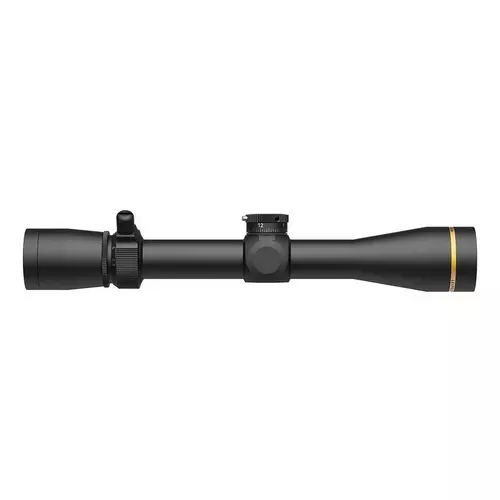
The Leupold VX-3HD 2.5-10×42 arrives with typical Leupold packaging and presentation – nothing fancy, but the scope itself feels substantial in hand. At 12.6 ounces, it’s not heavy by any stretch, but it’s also not as svelte as some competitors with similar objective sizes. The matte finish is well-executed and resists minor scratches reasonably well, though I did notice some wear on the magnification ring after sliding in and out of a rifle scabbard repeatedly during a Colorado elk hunt. The scope tubes are one-inch diameter, which limits your mounting options compared to 30mm tubes but keeps things simple and compatible with a wide range of rings.
Construction quality feels solid without being exceptional. The eyepiece rotates smoothly for diopter adjustment, and there’s no play in the magnification ring or turrets. Leupold uses aircraft-grade aluminum for the main tube, and the scope is both waterproof and fog-proof with nitrogen purging. I submerged it in a creek during one particularly clumsy stream crossing, and it showed zero internal fogging afterward. The eye relief is advertised at 3.7-4.2 inches depending on magnification, which proved accurate in practice – comfortable but not overly generous, requiring some attention to cheek weld consistency when transitioning between magnification settings.
Optical Performance in the Field
Glass clarity in the Leupold VX-3HD 2.5-10×42 is good but not outstanding when compared directly to European glass in the same price range. Center sharpness is quite respectable across the magnification range, with resolution holding up well enough for precise shot placement on vitals out to 300-350 yards. Edge clarity shows the expected softness you’d find in this price class, with some chromatic aberration visible in high-contrast scenarios – branches against bright sky, for example – particularly at higher magnifications. This isn’t a deal-breaker for hunting applications where you’re focused on the center of the image, but it’s noticeable if you’re comparing side-by-side with premium glass.
Low-light performance is where this scope shows its limitations most clearly. The 42mm objective and Leupold’s Twilight Max Light Management System help, but in genuine last-light conditions – that critical 20 minutes before legal shooting ends – the VX-3HD falls behind competitors with better coatings or larger objectives. I found myself struggling to clearly resolve antler details on a buck at 200 yards about 15 minutes after sunset, where a hunting partner’s Zeiss V4 on a similar rifle maintained better contrast and detail. In full daylight and moderate overcast conditions, the scope performs admirably. Color rendition is neutral without being particularly vibrant, and brightness is adequate for 90% of hunting scenarios. Just don’t expect it to extend your shooting window significantly in marginal light.
Turrets & Reticle Functionality
The Leupold VX-3HD 2.5-10×42 comes standard with finger-adjustable turrets that offer 1/4 MOA clicks. These turrets are designed for zero-and-forget hunting use rather than dialing for elevation, and they perform that role adequately. The clicks are tactile enough to feel but not particularly crisp or defined – you’ll hear them more than feel them in many cases. Each turret offers 60 MOA of total adjustment, which provides sufficient latitude for zeroing and accommodating various loads. The turrets are capped, which protects them from accidental adjustment during transport, though the caps feel somewhat flimsy and I’d be concerned about losing one in thick brush.
Reticle options include the standard Duplex, Duplex with CDS (Custom Dial System), and various other configurations. The Duplex reticle I tested is clean, simple, and effective for point-and-shoot hunting within reasonable ranges. The reticle sits in the second focal plane, meaning it remains the same apparent size regardless of magnification – ideal for hunters who want a consistent aiming point. However, this also means any holdover references you mentally establish at one magnification won’t translate to another. The reticle is not illuminated in the standard model, which I didn’t miss for daytime hunting but would appreciate in heavy timber or during those twilight periods. Leupold’s CDS system allows for a custom turret calibrated to your specific load, which is a nice option if you plan to dial occasionally, though most hunters will simply zero at 200 yards and hold for closer or farther shots.
Real-World Use Across Conditions
I used the Leupold VX-3HD 2.5-10×42 across three distinct hunting scenarios: whitetail hunting from treestands in mixed hardwoods, spot-and-stalk mule deer in open sage country, and one unsuccessful but educational elk hunt in Colorado timber. In the whitetail woods, the 2.5x low end proved genuinely useful for quick target acquisition when deer appeared at 30-40 yards, and I appreciated the wide field of view for tracking movement through brush. At 10x, I could comfortably assess antlers and make precise shots out to 250 yards, which covered every realistic scenario I encountered. The scope mounted low enough on a standard hunting rifle that I maintained a natural cheek weld without comb risers or awkward head positioning.
During the western hunts, I pushed the scope harder and found its limitations more apparent. Glassing at 10x for extended periods caused noticeable eye fatigue compared to higher-quality glass, and I found myself reaching for binoculars more frequently than I would with a scope featuring better optical quality. In one instance, I had a potential shot at a mule deer buck at approximately 380 yards in variable wind – within my rifle’s capability and my comfort zone – but I struggled to confidently resolve small details through mirage at 10x, ultimately passing on the shot. The scope handled a sudden afternoon thunderstorm without issues, maintaining zero afterward despite being thoroughly soaked. Temperature swings from 20°F mornings to 50°F afternoons caused no problems with focus or internal fogging.
How It Compares to Competitors
The mid-tier hunting scope market is brutally competitive, and the Leupold VX-3HD 2.5-10×42 faces strong opposition from both European and Asian manufacturers who’ve closed the quality gap considerably in recent years.
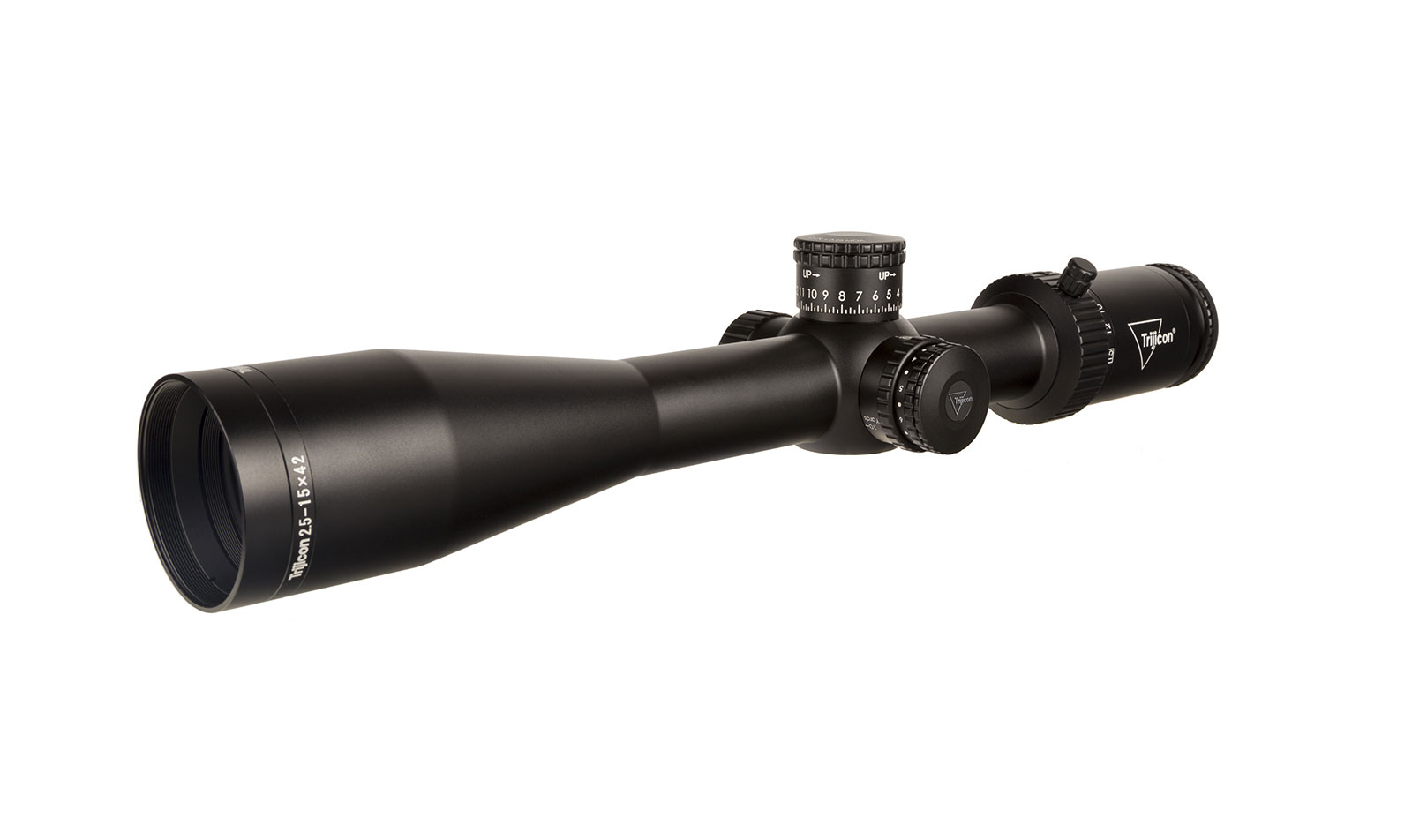
| Feature | Leupold VX-3HD 2.5-10×42 | Zeiss V4 3-12×42 | Trijicon Huron 2.5-10×42 | Vortex Viper HS 2.5-10×44 |
|---|---|---|---|---|
| Street Price | $500-600 | $650-750 | $550-650 | $500-550 |
| Weight | 12.6 oz | 15.9 oz | 14.4 oz | 15 oz |
| Glass Quality | Good | Excellent | Very Good | Good |
| Low Light | Average | Excellent | Good | Good |
| Turret Feel | Average | Good | Very Good | Good |
| Warranty | Lifetime | Limited Lifetime | Lifetime | VIP Lifetime |
| Made In | USA | Germany/Japan | Japan | Philippines |
The Zeiss V4 3-12×42 offers noticeably superior glass and low-light performance but costs $100-150 more and carries significantly more weight. If optical quality is your primary concern and you’re willing to pay the premium, the Zeiss is the better choice. The Trijicon Huron 2.5-10×42 splits the difference – it offers better glass than the Leupold with excellent mechanical reliability at a similar price point, though it lacks Leupold’s extensive dealer network and established reputation. The Vortex Viper HS 2.5-10×44 competes directly on price and offers slightly better low-light capability thanks to the 44mm objective, though build quality feels a step behind the Leupold.
Where the Leupold VX-3HD 2.5-10×42 distinguishes itself is serviceability and support. Leupold’s warranty is backed by a company that’s been around for decades, with service centers that actually answer phones and turn around repairs quickly. I’ve personally had scopes serviced by Leupold with minimal hassle, which matters when you’re depending on an optic for a once-a-year hunt. The VX-3HD also tends to hold resale value better than Asian-made competitors, which matters if you upgrade later. However, purely on optical and mechanical performance per dollar spent, the Leupold doesn’t lead the pack – it’s a solid middle-of-the-road option that trades on reputation and support rather than cutting-edge performance.
Common Mistakes When Using This Scope
The most frequent error I see with the Leupold VX-3HD 2.5-10×42 is improper mounting height, particularly on rifles with larger objective bells or heavier barrels. Hunters often mount this scope too high in an attempt to clear these obstacles, resulting in an uncomfortable cheek weld that requires lifting your head unnaturally. Take time to find the lowest ring height that provides adequate clearance – usually medium rings on standard contour barrels – and test your cheek weld at both 2.5x and 10x magnification, as eye relief changes slightly across the range. A proper, repeatable cheek weld matters far more than you might think for consistent accuracy.
Another common mistake is failing to properly set the diopter for your individual eye. The fast-focus eyepiece makes it tempting to just start shooting, but if you don’t dial in the diopter correctly while looking at a distant object on maximum magnification, you’ll never achieve the sharpest image the scope can deliver. Additionally, many hunters crank the magnification to 10x and leave it there, thinking more magnification is always better. In reality, keeping the scope at 4-6x for most hunting situations provides a wider field of view, better low-light performance, and faster target acquisition. Save 10x for deliberate, longer shots where you need precise aiming point verification. Finally, don’t expect this scope to perform like a $1,500 optic just because it carries the Leupold name – manage your expectations appropriately for a mid-tier hunting scope, and you’ll appreciate what it does well rather than being disappointed by its limitations.
The Leupold VX-3HD 2.5-10×42 is a competent, reliable hunting scope that performs its intended role without particular distinction. It’s ideal for hunters who prioritize American manufacturing, established warranty support, and proven reliability over cutting-edge optical performance or mechanical refinement. If you’re hunting whitetails in the eastern half of the country, shooting within 300 yards in reasonably good light, and you value the peace of mind that comes with Leupold’s service reputation, this scope will serve you well. It’s also a solid choice for someone buying their first quality scope who wants something that won’t require immediate replacement as skills develop.
However, if you’re primarily hunting in low-light conditions, regularly shooting beyond 300 yards, or you’re optically discriminating enough to notice the difference between good glass and great glass, you should seriously consider spending another $100-200 for a Zeiss V4 or evaluating the Trijicon Huron as a better value proposition. The Leupold VX-3HD 2.5-10×42 isn’t a bad scope by any measure – it’s just operating in a market segment where competition has intensified dramatically, and the Leupold name alone no longer guarantees the best performance for the money. It’s a safe, sensible choice that will get the job done, which is exactly what many hunters need, even if it’s not the most exciting recommendation to make.