
First impressions & build quality overview
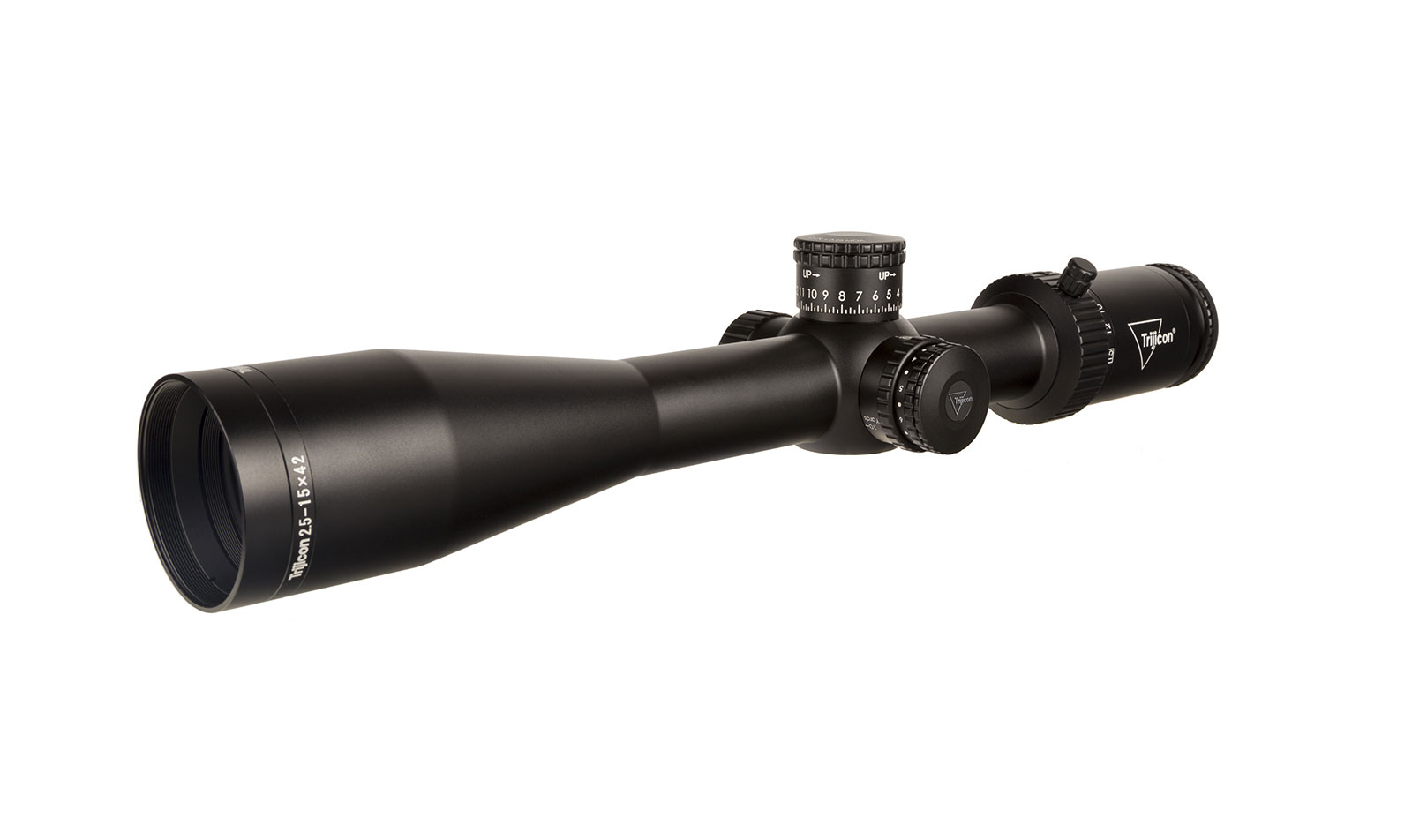
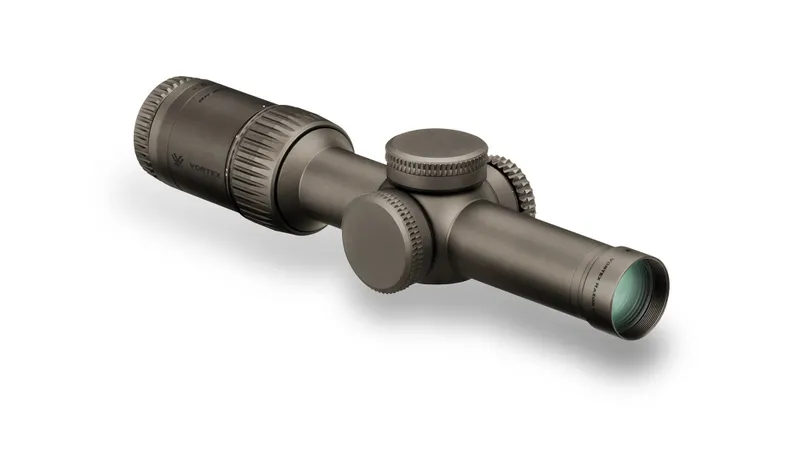
The Primary Arms GLx 4-16×50 arrives with a utilitarian confidence that immediately sets expectations – this is a workhorse scope built for shooters who prioritize function over flash. The Primary Arms GLx 4-16×50 features a 34mm main tube, first focal plane reticle, and a substantial weight of approximately 28 ounces that speaks to its robust construction. The machining is clean, with sharp turret edges and a matte black anodization that resists glare without feeling overly tactical. At first handling, the scope feels dense and purposeful, though it lacks the refined polish of European glass. The included throw lever, zero stop turrets, and locking diopter are features typically found at higher price points, which immediately signals Primary Arms’ intent to deliver value through practical features rather than brand prestige.
Build quality holds up under close inspection, with no play in the turrets, a smooth magnification ring that requires moderate force, and a generous eyebox that forgives minor head positioning errors. The objective bell diameter is substantial without being unwieldy, and the scope balances reasonably well on rifles with 20 MOA rails. Weather sealing appears thorough, with O-rings visible at all junction points. The scope tube finish shows minor machine marks under magnification, but nothing that affects function. For a scope priced significantly below premium competitors, the construction inspires confidence for field use, though it doesn’t quite match the mechanical refinement of higher-tier optics.
Optical performance in varied field conditions
Glass clarity in the Primary Arms GLx 4-16×50 is competent rather than exceptional, delivering sharp center resolution with noticeable edge softness beginning around 70% of the image. In bright midday conditions, the scope performs admirably, with good contrast and minimal chromatic aberration on high-contrast edges like tree branches against sky. Color rendition leans slightly cool but remains natural enough for game identification. The real test comes at dawn and dusk, where the 50mm objective and Japanese glass provide usable light transmission but fall short of alpha-tier optics. Whitetail in heavy shadow at last light remain identifiable at 12x, but fine detail like antler points becomes ambiguous compared to German or Austrian glass in the same conditions.
Parallax adjustment is functional across the 25-yard to infinity range, though the side focus knob requires careful attention – the sweet spot can be narrow, particularly at higher magnifications. In variable weather, the scope handled light rain and humidity without internal fogging, though lens coatings aren’t quite hydrophobic enough to shed water droplets cleanly. Mirage becomes visible through the scope around 14x on hot days, which is typical for this magnification range. For hunters operating primarily in good light or early season conditions, the optical performance is more than adequate. Those frequently hunting thick timber at closing time or requiring absolute clarity for long-range shot confirmation will notice the limitations compared to premium European glass.
Turrets & reticle functionality under pressure
The turrets on the Primary Arms GLx 4-16×50 use a 0.1 mil adjustment system with audible and tactile clicks that are distinct without being overly stiff. Each click requires deliberate finger pressure, which prevents accidental adjustment but can slow rapid dialing when wearing gloves. The turrets tracked accurately through multiple box tests, returning to zero consistently over 30 mils of total travel. The zero stop function works reliably once set, though the initial setup requires removing the turret cap and following the included instructions carefully. Turret caps are low-profile and secure, staying in place during rough handling but remaining accessible when needed. The exposed turret design is practical for precision shooting but accumulates dirt and debris during field carry, requiring occasional cleaning.
The ACSS reticle options (typically the Griffin or Apollo variations) are where this scope distinguishes itself in first focal plane functionality. The reticle remains usable at 4x for close encounters while providing precise holdover references at full magnification. The illumination system offers multiple brightness levels controlled by a side-mounted dial, with daylight-visible settings that don’t wash out the reticle and night-vision compatible dim settings. Battery life is rated at several hundred hours, and the CR2032 battery is easily accessible. Under recoil from magnum cartridges, the reticle has remained crisp and the illumination electronics have proven reliable. The Christmas tree-style holdovers work well for wind calls and ranging, though the reticle can appear busy to shooters accustomed to simpler designs.
Real-world use across hunting scenarios
During mountain mule deer hunts where shots ranged from 150 to 450 yards, the Primary Arms GLx 4-16×50 proved its worth as a practical field tool. The 4x low end provided adequate field of view for locating bedded deer in broken terrain, while 12-14x delivered sufficient resolution for precise shot placement on vitals. The scope’s weight became noticeable during full-day ridge walks above 10,000 feet, but the durability justified the mass when the rifle took inevitable bumps against rocks and tailgates. Dialing for elevation worked smoothly in field positions, and the reticle’s wind holds proved accurate when verified against Kestrel readings. The scope maintained zero through transport and rough handling, which is the fundamental requirement for any hunting optic.
For whitetail hunting in Midwest agricultural settings, the scope handled both treestand ambush scenarios and longer-range field shots competently. The 4x setting worked for scanning edge habitat, though a true 3x or lower would have been preferable in thick cover. At typical whitetail ranges of 100-250 yards, the glass quality was more than sufficient for confident shot placement. The illuminated reticle proved valuable during late evening sits when deer appeared in the final 15 minutes of legal light. Where the scope struggled was in dense timber still-hunting, where the magnification range and overall length made quick target acquisition more cumbersome than a 1-6x or 2-10x optic would have been. This is fundamentally a precision-oriented scope that happens to have a functional low-end magnification, not a true versatile hunting optic.
How it compares to direct competitors
| Feature | Primary Arms GLx 4-16×50 | Athlon Ares ETR 4.5-30×56 | Vortex Viper PST Gen II 5-25×50 |
|---|---|---|---|
| Price | ~$1,000 | ~$1,400 | ~$1,100 |
| Glass Origin | Japan | Japan | Philippines |
| Turret Click Value | 0.1 mil | 0.1 mil | 0.1 mil |
| Weight | 28 oz | 35 oz | 31 oz |
| Reticle Plane | FFP | FFP | FFP |
| Low Light Performance | Good | Very Good | Good |
| Turret Feel | Positive, moderate force | Crisp, lighter | Firm, consistent |
Against the Athlon Ares ETR 4.5-30×56, the Primary Arms offers a more practical magnification range for hunting applications and saves nearly half a pound. The Athlon provides noticeably better glass clarity and light transmission, particularly at the edges and in low light, but costs 40% more. For hunters who need the optical performance and plan to shoot beyond 600 yards regularly, the Athlon justifies the premium. For those prioritizing functional features and field durability within a tighter budget, the Primary Arms delivers better value.
The Vortex Viper PST Gen II 5-25×50 sits at a similar price point and offers comparable build quality with Vortex’s industry-leading warranty. The Vortex has slightly better glass clarity and a more refined turret feel, but the Primary Arms counters with a more useful low-end magnification for hunting and a reticle system that many shooters find more intuitive for field ranging and wind holds. The Vortex makes sense for shooters who value brand support and want higher magnification for target shooting, while the Primary Arms better serves hunters who need a true field optic with precision capabilities. Neither scope reaches the optical quality of Nightforce NX8 or Zeiss V4 models, but both deliver functional performance at roughly half the cost.
Common mistakes when setting up this scope
The most frequent error with the Primary Arms GLx 4-16×50 is failing to properly set the zero stop before heading to the range. The system requires loosening set screws, dialing to your zero position, and resetting the turret, which some shooters skip in their eagerness to shoot. Without this step, the mechanical stop won’t align with your actual zero, negating one of the scope’s key features. Take 15 minutes with the included instructions and a quality hex key set to properly configure the zero stop after confirming your zero – the investment pays dividends every time you dial for distance. Additionally, shooters sometimes over-tighten the turret cap screws, which can strip the relatively soft metal threads. Snug is sufficient; gorilla-tight causes problems.
Another common setup issue involves mounting height and eye relief optimization. The Primary Arms GLx 4-16×50 has approximately 3.5 inches of eye relief, which is adequate but not generous. Mounting the scope too far forward to accommodate the large objective bell results in uncomfortable head positioning and a restricted eyebox. Use appropriately sized rings – typically medium height on most bolt actions – and position the scope so that at full magnification with proper cheek weld, you see a full sight picture without straining. Many shooters also neglect to properly torque the ring screws to specification, either under-tightening and allowing scope movement under recoil or over-tightening and potentially damaging the scope tube. Use an inch-pound torque wrench and follow Primary Arms’ specifications, typically 18-20 inch-pounds for ring screws on a 34mm tube.