
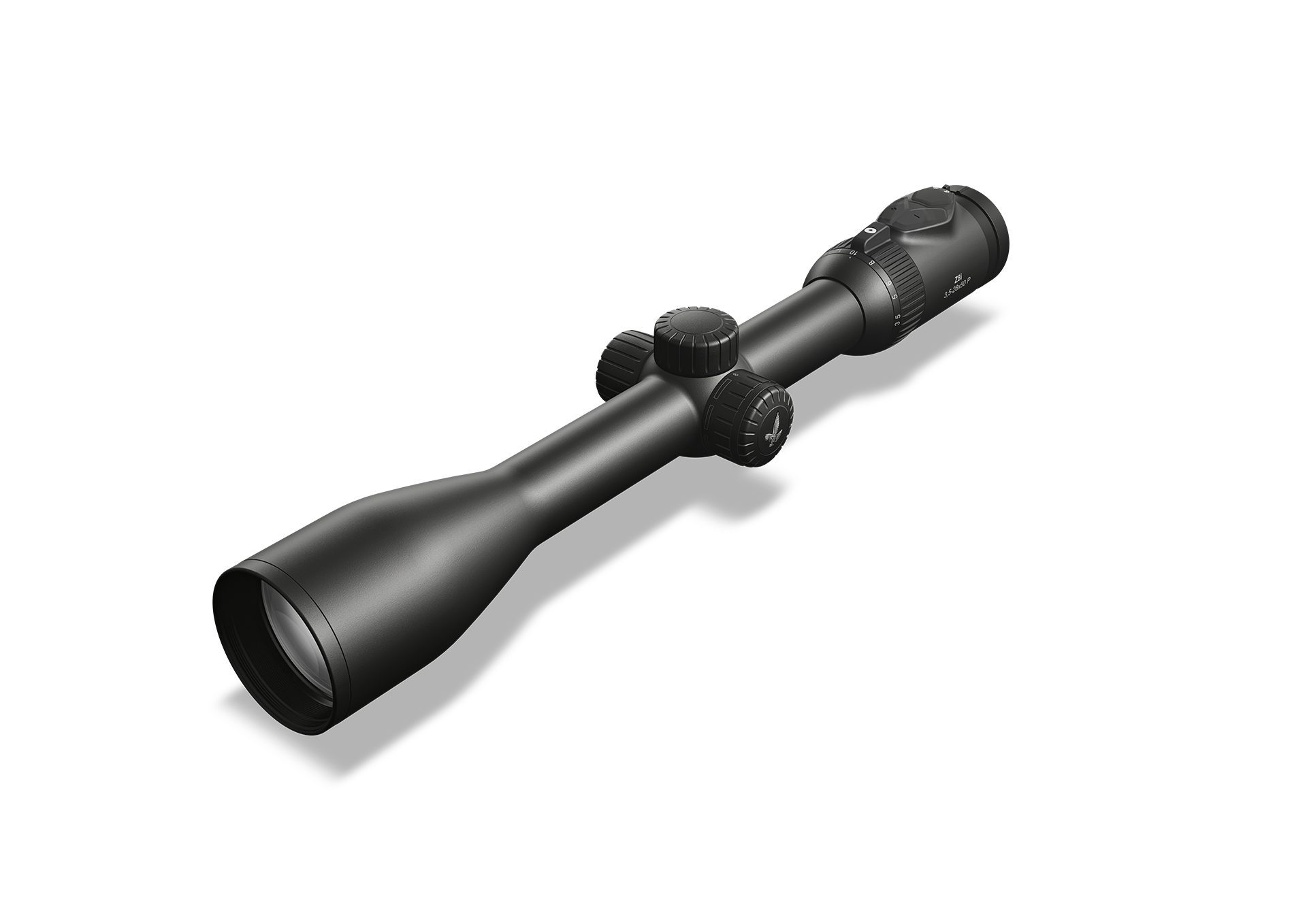
The Swarovski Z8i 3.5-28×50 sits at the premium end of the hunting scope market, commanding a price that makes most shooters pause before reaching for their wallet. This Austrian-made riflescope promises exceptional optical performance wrapped in a surprisingly compact package, with an 8x magnification range that’s meant to handle everything from driven boar at twilight to mountain chamois at distance. After spending several months with this optic across varying conditions – from foggy Scottish mornings to bright alpine afternoons – I can say it delivers on some promises while falling short on others in ways that matter for practical field use.
What makes the Z8i interesting isn’t just the glass quality, which is predictably excellent, but rather how Swarovski balanced the feature set for European-style hunting. The illuminated dot reticle, flex-zoom system, and compact 13.6-inch length suggest this scope was designed with driven hunts and mountain stalking in mind rather than American-style long-range precision work. Understanding where this scope excels – and where it doesn’t – is critical before spending north of $3,000.
Optical Performance: Glass Quality & Low-Light
The Z8i’s optical performance is where Swarovski justifies much of its asking price. Edge-to-edge clarity is exceptional even at 28x magnification, with minimal chromatic aberration and virtually no color fringing when glassing through brush or against bright skies. The HD fluoride glass delivers noticeably better resolution than mid-tier optics, particularly when judging antler points or identifying animals in broken timber at distance. During back-to-back comparisons with a Zeiss V6, the Swarovski showed slightly warmer color rendition and fractionally better contrast in mixed light conditions, though the difference was subtle enough that most shooters wouldn’t notice without direct comparison.
Low-light performance is genuinely impressive, though not miraculous. During the last 20 minutes of legal shooting light, the Z8i transmitted enough light to clearly identify a roe buck at 200 meters when my naked eye was struggling. The 50mm objective and quality coatings work together effectively here. However, the scope doesn’t defy physics – competitors like the Zeiss V8 with a 60mm objective do gather slightly more light in truly marginal conditions. Where the Z8i shines is maintaining color accuracy and contrast as light fades, rather than just raw brightness. I could still judge body condition and make confident identification calls when cheaper scopes had turned animals into gray silhouettes.
Turrets & Reticles: Tracking and Holdovers
The Z8i’s turrets are clearly designed for hunters who dial occasionally rather than tactical shooters who live on their adjustments. The capped windage turret and low-profile elevation turret with ballistic turret option provide adequate functionality, but the clicks lack the crisp, defined feedback you’ll find on a Nightforce or even a mid-range Vortex. Each click is mushy – you feel them, but there’s no sharp mechanical snap. After extended use, I found myself occasionally double-checking my adjustment count. The turrets tracked accurately during box tests, returning to zero consistently over multiple sessions, but the tactile experience inspires less confidence than the price point suggests it should.
The 4W-I reticle (my test model’s configuration) features a simple illuminated center dot with four thin posts – clean and uncluttered for quick target acquisition in timber or during driven hunts. The illumination has eight brightness settings that cover dawn to full sun adequately, though the brightest setting still isn’t daylight-visible in harsh conditions. For holdovers, you’re limited to the post intersections unless you opt for a BRH or BRHX reticle, which adds hash marks. Honestly, this isn’t a holdover-friendly scope system. If you’re planning extensive long-range work with wind calls and multiple elevation holds, you’ll want something with a more feature-rich reticle like the Nightforce MOAR or Zeiss Rapid-Z. The Z8i’s reticle philosophy is “aim small, shoot precisely at one distance” – very European, very traditional.
Real-World Use: Field Testing the Z8i
Carrying the Z8i on a Tikka T3x for several weeks of mountain hunting revealed its greatest practical strength: the compact form factor combined with massive magnification range. At 13.6 inches and 19.4 ounces, this scope doesn’t overwhelm a lightweight hunting rifle the way many high-magnification optics do. Hiking steep terrain, the balanced feel was noticeable compared to longer scopes I’ve used. The 3.5x low end provided genuinely useful field of view for scanning timber and tracking moving game at close range, then the 28x top end allowed precise shot placement on a red stag at 340 meters. That versatility in a single optic is legitimately valuable for mountain hunters who face unpredictable shot distances.
The eyebox proved more finicky than expected, particularly above 20x magnification. Cheek weld needs to be consistent or you’ll get shadowing and lose the full sight picture. This isn’t a “throw the rifle up and instantly see clearly” scope at high magnification – it demands proper shooting fundamentals. The parallax adjustment side-focus is smooth and adequately marked, though I found myself wishing for slightly larger numbers in low light. During a foggy morning stalk, condensation formed on the objective but cleared quickly without penetrating the scope body – the waterproofing held up as expected. One genuine complaint: the magnification ring’s “flex-zoom” system (designed for quick changes) requires more rotation than I’d like between useful hunting magnifications. Going from 5x to 20x means significant hand movement.
How It Compares: Value Against Rivals
| Scope | Magnification | Weight | Length | Approximate Price | Key Advantage |
|---|---|---|---|---|---|
| Swarovski Z8i 3.5-28×50 | 3.5-28x | 19.4 oz | 13.6″ | $3,400 | Compact + clarity |
| Zeiss V8 4.8-35×60 | 4.8-35x | 31.7 oz | 15.9″ | $3,600 | Low-light superiority |
| Nightforce ATACR 5-25×56 | 5-25x | 38 oz | 15.1″ | $3,200 | Turret precision/reliability |
| Leica Magnus 2.4-16×56 | 2.4-16x | 25.4 oz | 13.7″ | $2,900 | True low-end versatility |
Against its natural competitors, the Z8i occupies an interesting middle ground. The Zeiss V8 offers higher magnification and better twilight performance but weighs 60% more – a significant penalty on a mountain rifle. The Nightforce ATACR delivers bombproof turrets and better reticle options for precision shooting but lacks the Z8i’s compact elegance and low-end magnification. The Leica Magnus provides comparable glass quality and a more useful low-end range (2.4x is genuinely better for driven hunts) but tops out at only 16x, limiting long-range capability.
Where the Z8i struggles with value is when you consider scopes slightly below its price point. A Zeiss V6 3-18×50 costs roughly $2,200 and delivers 90% of the Z8i’s optical performance in a similarly compact package – you lose top-end magnification and a bit of twilight capability, but gain $1,200 for ammunition and travel. Similarly, the Leupold VX-6HD 3-18×50 at around $1,800 provides excellent glass and more practical turrets for many hunters. The Z8i makes sense for hunters who genuinely need 25x+ magnification occasionally, demand absolute top-tier glass, and want the lightest possible package to deliver it. If you’re primarily hunting inside 300 meters or don’t regularly shoot in challenging light, you’re paying for capabilities you won’t fully utilize.
The Swarovski Z8i 3.5-28×50 is an exceptional optical instrument that excels at specific tasks while being merely good at others. Its greatest strengths – compact dimensions, outstanding glass clarity, and massive magnification range – make it ideal for alpine hunters pursuing ibex, chamois, or sheep in unpredictable conditions where one moment you’re scanning at close range and the next you’re making a precise 400-meter shot. The scope delivers genuine performance advantages in these scenarios that justify the premium price for serious mountain hunters.
However, this isn’t a universal “best scope” despite the cost. The mushy turrets, finicky eyebox at high magnification, and reticle system better suited to single-distance precision than holdovers mean long-range precision shooters and tactical users should look elsewhere – a Nightforce or Kahles would serve them better. If your hunting rarely extends past 300 meters or you don’t truly need 28x magnification, you’ll get better practical value from a Zeiss V6 or Leica Magnus. The Z8i is for the hunter who knows exactly what it offers and needs those specific capabilities. For that shooter, it’s an outstanding tool. For everyone else, it’s an expensive solution to problems they don’t actually have.