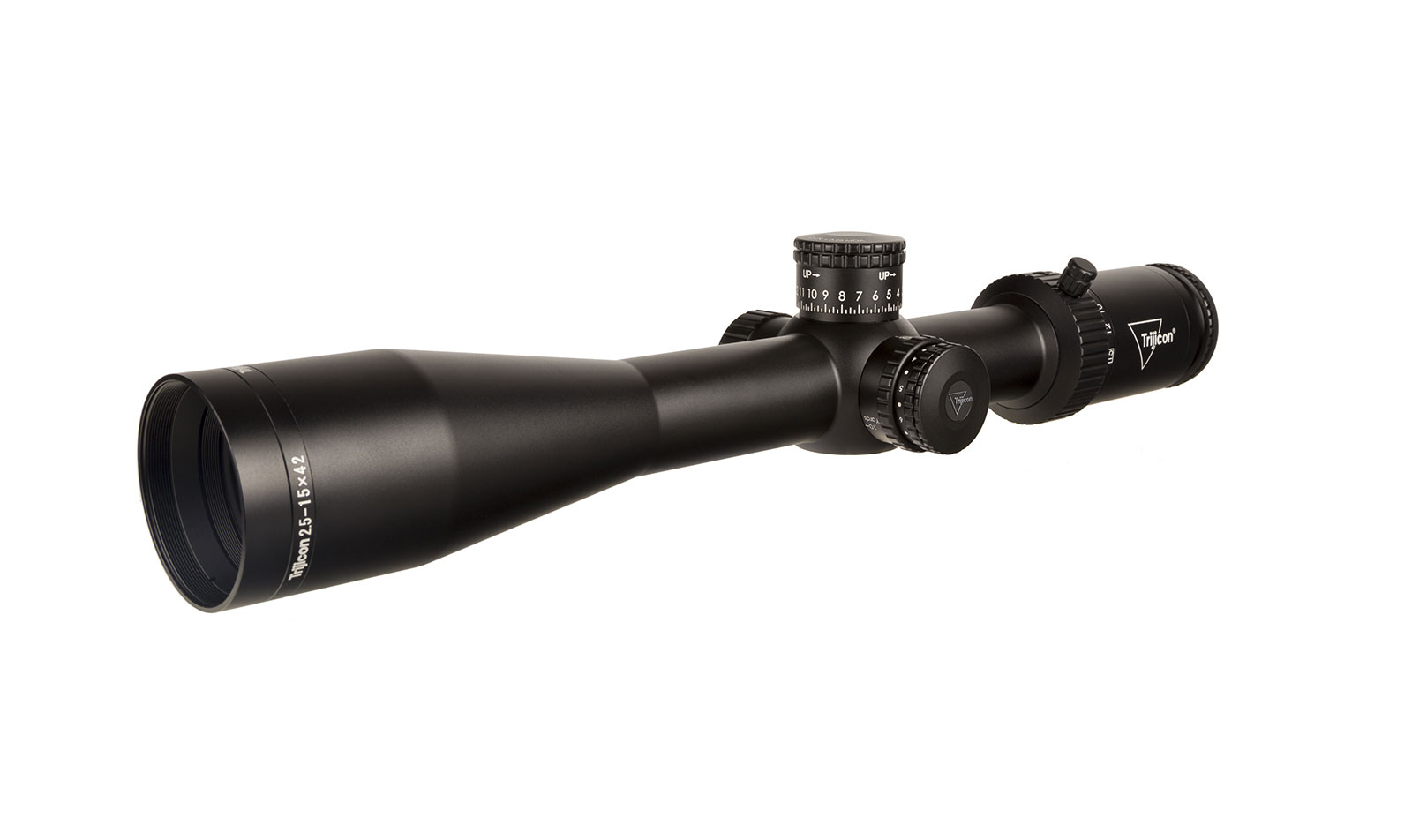

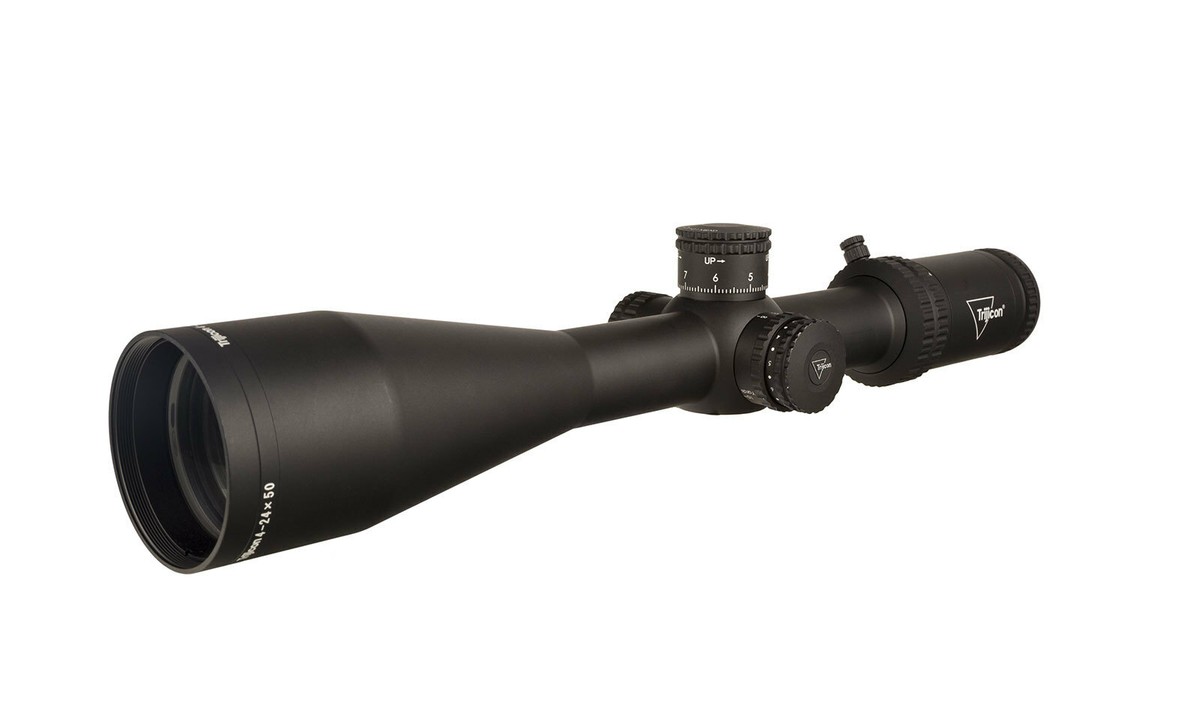
Trijicon Tenmile HX 4-24×50
A Field-Tested Review
The Trijicon Tenmile HX 4-24×50 sits in an interesting position within Trijicon’s lineup – it’s their offering for hunters and precision shooters who need substantial magnification range without stepping into full tactical territory. Priced around $1,400-$1,600 street price, this scope competes directly with established performers from Vortex, Athlon, and even some lower-tier European glass. Trijicon built its reputation on bomb-proof military optics, so the question becomes whether that engineering philosophy translates effectively to a hunting scope where weight, optical clarity, and field usability matter as much as durability.
After running this optic through mountain hunts in Colorado, prairie dog sessions in Wyoming, and multiple range days in varying light conditions, I’ve developed a clear picture of what this scope does well and where it falls short. The Tenmile HX represents a solid middle-ground option with some genuine strengths, but it’s not without compromises that potential buyers should understand before committing.
Trijicon Tenmile HX 4-24×50: First Impressions
Unboxing the Tenmile HX, the first thing you notice is the build quality – this scope feels like it could survive being dropped from a truck bed. The 30mm main tube is robust without being excessively heavy at 27 ounces, though that’s still notably heavier than some hunting-specific designs. The matte finish resists glare effectively, and all controls have positive, tactile feedback that inspires confidence. The included throw lever is a nice touch and actually stays tight, unlike some aftermarket additions that loosen after a few hundred rounds.
The scope ships with Trijicon’s MRAD Center Dot reticle in the first focal plane, which is clean and uncluttered – perhaps too much so for some applications. The center illuminated dot is useful in low light, with 11 brightness settings that range from barely visible to daylight-bright. Eye relief is listed at 3.7 inches, and in practice, I found this accurate but somewhat unforgiving compared to premium European glass. You’ll need consistent cheek weld and head position, which isn’t a dealbreaker but becomes noticeable during quick target acquisition on moving game or transitioning between shooting positions.
Optical Performance in Field Conditions
The optical quality of the Tenmile HX is where things get nuanced. In good lighting conditions – from dawn through mid-afternoon – the glass performs admirably for its price point. Edge-to-edge clarity is good out to about 85% of the image, with some expected softening at the periphery that’s typical for this class. Color rendition is neutral and accurate, which I appreciate when trying to distinguish animals from terrain at distance. At 12-16x magnification, which is where I spent most of my time during actual hunting, the image is crisp enough to confidently identify shot placement opportunities out to 600 yards on deer-sized game.
Where the Tenmile HX shows its mid-tier positioning is in challenging light. During early morning glassing sessions at 5:45 AM in overcast conditions, the scope is usable but noticeably less impressive than premium glass in the $2,000+ range. Light transmission is adequate – Trijicon doesn’t publish figures, but it feels comparable to other scopes in the 85-88% range. The twilight performance is good enough for the last 20 minutes of legal shooting light, but if you’re regularly hunting in thick timber at dawn or dusk, you’ll notice the difference compared to Zeiss or Swarovski. Chromatic aberration is well-controlled in most situations, though I did see some purple fringing when glassing into heavy shadow-to-light transitions at maximum magnification.
Turrets, Tracking, and Reticle Functionality
The turrets on the Tenmile HX are a highlight. They’re exposed, tactical-style adjustments with 0.1 MRAD clicks that are both audible and tactile – you can feel and hear each click even with gloves on. The zero-stop feature works reliably after initial setup, and I experienced zero issues with turret failure or slippage across approximately 400 rounds of testing. Tracking accuracy was verified with box tests and tall target tests, and the scope returned to zero consistently. The rotation is smooth without being loose, and the turret caps provide good protection without being difficult to remove in cold conditions.
The MRAD Center Dot reticle is functional but minimalist. For pure precision shooting where you’re dialing elevation and holding wind, it works perfectly – the floating center dot doesn’t obscure targets, and the wind holds are clearly marked. However, for hunting applications where you might want quick ranging references or more robust holdover options, the reticle feels sparse. The illumination is bright enough for any condition you’d actually shoot in, and the battery compartment is accessible without removing the scope from the rifle. The first focal plane design means your holds remain consistent across the magnification range, which is essential for this type of scope, though it also means the reticle gets quite fine at lower magnifications – sometimes too fine for quick acquisition at 4-6x.
Real-World Use: From Range to Mountain Hunts
On the range, the Tenmile HX performs exactly as you’d hope. Dialing for distance is straightforward, the parallax adjustment is smooth and accurate, and the scope holds zero through recoil without issue. I mounted this on a 6.5 Creedmoor for most testing, and it handled the moderate recoil perfectly. The eye box is adequate but not generous – you’ll notice if your head position shifts, particularly above 18x magnification. For precision rifle work where you’re shooting from stable positions with consistent form, this isn’t problematic. For field shooting from improvised positions, it requires more attention than some competitors.
During actual mountain hunts, the scope’s strengths and limitations became clear. The weight is manageable but noticeable on a lightweight hunting rifle – if you’re building an ultralight mountain rig, there are better options. The durability is genuinely impressive; after several days of scrambling through rocky terrain with the rifle slung, the scope maintained zero and showed no mechanical issues. The magnification range is genuinely useful – 4x is low enough for timber encounters, while 24x provides plenty of resolution for long-range shots across canyons. My primary frustration was the eye relief and eye box when shooting from awkward positions on steep terrain. Quick shots on moving elk required more deliberate head positioning than I’d like, and compared to scopes with more forgiving eye boxes, it added a split-second of acquisition time that could matter in critical moments.
Performance Comparison
| Feature | Trijicon Tenmile HX 4-24×50 | Vortex Razor LHT 4.5-22×50 | Athlon Cronus BTR Gen2 4.5-29×56 | Nightforce SHV 4-14×50 |
|---|---|---|---|---|
| Street Price | $1,400-$1,600 | $1,300-$1,500 | $1,400-$1,600 | $1,000-$1,200 |
| Weight | 27 oz | 21 oz | 35 oz | 20.5 oz |
| Optical Quality | Very Good | Excellent | Very Good | Very Good |
| Low-Light Performance | Good | Very Good | Good | Good |
| Eye Box | Moderate | Generous | Moderate | Moderate |
| Turret Feel | Excellent | Very Good | Excellent | Good |
| Reticle Options | Limited | Limited | Multiple | Multiple |
| Best For | All-around precision/hunting | Mountain hunting | Range/tactical | Hunting durability |
Who Should Buy the Tenmile HX – And Who Shouldn’t
This scope makes the most sense for shooters who prioritize mechanical reliability and turret performance over ultimate optical quality or weight savings. If you’re someone who dials for distance regularly, needs a scope that will survive hard use without babying, and operates primarily in decent lighting conditions, the Tenmile HX delivers solid value. It’s particularly well-suited for western hunters who glass in good light and shoot at extended ranges where precise adjustments matter, or for precision rifle competitors on a budget who need reliable tracking without premium-tier pricing.
You should look elsewhere if low-light performance is critical to your hunting style – timber hunters and those who regularly shoot during marginal light will benefit from spending more on better glass. Similarly, if you’re building a lightweight mountain rifle where every ounce matters, the Vortex Razor LHT saves six ounces with comparable performance. And if you want more reticle options or a more forgiving eye box for dynamic shooting positions, other platforms offer better ergonomics. The Tenmile HX is a workhorse scope that does many things well without excelling dramatically in any single category – which is either exactly what you need or a reason to specialize with something more focused on your specific use case.
The Trijicon Tenmile HX 4-24×50 is a competent, well-built scope that delivers on Trijicon’s reputation for durability while offering solid optical performance for the price. It won’t wow you with edge-of-darkness light transmission or feather-light weight, but it also won’t let you down when you need it to track accurately and hold zero through hard use. After extensive field testing, I’d describe it as a sensible choice rather than an exciting one – it’s the reliable tool that gets the job done without drama. For many shooters, particularly those who value proven mechanical performance and don’t need the absolute best glass, that’s exactly what they’re looking for. Just understand its limitations in eye box forgiveness and twilight performance before committing, and make sure those compromises align with how you actually hunt and shoot.