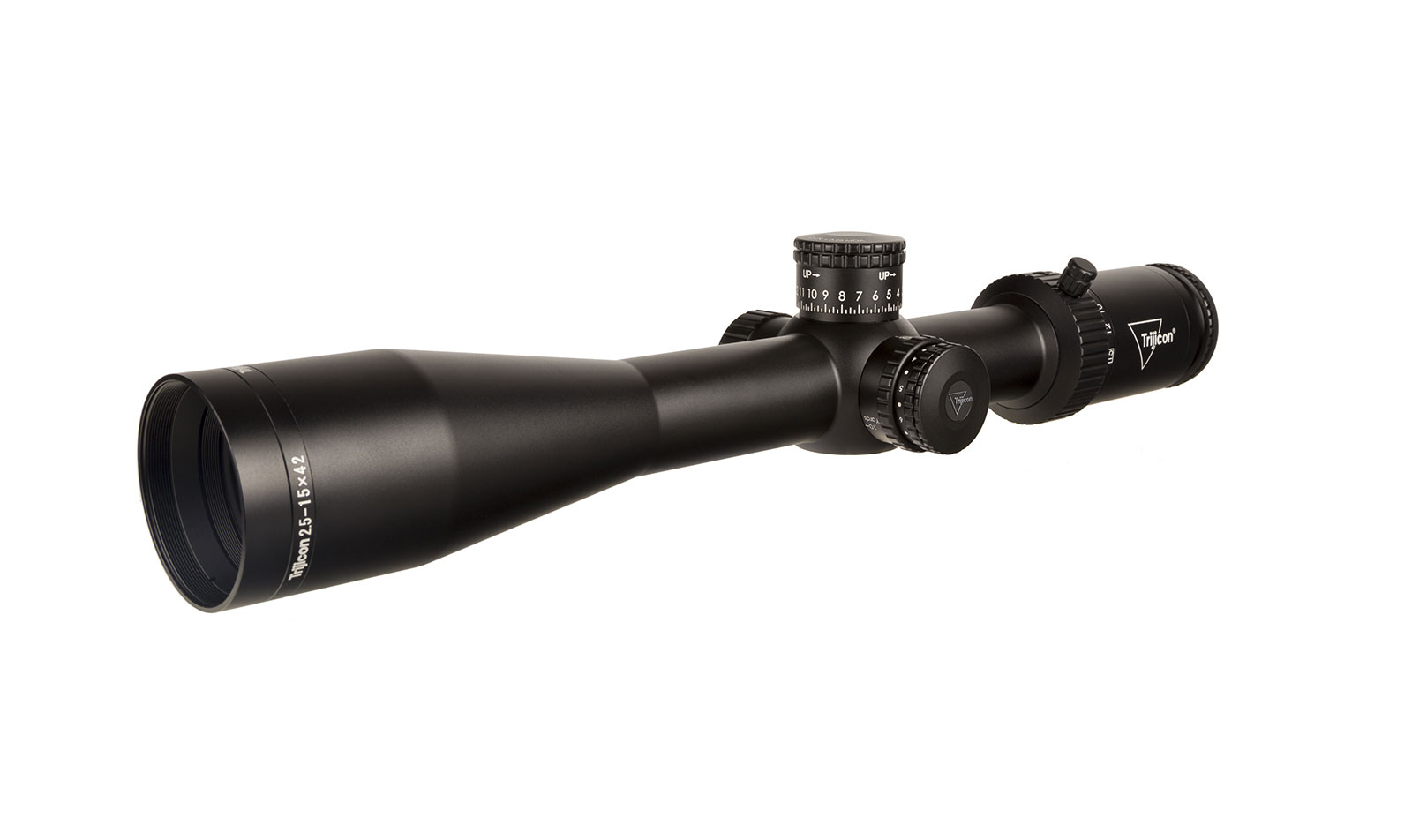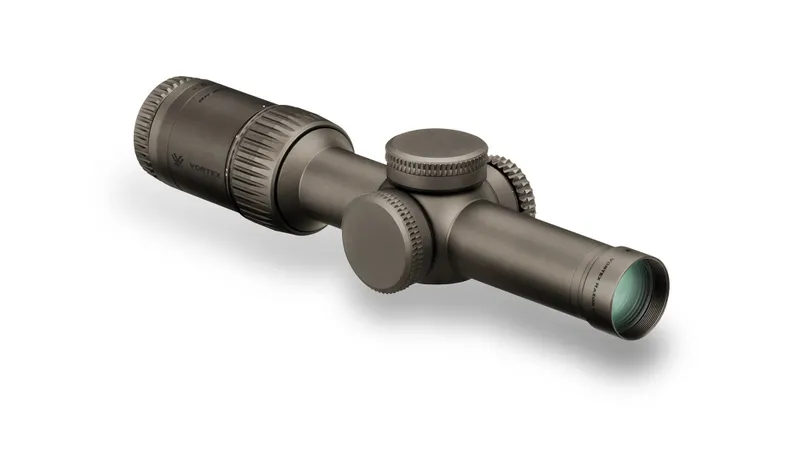

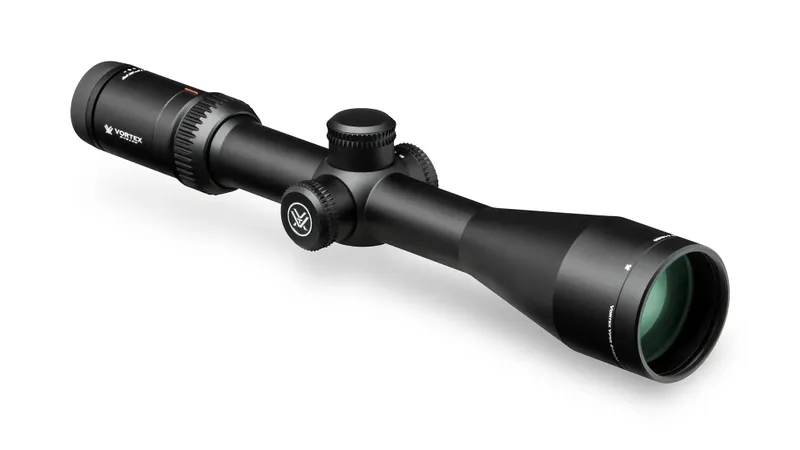
The Vortex Viper HS-T 4-16×44 arrives with a functional, no-nonsense aesthetic that signals its purpose immediately. This isn’t a scope trying to impress you with unnecessary frills – it’s a tool designed for precision shooting and hunting where reliability matters more than cosmetics. The tube is a standard 30mm diameter, and the overall length of 13.3 inches places it in the mid-size category. At 21 ounces, the Viper HS-T 4-16×44 won’t overburden a hunting rifle, but it’s not ultralight either. The anodizing is even and durable, though not quite as refined as what you’ll find on premium European glass.
Build quality reflects Vortex’s commitment to value-oriented durability. The magnification ring turns smoothly with appropriate resistance, while the parallax adjustment dial operates without binding or excessive play. The turrets feel solid under hand, with distinct tactile clicks that inspire confidence. One minor complaint: the eyepiece diopter can feel slightly loose after extended adjustments, though it hasn’t caused issues in field use. The scope is fully waterproof and fog-proof, and the nitrogen purging has held up through temperature swings and heavy rain during testing. For a scope in this price bracket, the construction exceeds expectations without pretending to compete with optics costing twice as much.
Optical Performance in Field Conditions
Glass quality on the Viper HS-T 4-16×44 punches above its weight class in most lighting conditions. Edge-to-edge clarity is good – not exceptional, but certainly adequate for precision work out to 600 yards. The center of the image is sharp and color-accurate, with minimal chromatic aberration when viewing high-contrast targets. Where some budget optics fall apart at higher magnifications, this scope maintains usable resolution all the way to 16x, though you’ll notice some slight softening at the edges when dialed all the way up.
Low-light performance is where the 44mm objective shows its limitations compared to larger scopes. In the final 20 minutes of legal shooting light, the image remains usable but noticeably dimmer than scopes with 50mm objectives or premium glass coatings. For whitetail hunting from a stand during prime evening hours, you’ll have enough light transmission to identify vitals on a deer at reasonable distances. However, if you’re hunting in dense timber or mountainous terrain where shadows dominate, you might find yourself wishing for more light-gathering capability. The fully multi-coated XR Plus lenses perform respectably, but they can’t defy physics – a 44mm objective will never match a 50mm in twilight conditions.
Turrets & Reticle Functionality
The tactical-style turrets on the Viper HS-T are where this scope truly shines for its intended purpose. Both windage and elevation turrets offer precise 0.25 MOA clicks that are audible and tactile enough to count without looking. The turrets are exposed and capped, with zero-reset functionality that works reliably – simply lift, rotate to zero, and push down to set your reference point. Tracking has been spot-on during box tests, with no measurable deviation over multiple rotations. Each turret provides 60 MOA of total adjustment, which is sufficient for most hunting and precision shooting applications within reasonable distances.
The VMR-1 MOA reticle is a standout feature that balances simplicity with functionality. The reticle is located in the first focal plane, meaning holdover references remain accurate at any magnification – a critical feature for hunters who need quick adjustments without dialing turrets. The hash marks are clean and uncluttered, offering holdover and windage correction without obscuring the target. At lower magnifications, the reticle becomes appropriately thin, though some shooters with aging eyes might find it a touch fine in low light at 4x. The illumination system offers multiple brightness settings and works well for dawn and dusk shooting, though it’s not daylight-bright. Battery life has been excellent, and the side-mounted adjustment knob is easy to reach without breaking cheek weld.
Real-World Use Across Hunting Scenarios
For western big game hunting where shots might range from 100 to 400 yards, the Viper HS-T 4-16×44 performs admirably. The 4x bottom end provides enough field of view for locating animals in open terrain, while 16x delivers sufficient magnification for precise shot placement at extended distances. During a recent mule deer hunt in Colorado, the scope handled rapid temperature changes from morning frost to midday sun without fogging internally. The parallax adjustment is critical at longer ranges, and the side-focus dial is positioned well for quick adjustments without removing your firing hand from the rifle.
Whitetail hunting from tree stands and ground blinds presents a different challenge, and here the scope’s performance is more situational. In open agricultural settings with clear lanes, it excels. The magnification range is appropriate for anything from close encounters at 50 yards to longer shots across bean fields. However, in thick hardwood timber where most shots happen inside 150 yards, you might find yourself keeping the scope at 4-6x most of the time, making you question whether a simpler 3-9x would be more appropriate. The eye box is forgiving at lower magnifications but tightens up considerably above 12x, requiring precise head placement for a full sight picture. This can be problematic in awkward shooting positions common to hunting scenarios.
How It Compares to Direct Competitors
| Feature | Vortex Viper HS-T 4-16×44 | Athlon Midas TAC 5-25×56 | Leupold VX-Freedom 4-12×40 | Bushnell Match Pro 6-24×50 |
|---|---|---|---|---|
| Weight | 21 oz | 30 oz | 13.6 oz | 26 oz |
| Focal Plane | FFP | FFP | SFP | FFP |
| Turret Style | Exposed, Zero-Reset | Exposed, Zero-Reset | Capped | Exposed, Locking |
| Price Range | $550-650 | $400-500 | $300-400 | $500-600 |
| Low-Light Rating | Good | Better | Average | Good |
| Warranty | VIP Unlimited | Lifetime | Limited Lifetime | Limited Lifetime |
Against the Athlon Midas TAC 5-25×56, the Viper HS-T trades magnification range and light transmission for a more compact, lighter package. The Athlon offers better glass clarity and a larger objective, but at the cost of nearly 10 additional ounces. For mountain hunters counting every ounce, the Vortex makes more sense. For bench shooters or those primarily shooting from stationary positions, the Athlon’s advantages become more relevant.
The Leupold VX-Freedom 4-12×40 represents a more traditional hunting scope approach at a lower price point. It’s significantly lighter and features simpler capped turrets, making it ideal for hunters who rarely dial adjustments. However, it lacks the first focal plane reticle and tactical features that make the Viper HS-T suitable for precision shooting applications. The Bushnell Match Pro 6-24×50 offers more magnification and locking turrets, but its higher starting magnification makes it less versatile for close-range hunting scenarios. The Viper HS-T occupies a sweet spot for shooters who want one scope capable of handling both hunting and range work without excelling exclusively at either.
Common Mistakes When Using the HS-T 4-16×44
The most frequent error with this scope involves neglecting the parallax adjustment, particularly at distances beyond 200 yards. Many hunters accustomed to simpler scopes forget that parallax becomes increasingly problematic at higher magnifications. Failing to properly adjust the side-focus dial can introduce several inches of error at 400 yards, negating the scope’s precision capabilities. Get in the habit of checking parallax adjustment as part of your pre-shot routine, especially when shooting at varying distances throughout the day.
Another common mistake is mounting the scope too far forward on the rail, attempting to maximize eye relief. While the Viper HS-T offers adequate eye relief at approximately 3.8 inches, positioning it too far forward reduces the usable eye box and makes it difficult to achieve a full sight picture at higher magnifications. Mount the scope so that you achieve a proper sight picture at maximum magnification with your natural shooting position – this typically means positioning it slightly closer than feels instinctive initially. Additionally, many shooters over-tighten the turret caps after zeroing, which can affect the zero-reset mechanism’s reliability. Snug them down firmly, but don’t reef on them like you’re installing lug nuts.