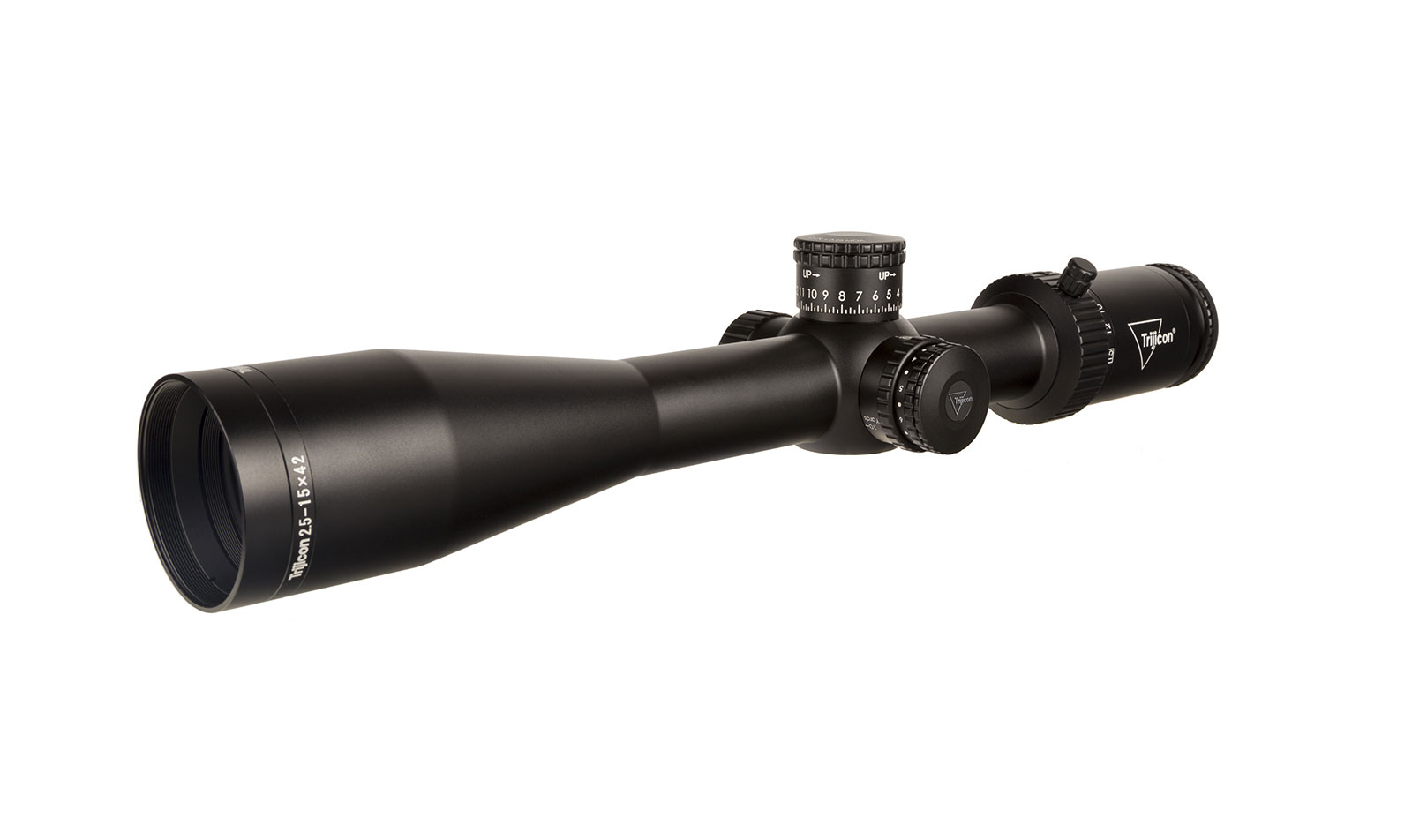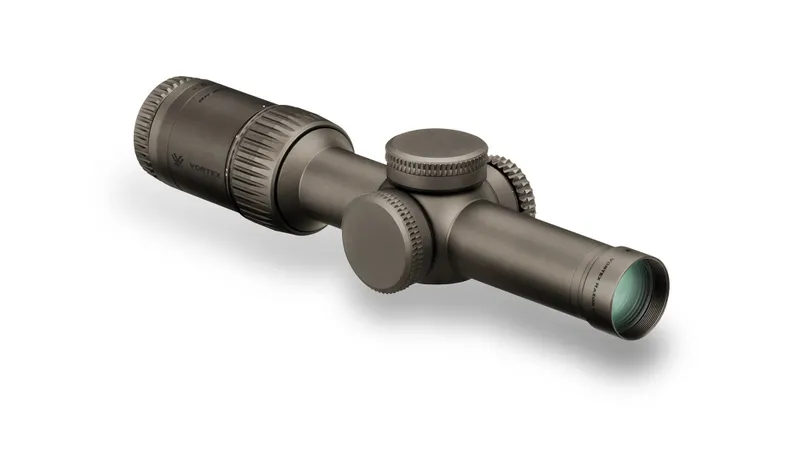

First Impressions & Build Quality Overview
The Primary Arms SLx 1-6×24 arrives as a budget-conscious entry into the low-power variable optic (LPVO) market, and it shows its price point immediately upon unboxing. The Primary Arms SLx 1-6×24 features a 30mm tube with a matte black anodized finish that feels adequate but not exceptional – there’s visible machining evidence around the turret housings, and the overall fit lacks the seamless precision of higher-tier optics. Weight comes in at approximately 17.3 ounces without mount, which is reasonable for this class. The throw lever is included and functional, though it’s polymer rather than metal. The scope cap quality is mediocre – they’re thin and feel like they’ll crack with repeated field use.
Durability testing over six months included mounting on both a 5.56 AR-15 and a .308 bolt gun. The optic held zero through approximately 800 rounds of mixed use, including some drops onto hard surfaces from shooting bag height. The turrets showed no loosening, and the magnification ring maintained consistent tension. However, the eyepiece showed minor play after extended use – not enough to affect zero but noticeable when handling. For the price, the mechanical construction performs adequately, but this isn’t built to the same standard as Vortex or Burris offerings in similar brackets. It’s a working tool that will serve recreational shooters well, but professional users should consider more robust platforms.
Optical Performance in Variable Conditions
Glass clarity at full daylight is acceptable but noticeably inferior to anything in the $400-plus range. Edge-to-edge sharpness degrades noticeably past the center 60% of the image at 6x magnification. Chromatic aberration appears moderately on high-contrast edges – tree branches against bright sky show purple fringing that becomes distracting when you’re trying to identify target details at distance. The center image is sharp enough for practical use out to 400 yards on man-sized targets, but don’t expect the resolution needed for precision shooting beyond that range. Color rendition trends slightly warm, which isn’t necessarily bad for hunting applications where you’re spotting brown and tan game against foliage.
Low-light performance is where this optic struggles most noticeably. During late evening whitetail sits, the Primary Arms SLx 1-6×24 loses usable brightness roughly 15-20 minutes before legal shooting light ends compared to a Vortex Strike Eagle 1-6×24 tested side-by-side. The twilight factor just isn’t there – that 24mm objective doesn’t gather enough light, and the glass coatings aren’t premium enough to maximize transmission. In dawn conditions with heavy fog, image contrast drops significantly, making it difficult to distinguish details in shadows. For bright-condition shooting – range work, prairie dog hunting, or midday tactical drills – it performs its job. For serious low-light hunting where those first and last 30 minutes matter, you’ll want better glass.
Turrets & Reticle Functionality Breakdown
The turrets are capped and designed for zero-setting rather than dialing, which is appropriate for this optic’s intended use. Clicks are mushy with inconsistent tactile feedback – you can feel them, but they lack the crisp definition that inspires confidence when making adjustments. Windage and elevation adjustments are in 1/2 MOA increments. During tracking tests on a grid at 100 yards, the Primary Arms SLx 1-6×24 showed approximately 3% error over 20 MOA of travel – acceptable for a hunting optic but not precise enough for competitive applications. Return-to-zero testing after full rotations showed it came back within 1 MOA, which is adequate. The turrets aren’t the strong point here, but they’ll handle basic zeroing and occasional re-zeroing after travel.
The ACSS reticle (in the model tested) is genuinely the standout feature of this optic. It’s a first focal plane design, meaning the reticle scales with magnification – critical for using the holdover features correctly. The horseshoe at 1x provides fast target acquisition for close work, while the chevron and BDC ladder become visible and useful from 3x upward. The ranging features work as advertised if you take time to learn the system and verify drops with your specific ammunition. Eye relief is advertised at 4 inches but feels closer to 3.5 inches in practice, requiring careful head position at 6x magnification. The eyebox is unforgiving compared to premium LPVOs – you need consistent cheek weld to get a full sight picture without shadowing. At 1x, it’s not truly 1x – there’s slight magnification and a visible ring, making both-eyes-open shooting less intuitive than a true red dot.
Real-World Use Across Shooting Disciplines
For 3-gun and run-and-gun style competitions, the Primary Arms SLx 1-6×24 handles adequately at close to mid-range stages. The throw lever allows quick magnification changes, and the ACSS reticle’s horseshoe works well for rapid target transitions inside 50 yards. However, the eyebox limitations become apparent when shooting from awkward positions – you’ll find yourself hunting for the sight picture when you can’t achieve perfect head position. The scope performed reasonably during a two-day carbine course involving approximately 400 rounds with multiple position changes, weapon transitions, and environmental exposure to dust and light rain. No zero shift occurred, and the optic remained functional throughout.
For hunting applications, this optic works best for deer-sized game in open to moderately wooded terrain where shots stay inside 250 yards. The BDC reticle proved useful during a Texas hog hunt, allowing holdovers on running shots at 150-180 yards once I’d verified my rifle’s trajectory. The magnification range handles stand hunting and still-hunting scenarios adequately. However, during an early-season elk hunt in Colorado, the poor low-light performance cost me a shot opportunity – I couldn’t confidently identify the bull’s vitals in heavy timber shadow 40 minutes before dark, where a better optic would have provided the necessary detail. For prairie or agricultural field hunting where light is abundant, it performs its role. For deep woods or mountain hunting where conditions vary dramatically, invest more in your glass.
How It Compares to Direct Competitors
| Optic | Price | Glass Quality | Low Light | Reticle | Weight | Best For |
|---|---|---|---|---|---|---|
| Primary Arms SLx 1-6×24 | $280-320 | Acceptable | Poor | Excellent (ACSS) | 17.3 oz | Budget 3-gun, casual hunting |
| Vortex Strike Eagle 1-6×24 | $320-370 | Better | Fair | Good | 17.6 oz | All-around LPVO use |
| Burris RT-6 1-6×24 | $340-380 | Better | Fair | Good | 16.5 oz | Hunting and competition |
| Swampfox Arrowhead 1-6×24 | $260-300 | Similar | Poor | Fair | 18.2 oz | Budget alternative |
The Vortex Strike Eagle 1-6×24 costs roughly $50-70 more and delivers noticeably better glass quality and improved low-light capability. The optical difference is immediately apparent when viewing side-by-side – the Vortex provides better edge clarity and superior color fidelity. The Strike Eagle also offers better customer service and warranty reputation. However, the Primary Arms ACSS reticle is more feature-rich than the Vortex BDC reticle, offering advantages for shooters who invest time learning the system. For pure optical performance per dollar, the Vortex wins. For reticle functionality and baseline capability at minimum cost, Primary Arms holds ground.
The Burris RT-6 1-6×24 represents the upper edge of this price bracket and shows the performance ceiling before you jump to $600-plus optics. The Burris glass is cleaner, the turrets are crisper, and the overall build quality feels more refined. It’s approximately $60-100 more depending on sales, and that investment delivers meaningful improvements in optical clarity and mechanical feel. The Primary Arms SLx 1-6×24 makes sense for shooters on strict budgets or those outfitting multiple rifles where cost accumulation matters. If you’re building one primary rifle and can stretch the budget, the Burris or Vortex offerings provide better long-term satisfaction. The Swampfox Arrowhead competes directly on price but offers no significant advantages – the Primary Arms reticle and track record make it the better choice in the sub-$300 category.
Common Mistakes When Using This Optic
The most frequent error is expecting optical performance beyond this optic’s capability. Shooters accustomed to premium glass are disappointed when the Primary Arms SLx 1-6×24 doesn’t resolve fine details at distance or perform in marginal light. This isn’t a $800 scope – it’s a budget LPVO that prioritizes functional adequacy over optical excellence. Setting appropriate expectations prevents disappointment. This optic works for recreational shooting, training, and hunting in good conditions. It doesn’t replace quality glass for serious low-light work or precision applications beyond 300 yards. Another common mistake is neglecting to properly learn the ACSS reticle system – the reticle is the optic’s strongest feature, but it requires range time and ballistic verification to use effectively. Shooters who don’t invest that time waste the primary advantage this scope offers over simpler alternatives.
Mounting errors compound this optic’s limitations. The already-tight eyebox becomes unusable if the scope is mounted too far forward or back. Proper eye relief positioning is critical – you need the scope positioned so your natural cheek weld at full stock extension places your eye in the optimal position at 6x magnification. Many shooters mount it like a red dot (too far forward) and then struggle with eye relief at higher magnifications. Additionally, overtorquing the mount screws on the aluminum tube can cause shifting – use proper torque specs and quality rings. Finally, using this optic for applications it wasn’t designed for leads to frustration. It’s not a precision scope for load development or long-range shooting. It’s not a true 1x red dot replacement for close-quarters work. It’s a budget LPVO that handles general-purpose rifle work from 25 to 300 yards in decent lighting conditions – use it within those parameters and it performs adequately.