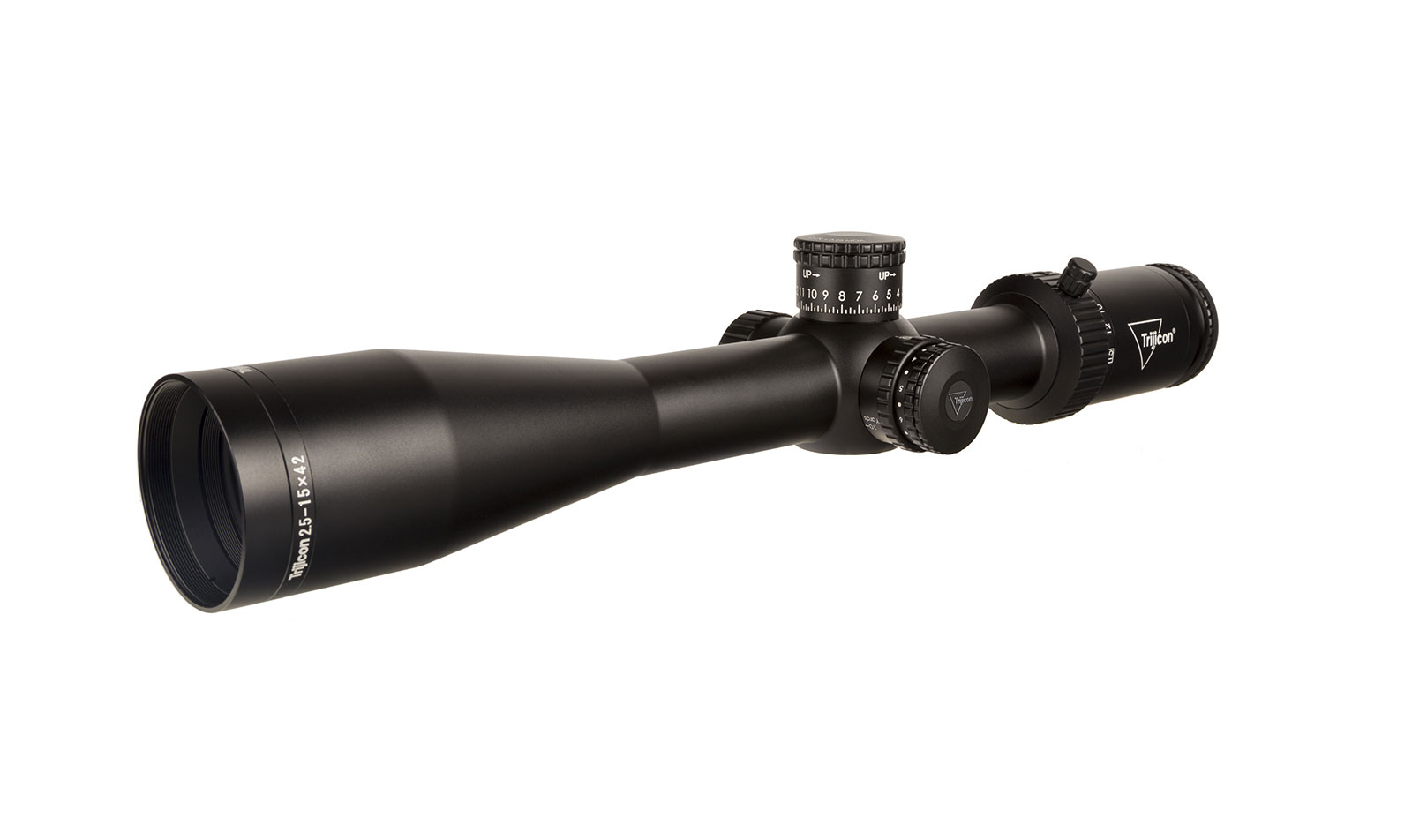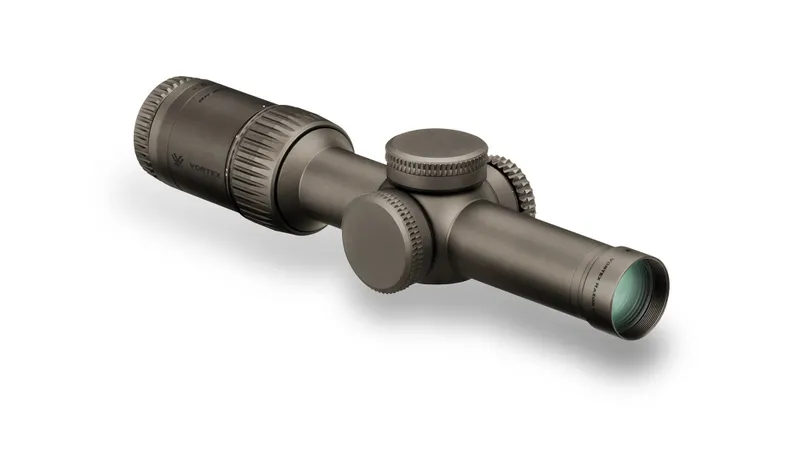

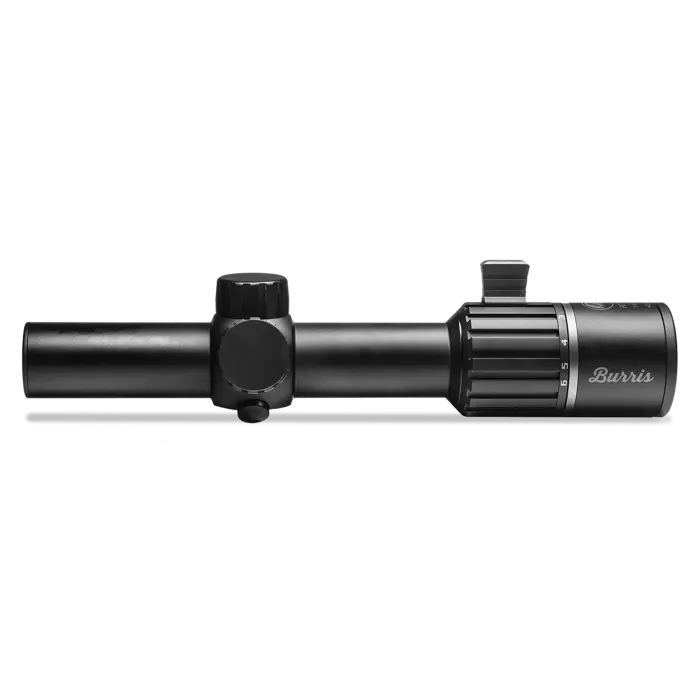
The Burris RT-6 1-6×24 arrives with a utilitarian presence that immediately signals its intended purpose – this is a working optic, not a showpiece. The matte black finish resists glare effectively, and the scope tube feels dense in hand at 17.6 ounces. Burris built the RT-6 1-6×24 around a 30mm main tube with a forged aluminum construction that inspires confidence when you handle it. The eyepiece and magnification ring both operate with appropriate resistance – not buttery smooth like premium European glass, but deliberate and positive enough that you won’t accidentally shift magnification during manipulation.
The throw lever included from the factory is a practical touch that many competitors charge extra for. Turrets sit low to the body with protective caps that thread on securely without feeling cheap. The scope ships with flip-up lens covers that actually stay in place during recoil, which sounds basic but separates functional gear from range-only equipment. Burris rates this optic as waterproof and shockproof, backing it with their Forever Warranty. The anodizing shows no immediate wear after mounting and initial handling, though time will tell how the finish holds up to hard field use.
Optical Performance in Field Conditions
Glass clarity on the Burris RT-6 1-6×24 sits firmly in the “good enough” category for its price point. At 1x, the sight picture is adequately bright with minimal distortion at the edges – you can acquire targets with both eyes open without significant parallax issues. Edge clarity degrades noticeably compared to scopes costing twice as much, but the center remains sharp enough for practical work inside 400 yards. Colors appear slightly muted compared to premium Japanese or German glass, with a faint amber cast in certain lighting conditions. In bright daylight, the optic performs well, delivering sufficient resolution to identify features on targets at mid-range distances.
Low-light performance reveals the RT-6’s limitations. During the last 20 minutes of legal shooting light, the image dims faster than scopes with better lens coatings and larger objectives. The 24mm objective simply cannot gather as much light as a 30mm or larger lens, and Burris’s coating package – while functional – doesn’t match the light transmission of higher-tier optics. This scope works fine for early morning hunts or overcast conditions, but if you regularly shoot in marginal light, you’ll notice the difference. At 6x magnification, clarity remains acceptable for precision work on steel or game out to 300-350 yards, though some chromatic aberration appears around high-contrast edges when conditions aren’t ideal.
Turrets & Reticle Functionality
The Burris RT-6 uses capped turrets with 1/2 MOA adjustments that deliver tactile and audible clicks. These aren’t designed for dialing – they’re set-and-forget adjustments for zeroing. The clicks feel distinct enough to count accurately, though they lack the precision feedback of higher-end tactical scopes. Turrets reset to zero after loosening the cap screws, a feature borrowed from more expensive optics that works reliably here. During box testing at 100 yards, tracking proved consistent across multiple adjustment cycles with no significant point-of-impact shift when returning to zero.
The illuminated Ballistic CQ reticle is where this scope earns its keep. The horseshoe-dot combination at 1x provides fast target acquisition for close work, while the ranging marks and holdovers become useful at higher magnifications. Illumination brightness adjusts through 11 settings controlled by a side-mounted dial that’s accessible without breaking your shooting position. The reticle remains visible without illumination in good light – an important backup feature if your battery dies. Holdover marks are calibrated for 5.56/.223 but work reasonably well for other calibers with similar trajectories. The horseshoe subtensions measure approximately 32 MOA, providing a useful ranging reference for man-sized targets.
Real-World Use: Range to Field Testing
Mounting the RT-6 1-6×24 on an AR-15 platform reveals its natural habitat. The scope sits at a comfortable height with a standard 1.5-inch mount, providing adequate eye relief across the magnification range – approximately 3.5 to 4 inches depending on power setting. The eyebox at 1x is forgiving enough for rapid target transitions, though it tightens noticeably at 6x, requiring more precise head placement. During dynamic drills transitioning between 50 and 200 yards, the throw lever proved essential for quick magnification changes without losing sight picture.
Recoil durability testing on both 5.56 and 308 platforms showed no loss of zero through several hundred rounds. The scope holds zero when removed and remounted in a quality quick-detach mount – a basic requirement that some budget optics fail. Field carrying through brush and unintentional bumps against vehicle doors and tree branches produced no mechanical issues or optical shift. In practical hunting scenarios, this optic handles the full spectrum from close-range hog encounters at 1x to deliberate shots on whitetail at 6x and 250 yards. The limitation isn’t the scope’s ability to hold zero or survive abuse – it’s the optical clarity in challenging light where you’ll notice you didn’t spend twice as much.
How the RT-6 Compares to Competitors
| Feature | Burris RT-6 1-6×24 | Vortex Strike Eagle 1-6×24 | Primary Arms SLx 1-6×24 | Leupold VX-6HD 1-6×24 |
|---|---|---|---|---|
| Street Price | ~$350 | ~$300 | ~$280 | ~$600 |
| Weight | 17.6 oz | 17.6 oz | 16.1 oz | 15.4 oz |
| Glass Quality | Good | Fair | Good | Excellent |
| Reticle Type | Ballistic CQ | BDC3 | ACSS Raptor | FireDot Duplex |
| Warranty | Forever | VIP Lifetime | Lifetime | Lifetime |
| Daylight Bright | Yes | Yes | Yes | Yes |
The RT-6 occupies an interesting middle position in the budget LPVO market. The Vortex Strike Eagle 1-6×24 costs less but delivers noticeably softer glass and less refined turret feel. Primary Arms SLx 1-6×24 offers the ACSS reticle system that some shooters prefer for ranging and holdovers, with comparable glass quality at a slightly lower price point. If you value reticle functionality over raw optical performance, the Primary Arms deserves consideration. The Leupold VX-6HD 1-6×24 represents the next tier up – significantly better glass, lighter weight, and superior low-light performance, but at nearly double the cost.
Where the Burris RT-6 makes sense is for shooters who need proven durability and functional glass without the premium price tag. It outperforms its actual street price in terms of mechanical reliability and reticle design. If you’re building a working rifle that will see hard use – ranch work, patrol duty, or serious hunting in varied terrain – this scope delivers sufficient optical quality with confidence-inspiring construction. Shooters prioritizing absolute optical clarity or those who regularly shoot in low light should budget more for the Leupold or consider European glass. Casual range shooters might find adequate performance in the cheaper Vortex and save the difference.
Common Mistakes When Using This LPVO
The most frequent error with the RT-6 1-6×24 is attempting to use it as a long-range precision instrument. This scope’s design priorities favor speed and durability over fine target resolution beyond 400 yards. Shooters who mount this optic on a precision bolt gun and expect crisp target definition at 600 yards will be disappointed. The reticle holdovers lose practical utility beyond 400 yards for most calibers, and the optical clarity doesn’t support the level of detail needed for small target identification at extended distance. Use this scope within its design envelope – close to medium range work where speed matters more than extreme precision.
Another mistake involves improper mounting height selection. Many shooters default to standard AR-height mounts without considering their specific shooting style and head position. The RT-6 benefits from careful attention to mount height – too low and you’ll crane your neck at 6x magnification, too high and the 1x sight picture suffers. Test your natural head position before permanently mounting, and consider that adding night vision or other accessories may require height adjustment. Finally, some users neglect to properly tension the throw lever, resulting in looseness that allows unintended magnification changes during rifle manipulation. The throw lever should be snug enough to stay in position under handling but loose enough to operate smoothly with one hand – finding this balance requires a few minutes of adjustment but significantly improves the scope’s field performance.