
First Impressions & Build Quality
The Nightforce SHV 4-14×50 arrives with the kind of understated confidence you’d expect from a company known for building scopes that survive harsh military and competition environments. Unboxing this optic, the first thing you notice is the weight – at 28.2 ounces, it’s not a lightweight hunting scope, but that mass comes from legitimate construction rather than unnecessary bulk. The tube is a true 30mm, machined from a single billet of aircraft-grade aluminum, and the matte black finish shows careful attention to reducing glare without feeling overly textured or prone to showing wear.
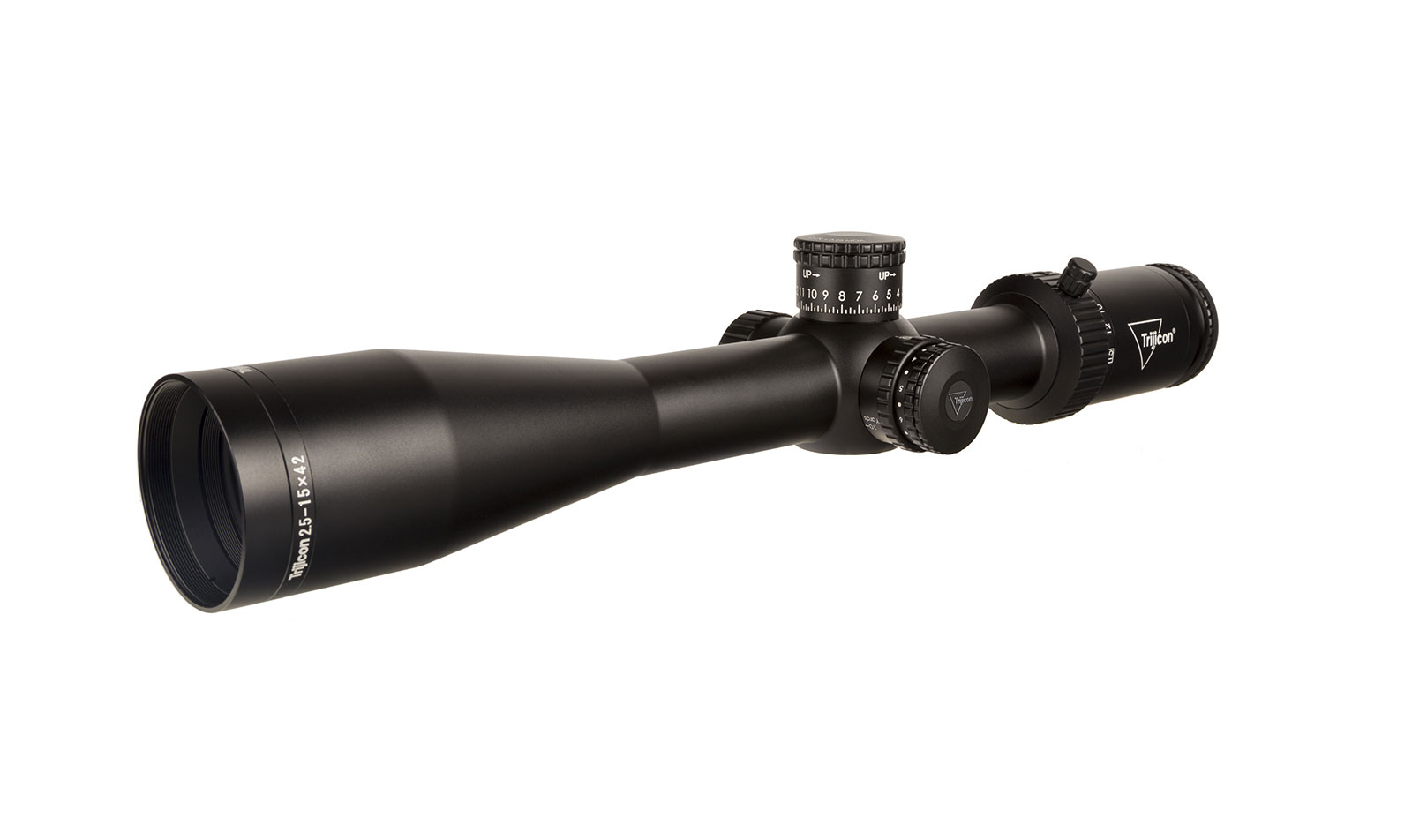
The Nightforce SHV 4-14×50 features a side parallax adjustment and capped turrets, signaling its intended role as a precision rifle scope for shooters who dial occasionally but don’t need the exposed turrets of a dedicated tactical or competition optic. The eyepiece has a fast-focus diopter that locks firmly once set, and the magnification ring turns with deliberate resistance – not stiff, but controlled enough that you won’t accidentally shift power during positional shooting. The objective bell is generously sized to accommodate the 50mm lens, and while this adds some bulk, it’s a necessary trade-off for the light transmission you’ll need in dawn or dusk conditions.
Optical Performance in the Field
Glass clarity in the Nightforce SHV 4-14×50 is where this scope begins to separate itself from budget-tier competitors. The image is sharp from center to edge across the entire magnification range, with minimal chromatic aberration even when glassing high-contrast targets like dark timber against bright sky. Color rendition is neutral and accurate – not overly warm or cool – which helps with target identification at distance. Resolution at 14x is genuinely usable for precision work out to 600-800 yards on man-sized targets, and the 50mm objective provides enough light gathering to extend your effective shooting window into twilight hours.
Low-light performance is solid, though not quite at the level of Nightforce’s premium NXS or ATACR lines. During field testing in heavy overcast and late evening conditions, the SHV 4-14×50 maintained usable brightness roughly 15-20 minutes longer than comparable scopes with smaller objectives or lower-grade glass. The eye box is forgiving at lower magnifications but tightens up predictably as you approach 14x – you’ll need consistent cheek weld and head position for precision shooting at full power. There’s no noticeable tunneling effect at 4x, which makes this scope surprisingly versatile for closer-range work or transitional shooting scenarios.
Turrets & Reticle Functionality
The Nightforce SHV 4-14×50 ships with capped turrets that deliver 0.25 MOA clicks with tactile and audible feedback that’s clear even when wearing gloves. Each click is distinct without being mushy, and the turrets track accurately – box tests at 100 yards confirmed reliable return-to-zero and precise adjustments without any slop or backlash. The caps are low-profile and secure, requiring deliberate effort to remove, which prevents accidental adjustments during transport or field carry. Total elevation travel is 80 MOA, which provides sufficient adjustment range for most practical precision shooting applications without requiring a canted base in many rifle configurations.
The MOAR reticle (one of several available options) is a clean, hash-marked design that balances holdover capability with an uncluttered sight picture. The reticle is in the second focal plane, meaning the subtensions remain constant regardless of magnification – this simplifies ranging and holdover calculations if you’re accustomed to SFP scopes, though it does lock you into using the reticle’s calibrated values only at maximum magnification. Reticle thickness is well-judged for precision work, fine enough for precise aiming points without disappearing against complex backgrounds. The illumination (on illuminated models) is daylight-bright at higher settings and subdued enough at lower levels for night vision compatibility.
Real-World Use: Tactical & Precision Shooting
In practical field use, the Nightforce SHV 4-14×50 excels as a do-everything precision rifle scope for shooters who need reliable performance without the cost and weight of top-tier competition optics. During extended range sessions from prone, barricade, and improvised positions, the scope delivered consistent performance with no point-of-impact shifts, even after being bumped and jostled during positional transitions. The 4x low end provides adequate field of view for target acquisition at closer ranges, while 14x offers enough magnification for precise shot placement on small targets or vitals at distances exceeding 500 yards.
For tactical applications – law enforcement precision rifle work, designated marksman roles, or practical rifle competitions – this scope hits a practical sweet spot. It’s durable enough to withstand hard use without babying, yet doesn’t carry the weight penalty of scopes designed for extreme long-range shooting. The capped turrets work well for shooters who zero at a practical distance (100 or 200 yards) and prefer to hold for elevation rather than dial constantly. Where this scope shows limitations is in rapid target transitions at very close range (the 4x low end isn’t as fast as a true 1-6x or 1-8x) and in extended-range scenarios beyond 800 yards where more magnification would be beneficial.
How It Compares to Direct Competitors
| Feature | Nightforce SHV 4-14×50 | Vortex Viper PST Gen II 5-25×50 | Athlon Ares BTR Gen2 4.5-27×50 |
|---|---|---|---|
| Weight | 28.2 oz | 31.2 oz | 31 oz |
| Turrets | Capped, 0.25 MOA | Exposed, 0.1 Mil | Exposed, 0.1 Mil |
| Reticle Plane | SFP | FFP | FFP |
| Price Range | $1,000-1,100 | $900-1,000 | $550-650 |
| Glass Quality | Excellent | Very Good | Good |
The Nightforce SHV 4-14×50 occupies a specific niche among mid-tier precision scopes. Compared to the Vortex Viper PST Gen II 5-25×50, the Nightforce offers superior glass clarity and a more compact, lighter package, but sacrifices the exposed turrets and first focal plane reticle that many precision shooters prefer for dialing solutions. The Vortex provides more magnification range and better feature set for pure long-range work, while the Nightforce is better suited to general-purpose precision applications where ruggedness and optical quality take priority over tactical features.
Against the Athlon Ares BTR Gen2 4.5-27×50, the Nightforce commands nearly double the price but delivers noticeably better glass quality, more refined mechanical feel, and a reputation for absolute reliability that Athlon hasn’t yet fully established in the precision rifle community. The Athlon offers tremendous value with its first focal plane reticle, exposed turrets, and generous magnification range – it’s the better choice for budget-conscious shooters who need tactical features. The Nightforce is the choice for shooters who prioritize optical performance and bombproof construction over feature count, and who can justify the price premium for those qualities.
Common Mistakes When Using the SHV 4-14×50
The most frequent error shooters make with the Nightforce SHV 4-14×50 is treating it like a tactical scope with exposed turrets and then being disappointed by the capped design. This scope is purpose-built for shooters who establish a solid zero and then hold for corrections using the reticle, not for those who want to dial every shot. If your shooting style involves constant elevation adjustments for varying distances, you’ll find the capped turrets frustrating. Understand that this design choice reduces weight, prevents accidental adjustments, and suits hunting or tactical applications where a fixed zero is maintained throughout the mission or hunt.
Another common mistake is expecting first focal plane reticle behavior from this second focal plane scope. Shooters accustomed to FFP optics will sometimes attempt to use the reticle’s holdover marks at lower magnifications and wonder why their calculations don’t work. With the SHV 4-14×50, the reticle subtensions are only accurate at 14x – at any other magnification, you’re either estimating or doing mental math to compensate. This isn’t a flaw, it’s a design choice that keeps the reticle appropriately sized across the magnification range and simplifies the sight picture at lower powers. If you need reticle-based ranging and holdovers at any magnification, you need a different scope – but if you can work within the SFP framework, this scope delivers excellent performance for its intended role.