
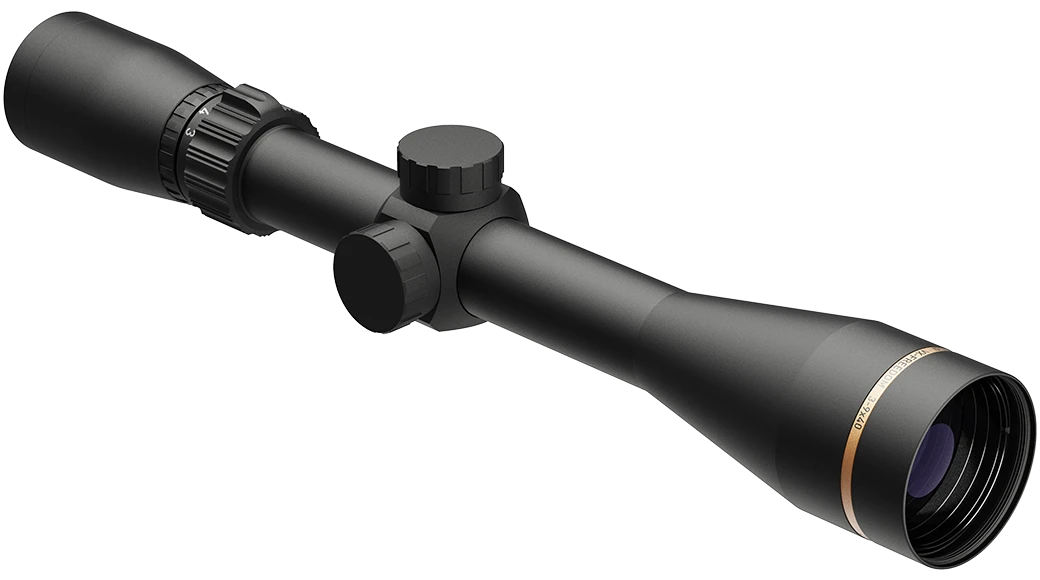
The Leupold VX-Freedom 3-9×40 sits in an interesting position in the riflescope market – it’s Leupold’s entry-level offering, yet it carries the brand’s American-made reputation and lifetime warranty. With a street price hovering around $200-250, it targets hunters and recreational shooters who want reliable glass without breaking the bank. I’ve spent the better part of a season with this scope mounted on a .308 hunting rifle, testing it in conditions ranging from bright Colorado mornings to the dim light of late evening sits in heavily wooded areas. This review cuts through the marketing to tell you what this scope actually delivers in the field, where it falls short, and whether it deserves a spot on your rifle.
First Impressions & Build Quality
Right out of the box, the VX-Freedom feels solid but noticeably lighter than premium Leupold models – it weighs in at 12.6 ounces, which is pleasant for a hunting rifle but hints at the cost-cutting measures inside. The matte black finish is well-applied with no obvious machining flaws, and the 1-inch main tube is aircraft-grade aluminum that feels substantial enough for typical hunting abuse. The eyepiece and power ring turn smoothly, though the magnification ring has slightly more resistance than I’d prefer when wearing gloves. The scope tube shows no visible seams or weak points, and the lens coatings appear even across the glass, though they lack the deep, almost purple hue you see on higher-end Leupold models. Overall, it presents as a workmanlike optic – nothing fancy, but nothing that immediately raises red flags about durability either.
Optical Performance in Various Conditions
The VX-Freedom uses Leupold’s Twilight Light Management System, which sounds impressive but in practice delivers middle-of-the-road performance compared to scopes in the $300-500 range. In bright daylight, the image is crisp with good color fidelity – greens look natural, and there’s minimal chromatic aberration when viewing high-contrast edges like tree branches against sky. Edge-to-edge clarity is acceptable at lower magnifications, but you’ll notice some softness creeping in at the outer 15-20% of the image at 9x. Where this scope shows its price point is in low light; during the last 20 minutes of legal shooting light, the image noticeably dims compared to my Vortex Diamondback HD, and fine details become harder to resolve. It’s still usable for hunting, but don’t expect it to squeeze out those extra few minutes that premium glass provides. In overcast or shaded conditions, it performs adequately – you can identify deer vitals out to 200 yards without issue, but trophy evaluation at distance requires good lighting.
Turrets & Reticle Options Explained
The VX-Freedom comes with finger-adjustable turrets that click in 1/4 MOA increments, and here’s where things get straightforward – these are not designed for dialing. The clicks are mushy compared to tactical scopes, with audible feedback that’s sometimes hard to hear in wind, and there are no zero-stop features or locking mechanisms. Leupold clearly designed these for set-it-and-forget-it zeroing rather than field adjustments, which is honest engineering for a hunting scope at this price. The reticle options include the Duplex (standard thick-to-thin crosshair), Tri-MOA (three MOA hash marks for holdovers), and Pig-Plex (heavier posts for quick acquisition on moving targets). I tested the Duplex, which is a second focal plane design, meaning the reticle stays the same size regardless of magnification – perfectly fine for hunting where you’ll typically use one magnification setting. The reticle is clean and uncluttered, with the crosshairs thin enough for precision shots but thick enough to see in dim conditions, though it’s not illuminated on any model.
Real-World Use: Hunting and Range Testing
I mounted this scope on a Ruger American in .308 and took it through a full whitetail season plus several range sessions. For deer hunting in mixed hardwoods at ranges under 200 yards, the VX-Freedom performed exactly as needed – I could acquire targets quickly at 3x in thick cover, and bump up to 7-9x for shot placement on broadside deer. The 40mm objective provides a decent exit pupil even at higher magnifications, and the eye relief of 3.6-4.2 inches is forgiving enough that I never took scope eye, even with the .308’s recoil. At the range, I confirmed zero at 100 yards and stretched it to 300, where the scope’s limitations became apparent. The image quality degraded noticeably beyond 250 yards, making precise shot placement on steel targets more challenging than with better glass. For practical hunting applications – taking ethical shots on game-sized targets within 250 yards – it’s completely adequate. For precision shooting or long-range work, you’ll quickly outgrow it.
How It Compares to Similar Riflescopes
| Feature | Leupold VX-Freedom 3-9×40 | Vortex Diamondback 3-9×40 | Burris Fullfield E1 3-9×40 |
|---|---|---|---|
| Street Price | $220 | $200 | $180 |
| Glass Quality | Good | Better (HD glass) | Good |
| Low Light | Average | Above Average | Average |
| Turret Feel | Mushy | Crisper | Similar to Leupold |
| Warranty | Lifetime (USA) | VIP Lifetime | Forever Warranty |
| Weight | 12.6 oz | 13.9 oz | 12.1 oz |
| Made In | USA | Philippines | Philippines |
The VX-Freedom‘s main advantage is its American manufacturing and Leupold’s customer service reputation – if something breaks, you’re dealing with a company that’s been around since 1907 and actually answers the phone. The Vortex Diamondback offers noticeably better glass with HD elements and performs better in low light, but you’re paying for glass made overseas. The Burris Fullfield E1 is the budget pick, lighter and cheaper, but with similar optical performance and less brand prestige. If “Made in USA” matters to you and you want a simple, reliable hunting scope, the VX-Freedom makes sense. If pure optical performance is your priority, the Diamondback edges it out.
Common Mistakes When Using This Scope
The biggest mistake I see with the VX-Freedom is people trying to use it like a tactical scope – dialing turrets for different ranges and expecting repeatable returns to zero. These turrets aren’t built for that; they’ll get you zeroed reliably, but constant adjustment will introduce errors over time. Set your zero and learn your holdovers instead. Another common error is mounting it too far forward to avoid scope eye, which actually makes the eye box less forgiving – the proper eye relief is already generous, so mount it where the image is clearest at your natural cheek weld. Some shooters also crank the magnification to 9x for every shot, which amplifies the scope’s optical weaknesses and introduces more wobble. For most hunting situations, 4-6x is plenty and actually provides a better image. Finally, don’t expect this scope to make marginal light conditions significantly better – it won’t, so plan your shots accordingly rather than pushing ethical boundaries because you think you have premium glass.
Mechanical Reliability and Tracking Accuracy
Over the course of testing, I put about 200 rounds through the rifle with this scope mounted, including some intentional abuse – carrying it unsecured in a truck bed on rough roads, deliberate bumps against trees while still-hunting, and exposure to rain and temperature swings from 20°F to 75°F. The scope held zero throughout, returning to point of impact after being removed and remounted (using quality rings, which matters). However, when I did a box test to check tracking accuracy, the results were less impressive. Dialing 8 MOA up and 8 MOA right, then back down and left, produced a box that was slightly off – closer to 7.5 MOA on some sides. This isn’t catastrophic for a hunting scope you’re not dialing, but it confirms that precision turret work isn’t this scope’s strength. The internal components feel secure with no rattling, and the nitrogen purging kept the glass fog-free even during rapid temperature changes. For the intended use case – getting zeroed and staying zeroed through a hunting season – the mechanical reliability is solid.
Quick Takeaways: Is the VX-Freedom Worth It?
The VX-Freedom 3-9×40 is worth buying if you’re a hunter who takes shots inside 250 yards, values American manufacturing, and wants a scope that’ll last without requiring a second mortgage. It’s ideal for someone mounting glass on a deer rifle that gets used a few weeks per year, or a budget-conscious shooter who prioritizes reliability over cutting-edge optics. It’s not worth it if you need excellent low-light performance, plan to dial turrets regularly, or shoot regularly beyond 300 yards – in those cases, save another $100-150 for better glass. At around $220, it’s priced fairly for what it delivers: honest, functional optics with Leupold’s warranty backing it up. It won’t wow you, but it won’t let you down in typical hunting scenarios either. The scope is a solid B-minus student – reliable, competent, but not exceptional in any particular area.
After a season of real-world use, the Leupold VX-Freedom 3-9×40 has earned its place as a legitimate option for budget-conscious hunters who want a dependable optic without frills. It’s not the best glass at any price point, and it won’t outperform scopes that cost $100 more, but it delivers on Leupold’s core promise: rugged, American-made reliability with a warranty that actually means something. If you’re the kind of shooter who takes a dozen shots per year at deer within 200 yards, this scope will serve you well for decades. If you’re pushing further, shooting more often, or hunting in consistently low light, invest in better glass – your success rate will justify the cost. The VX-Freedom knows what it is and doesn’t pretend to be more, which is refreshing in a market full of overblown marketing claims.