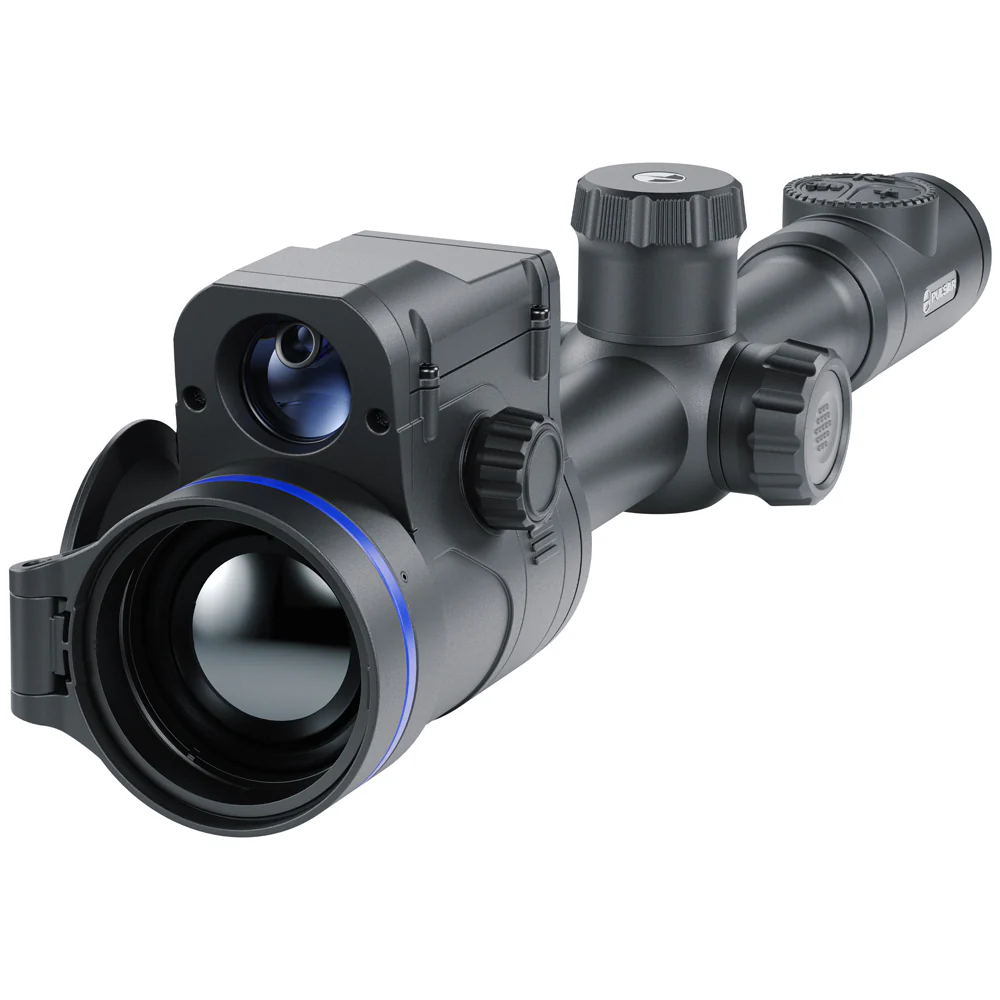

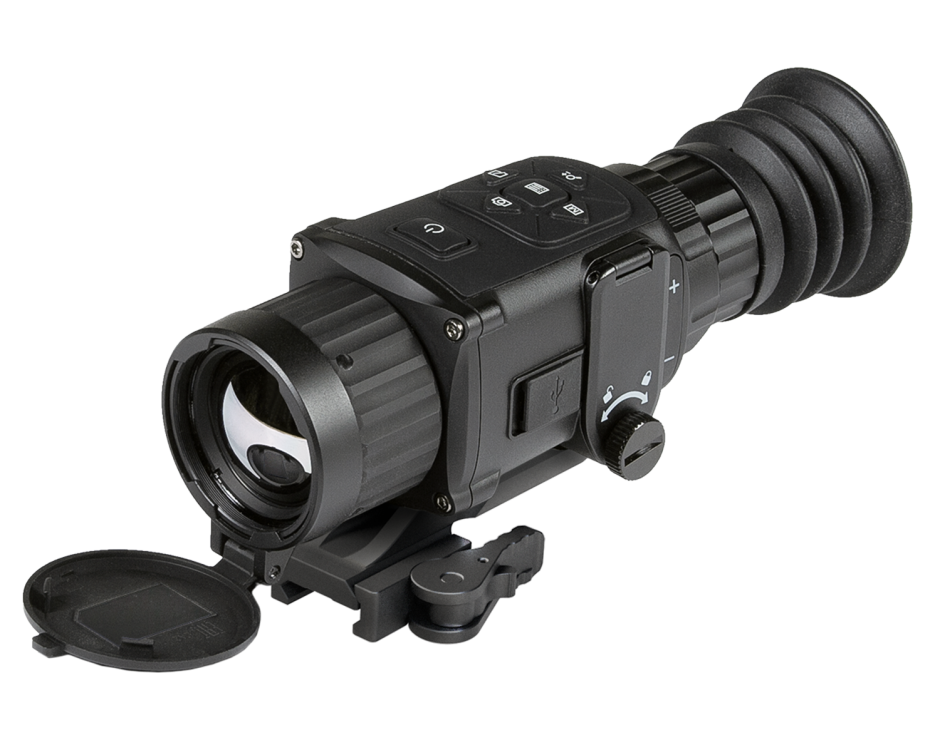

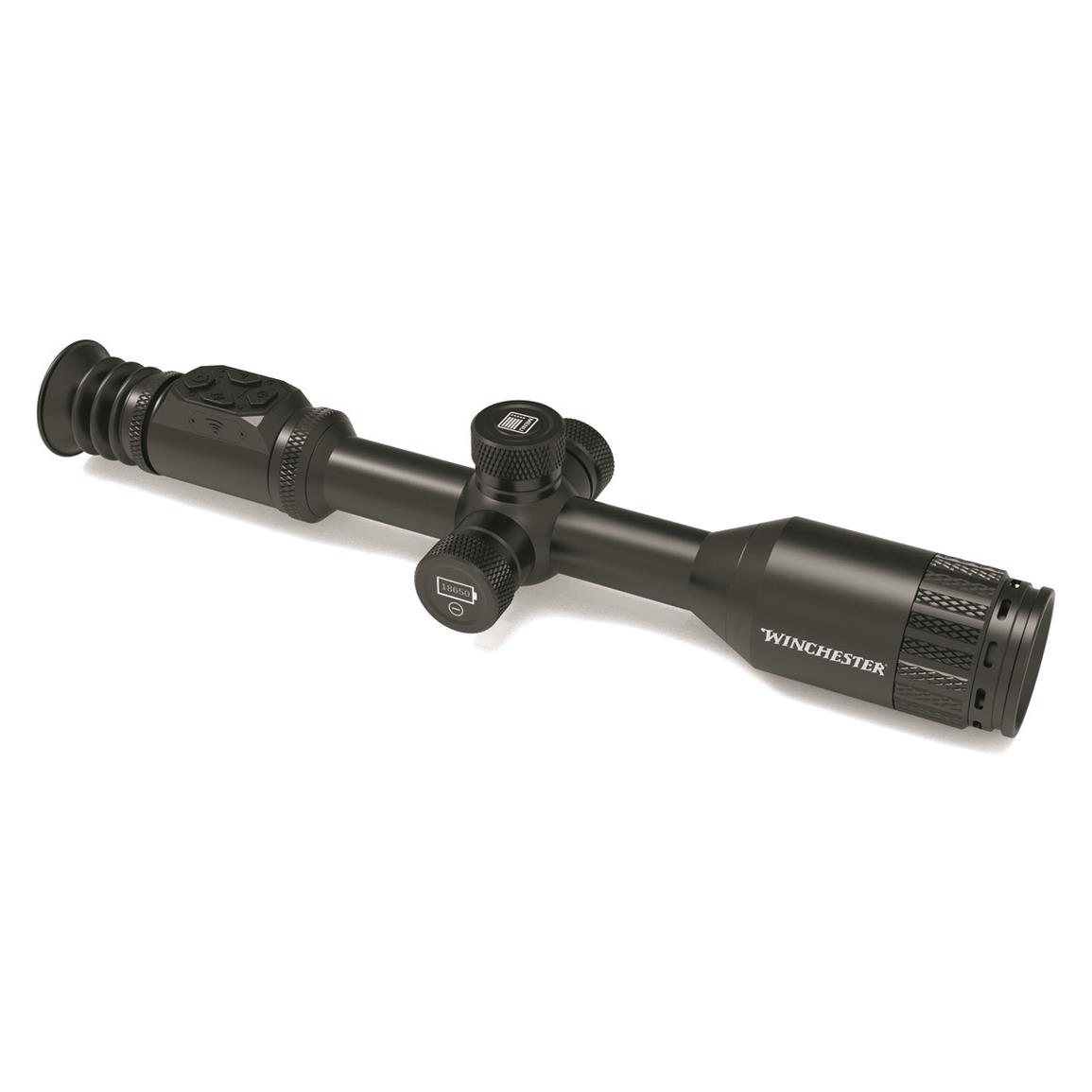


The AGM Rattler TS35-384 represents the company’s attempt to deliver thermal imaging capability at a price point that won’t require a second mortgage. Positioned as a mid-tier thermal riflescope, it features a 384×288 resolution sensor with a 35mm lens, targeting hunters and hog control operators who need reliable heat detection without stepping into premium-priced territory. After several months of field use across varied conditions – from humid Texas nights to cold early-season deer hunts – I’ve developed a clear picture of where this optic excels and where it shows its compromises.
Thermal riflescopes occupy a different evaluation space than traditional glass optics, but the fundamentals remain: does it deliver usable image quality when it matters, can you trust the mechanics under recoil, and does the user interface support quick target acquisition? The Rattler sits in a crowded segment competing against established names like Pulsar, ATN, and InfiRay, all vying for shooters who understand thermal’s advantages but aren’t ready to spend $4,000+. This review examines whether AGM’s offering justifies its place on your rifle.
First Impressions & Build Quality of the Rattler
The Rattler arrives in a functional foam-lined case with lens covers, USB-C charging cable, and a basic instruction manual that you’ll actually need to reference – the menu system isn’t immediately intuitive. Physical dimensions are reasonable at 10.24 inches and 2.6 pounds, making it noticeably heavier than a traditional hunting scope but manageable on carbine-length rifles. The housing is aluminum with a matte black finish that resists minor scratches but shows handling marks more readily than anodized coatings from premium manufacturers. The eyepiece diopter adjusts smoothly with enough resistance to prevent accidental changes, and the integrated picatinny mount eliminates the need for separate rings, though it does limit mounting flexibility.
Build quality feels solid without inspiring complete confidence. The turret caps seat firmly, and the power button provides tactile feedback, but there’s a slight hollowness to the housing when tapped that higher-end thermals don’t exhibit. Seals appear well-executed, and AGM rates the unit to IP67 standards – I’ve used it through rain and morning dew without issues, though I haven’t deliberately submerged it. The integrated laser rangefinder is a welcome inclusion at this price point, and the external controls are large enough for gloved operation. The display is an AMOLED with 1024×768 resolution, which provides adequate clarity though pixel structure is visible at higher magnification levels. Overall, it presents as a working tool rather than a precision instrument, which aligns with its market positioning.
Optical Performance in Low-Light Hunting Conditions
Thermal imaging fundamentally differs from light-gathering optics, but image quality still varies dramatically between sensors and processing algorithms. The Rattler’s 384×288 microbolometer with 17-micron pixel pitch delivers usable detection at distances that surprised me initially – whitetail-sized animals are identifiable to approximately 300 yards under favorable conditions, with detection (recognizing something is there) extending beyond 500 yards. Image quality degrades as digital magnification increases beyond the base 2.5x, with the 10x maximum becoming grainy enough that I rarely used it for positive target identification. The 35mm germanium lens provides a reasonable balance between detection range and field of view, though the narrower FOV compared to 25mm models requires more scanning in dense cover.
Refresh rate is listed at 50Hz, and in practice, the image updates smoothly enough for tracking moving animals without significant lag or ghosting. Color palettes include white hot, black hot, and several false-color options – I defaulted to white hot for most hunting situations due to its intuitive contrast. The real limitation emerges in temperature differentiation: animals partially obscured by brush or against varied backgrounds can blend more than they would through higher-resolution sensors. On humid nights above 70°F, detection range decreases noticeably as ambient thermal noise increases. The unit also struggles with thermal reflections from water and certain ground surfaces, occasionally creating false signatures that require a second look. For the sensor class, performance is competitive, but you’re working within clear constraints compared to 640-resolution units that cost twice as much.
Turrets, Reticle, and Controls Under Field Use
The Rattler uses a digital reticle system with multiple patterns available through the menu – I settled on a simple crosshair with center dot after finding the more complex options cluttered the display unnecessarily. Zeroing follows a straightforward process: take a shot, enter zeroing mode, move the reticle to point of impact, confirm. The system held zero reliably on a .308 bolt gun and a 6.5 Creedmoor gas gun through several hundred rounds, though I didn’t subject it to the aggressive transport abuse that might reveal weaknesses. Turret adjustments are 1/3 MOA per click, adequate for precision but requiring more clicks than I’d prefer for longer-range corrections. The turrets themselves provide distinct tactile and audible feedback, and while not as refined as mechanical systems from traditional optic manufacturers, they’re functional.
The integrated ballistic calculator works if you input correct data, but the interface for entering bullet specifications feels clunky compared to dedicated ballistic apps. I found it faster to use a holdover reticle and external ballistic data for anything beyond 200 yards. The rangefinder functions adequately to about 500 yards on reflective targets, less on organic surfaces – it’s a convenience feature rather than a precision tool. Menu navigation requires cycling through options using side-mounted buttons, and after two months I still occasionally needed to hunt for specific settings. Battery life from the dual 18500 batteries runs approximately 4-5 hours with the rangefinder and WiFi disabled, shorter with features active. The unit can charge via USB-C while operating, which proved valuable during extended evening hunts. Controls are logically positioned but require familiarization – this isn’t a grab-and-go optic for unfamiliar shooters.
Real-World Performance: Field-Tested Results
Over multiple hog control sessions and deer hunts, the Rattler proved its core capability: finding heat signatures in complete darkness that would be invisible to even the best night vision or low-light scopes. I connected on shots from 75 to 220 yards with confidence once I understood the system’s limitations. The sweet spot is clearly inside 200 yards on medium game, where the resolution provides enough detail to confirm target identity and shot placement. Beyond that distance, you’re increasingly relying on thermal signature shape and behavior rather than fine detail. The recording function captured usable footage for reviewing shot placement, though video quality won’t impress anyone accustomed to modern smartphone cameras.
Reliability proved solid across temperature ranges from 35°F to 85°F, though I noticed slightly slower boot times in colder conditions. The optic maintained zero through vehicle transport in foam-lined cases and moderate handling, but I wouldn’t trust it in hard-sided rifle cases without additional padding given the housing construction. Where the Rattler falters is in refinement – target acquisition is slower than instinctive shooting with traditional optics, the digital zoom feels laggy compared to variable magnification glass, and image quality under challenging thermal conditions (high humidity, temperature inversions) reveals the sensor’s limitations. It’s a capable working tool for nocturnal predator and hog work where detection matters more than image perfection, but it’s not the scope for shooters who demand premium performance or longer-range thermal precision.
Comparison Table
| Feature | AGM Rattler TS35-384 | Pulsar Thermion 2 XP50 | InfiRay Rico RH50 | ATN Thor 4 384 |
|---|---|---|---|---|
| Resolution | 384×288 (17µm) | 640×480 (12µm) | 640×512 (12µm) | 384×288 (17µm) |
| Base Mag | 2.5-10x | 2.5-20x | 2.5-20x | 1.25-5x |
| Detection Range | ~500 yards | ~1,200 yards | ~1,100 yards | ~475 yards |
| Refresh Rate | 50Hz | 50Hz | 50Hz | 60Hz |
| Weight | 2.6 lbs | 2.2 lbs | 2.4 lbs | 2.5 lbs |
| Battery Life | 4-5 hours | 8+ hours | 6-8 hours | 10+ hours |
| Rangefinder | Yes (500yd) | Yes (1000yd) | Yes (1000yd) | Optional |
| Price Range | ~$2,800 | ~$5,500 | ~$4,800 | ~$2,500 |
The AGM Rattler TS35-384 occupies a specific niche: shooters who need legitimate thermal capability for close-to-medium range nocturnal hunting without exceeding a $3,000 budget. It delivers on the fundamental promise of thermal detection -finding animals in complete darkness – with adequate image quality for positive identification inside 200 yards and serviceable performance to 300 yards. The integrated rangefinder and recording capability add value, and the unit proved reliable through varied field conditions without the quirks that plague some budget thermal optics.
That said, this isn’t a scope that will satisfy shooters accustomed to premium glass or those needing thermal performance beyond 300 yards. Image resolution, while competitive in its sensor class, shows clear limitations compared to 640-resolution units, and the user interface requires patience to master. It’s ideal for hog control operators, predator hunters, and deer hunters working agricultural fields where detection matters more than long-range precision. If your budget extends to $4,500+, the Pulsar Thermion 2 XP50 or InfiRay Rico RH50 deliver noticeably superior image quality and detection range. If you’re considering the ATN Thor 4 384, the Rattler offers better build quality and more intuitive controls at a comparable price. The Rattler won’t impress optics enthusiasts, but it will find hogs in the dark and hold zero—which is exactly what many practical hunters actually need.