
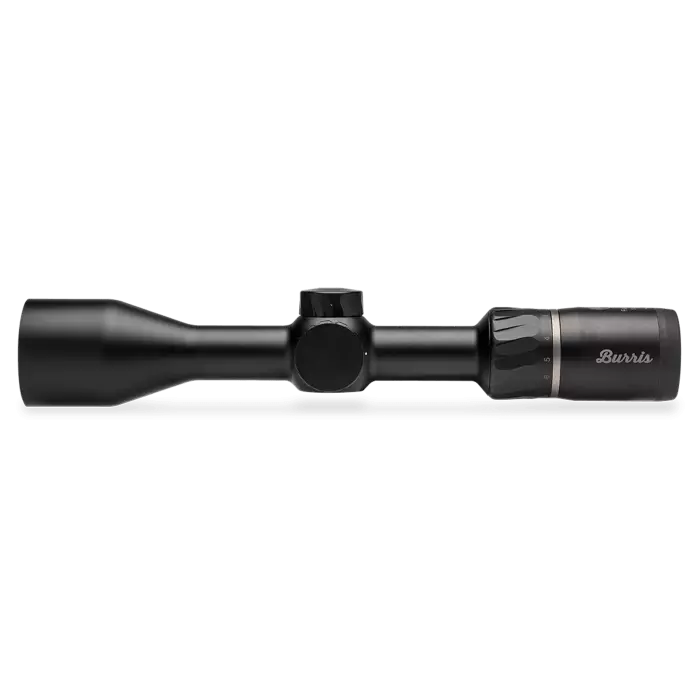
The Burris Fullfield IV 2.5-10×42 sits in an interesting space – it’s priced below premium European glass but aims to deliver performance that punches above its weight class. I’ve spent several months with this scope across whitetail hunts in low light, range work verifying tracking, and mountain carry where weight matters. Burris redesigned the Fullfield line with the Series IV, incorporating better glass and improved mechanics. The question is whether these upgrades translate to real-world advantage, or if you’re better served saving for something higher-end or dropping down to budget alternatives that cost half as much.
Optical Performance: Glass Quality & Low-Light
The Fullfield IV uses what Burris calls HiLume multicoating across all air-to-glass surfaces, and the difference from the older Fullfield series is immediately noticeable. Resolution is genuinely good – not Zeiss Conquest V4 exceptional, but competitive with scopes costing $100-150 more. At 10x, I could distinguish individual branches in shadowed timber at 300 yards during legal shooting light, which is the practical benchmark that matters for hunting. Edge clarity holds up surprisingly well until about the outer 15% of the image, where you’ll see some softness. Color rendition leans slightly warm, which I prefer for picking out game against brown/grey backgrounds.
Low-light performance is where this scope earns its keep. The 42mm objective and quality coatings gather enough light that I’ve confidently identified deer features 20-25 minutes after sunset – right at that critical window when legal light remains but cheap scopes turn muddy. It won’t match a 50mm premium scope in twilight, but it outperforms 40mm scopes in its price range. The eyebox is forgiving at lower magnifications, tightening predictably as you approach 10x. I tested it alongside a Vortex Viper HS 2.5-10×44, and the Burris delivered noticeably better contrast in heavy shade, though the Viper had slightly better edge-to-edge sharpness.
Turrets & Reticle: Tracking and Functionality
The Fullfield IV features capped turrets with 1/4 MOA clicks – appropriate for a hunting scope where you’ll zero and mostly hold for wind/elevation rather than dial. The clicks are tactile and audible with moderate resistance; you won’t accidentally bump them, but they’re not stiff enough to require tools. I ran a tracking test at 100 yards using a grid, dialing 8 MOA up and 8 MOA right in a box pattern. The scope returned to zero within 1/4 MOA after five cycles, which is solid reliability for this price point. The turrets aren’t designed for repeated dialing like a tactical scope, but they handle the occasional adjustment without issue.
Reticle options include the Ballistic Plex E1 (my test model) and a simple Plex. The Ballistic Plex features a standard duplex with hashmarks on the lower vertical post, calibrated for common hunting cartridges. It’s FFP (first focal plane), so the reticle scales with magnification – the subtensions remain accurate throughout the zoom range. This is a significant advantage over SFP scopes when ranging or holding at variable power. The reticle is busy enough to be useful but not cluttered; at 2.5x, it’s fast for close encounters, and at 10x, the hashmarks are legible without dominating the view. Illumination would improve low-light usability, but Burris omitted it to keep costs down – a reasonable trade-off for a hunting scope in this class.
Real-World Use: Field Testing Results
I mounted the Fullfield IV on a .308 Winchester using Warne medium rings, and it’s handled everything from range sessions to rough truck rides without losing zero. Total weight is 17.6 ounces – light enough for a mountain rifle but substantial enough to feel quality. The scope has accompanied me through rain, temperature swings from 20°F to 75°F, and one unfortunate tumble when my rifle slid off a tailgate onto gravel. No shifting zero, no internal fogging, no mechanical failures. The nitrogen purging works; I’ve glassed steaming creek bottoms in cold mornings without internal fog.
During an early-season deer hunt, I used the scope in mixed timber where shots range from 50 to 250 yards. At 4x, I took a running doe at 80 yards – the reticle was unobtrusive, and the field of view (approximately 42 feet at 100 yards on 2.5x) allowed me to track movement naturally. Later that week, I verified a 200-yard zero and held 1 MOA on the hashmark for a quartering shot. The glass clarity let me confirm it was a mature doe, not a button buck, which matters when you’re making ethical decisions in fading light. The parallax is fixed at 100 yards; I noticed slight parallax error at 25 yards and again past 300, but nothing that affected practical accuracy within the scope’s intended range.
How It Compares: Value Against Rivals
| Scope | Price | Weight | Glass Quality | Turret Type | Best For |
|---|---|---|---|---|---|
| Burris Fullfield IV 2.5-10×42 | ~$350 | 17.6 oz | Very Good | Capped 1/4 MOA | All-around hunting, budget-conscious shooters wanting FFP |
| Vortex Viper HS 2.5-10×44 | ~$370 | 17.2 oz | Very Good | Capped 1/4 MOA | Hunters prioritizing warranty and edge sharpness |
| Leupold VX-3HD 2.5-10×42 | ~$450 | 13.1 oz | Excellent | Capped 1/4 MOA | Weight-sensitive mountain hunters, SFP preference |
| Zeiss Conquest V4 3-12×44 | ~$600 | 17.6 oz | Exceptional | Exposed or Capped | Shooters who can stretch budget for top-tier glass |
The Fullfield IV offers the best value if you want FFP in this magnification range without spending $500+. The Vortex Viper HS is its closest competitor – similar glass, similar price, but SFP reticle and Vortex’s transferable warranty give it an edge for some buyers. The Leupold VX-3HD delivers better glass and saves 4.5 ounces, but costs $100 more and uses SFP. If you can afford the Zeiss Conquest V4, you’re getting noticeably superior glass and better low-light performance, but you’re also paying 70% more.
Where the Burris wins is for shooters who understand the FFP advantage for holdovers and ranging, hunt in varied light conditions, and need reliable mechanics without premium pricing. It’s not the lightest, doesn’t have the best glass, and lacks the refinement of higher-end scopes. But it performs the core functions – clarity, durability, accurate adjustments – better than most scopes at this price. I’d choose it over budget brands like Athlon or Primary Arms for hunting where reliability matters, but I’d save for the Leupold if weight is critical or the Zeiss if glass quality is non-negotiable.
The Burris Fullfield IV 2.5-10×42 is a practical hunting scope that delivers where it counts. It won’t impress on a spec sheet against premium optics, but in the field, it provides clear glass, reliable tracking, and durability at a price that leaves budget for ammunition and range time. It’s ideal for deer hunters, hog hunters, and general big-game applications within 400 yards who want FFP functionality without tactical scope bulk or cost. If you need lighter weight, look at the Leupold VX-3HD. If you want absolute best-in-class glass, stretch for the Zeiss. But if you want very good performance at a fair price with modern features, the Fullfield IV earns its place on a working rifle.