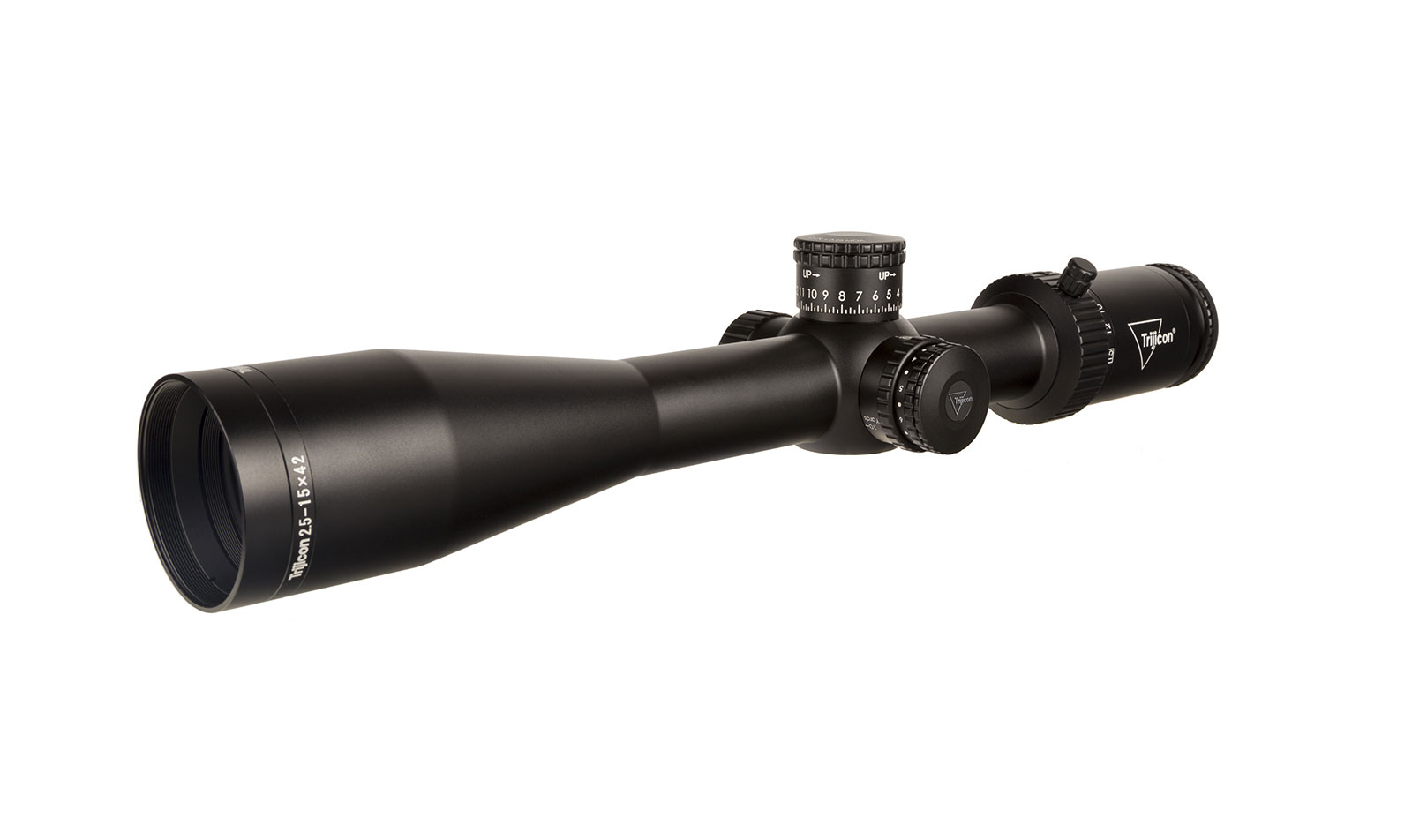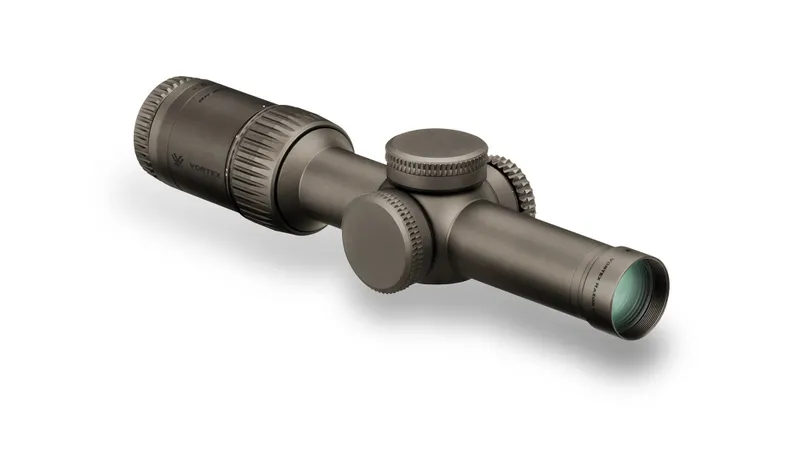

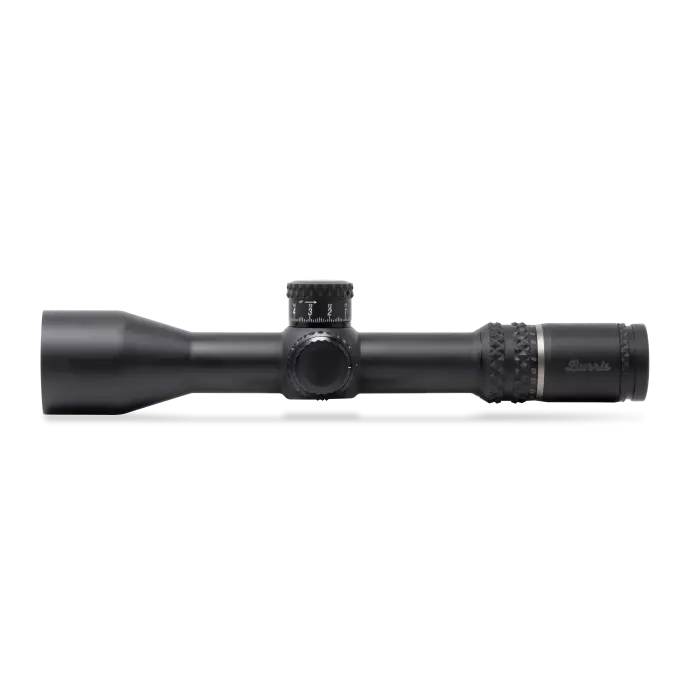
The Burris XTR III 5.5-30×56 arrives with a presence that suggests serious intent – this is clearly a scope built for precision shooters who demand repeatability over flash. Weighing in at 34 ounces, it sits in the middle ground between ultralight mountain rifles and dedicated bench guns. The 34mm main tube provides ample internal adjustment range (34 MOA per revolution), and the overall construction feels reassuringly solid without crossing into excessive bulk. The matte black finish resists glare effectively, and the machining quality shows clean lines with no sharp edges or tooling marks that might indicate cost-cutting.
What stands out immediately is the tactile feedback throughout the scope. The side parallax adjustment moves with appropriate resistance – not too stiff to adjust quickly, but firm enough that it won’t shift during transport. The magnification ring rotates smoothly with distinct detents that you can feel even with gloves. The locking turrets inspire confidence with their positive clicks and zero-stop mechanism. Burris includes flip-up lens covers that actually stay in place, a small detail that matters in the field. The overall impression is one of purposeful engineering rather than marketing-driven features.
Optical Performance in the Field
Glass clarity in the Burris XTR III 5.5-30×56 delivers where it counts most – center image sharpness remains excellent through the mid-magnification range, which is where most precision work actually happens. At 15-20x magnification, resolution and contrast are strong enough to distinguish bullet holes at 600 yards in good light. Edge-to-edge clarity shows some softness in the outer 15% of the image at maximum magnification, but this is consistent with most scopes in this price bracket. The Japanese glass performs well in bright conditions with minimal chromatic aberration, though you’ll notice some purple fringing on high-contrast edges when pixel-peeping at 30x.
Low-light performance is respectable but not exceptional. The 56mm objective provides adequate light transmission for shooting during legal hunting hours, and the image remains usable through dusk. However, comparing it side-by-side with premium European glass reveals a noticeable gap in twilight conditions – the image loses some of its snap and contrast as light fades. The scope’s strength lies in daylight precision work where the resolution and color fidelity support accurate target identification and wind reading. In practical terms, you’ll have no trouble spotting impacts on steel or reading mirage at distance, which is ultimately what matters for a precision-oriented optic.
Turrets & Reticle Functionality
The exposed tactical turrets on the Burris XTR III 5.5-30×56 are where this scope earns its keep for serious shooters. Each click delivers 0.1 MIL of adjustment with a distinct, audible feedback that you can count without looking. The turrets track reliably – multiple box tests showed consistent return to zero with no measurable slop or backlash. The zero-stop feature works as advertised, providing a hard stop at your zero without requiring tools to reset. The locking mechanism requires a firm pull upward to engage the turrets, which prevents accidental adjustment during handling but can be operated quickly once you’re familiar with the system.
The SCR MIL reticle (or G4 MIL, depending on configuration) offers a clean, uncluttered design that balances holdover capability with target visibility. The Christmas tree-style lower portion provides wind and elevation holds without obscuring your target at practical distances. Reticle illumination is daylight-bright at the higher settings and dims sufficiently for night vision compatibility at the lower end. The floating center dot subtends 0.06 MIL, fine enough for precise aiming without disappearing against dark targets. One limitation: the reticle is in the second focal plane on some models, which restricts holdover use to a single magnification – verify which version you’re purchasing if first focal plane functionality is critical to your application.
Real-World Use: Precision & Hunting
After several months and approximately 800 rounds of field testing, the Burris XTR III 5.5-30×56 has proven itself as a capable precision rifle scope for competitive shooting and long-range practice. On a bolt-action 6.5 Creedmoor, the scope’s tracking remained consistent through multiple range sessions, allowing confident dialing for targets from 400 to 1,000 yards. The generous eye relief (3.5-4 inches) accommodates various shooting positions without scope shadow, and the forgiving eyebox at lower magnifications makes quick target acquisition straightforward. At maximum magnification, the eyebox tightens considerably, requiring more precise head placement – typical for this magnification range but worth noting if you plan to shoot predominantly at 25-30x.
For hunting applications, the scope’s utility depends heavily on your style. The 5.5x lower magnification provides adequate field of view for shots inside 300 yards, making it workable for western hunting where long shots are expected. However, the 34-ounce weight and 30x top-end magnification signal this scope’s true calling – it’s built for deliberate, long-range shooting rather than quick offhand work or timber hunting. The turrets performed flawlessly in temperatures ranging from 20°F to 95°F, and the scope survived multiple range trips bouncing around in a truck bed without losing zero. If your hunting involves glassing hillsides and taking calculated shots from stable positions, this scope handles the task. If you need something for quick shots in timber or brush, lighter options with lower magnification ranges make more sense.
How It Compares to Competitors
| Feature | Burris XTR III 5.5-30×56 | Athlon Ares ETR 4.5-30×56 | Vortex Viper PST Gen II 5-25×50 |
|---|---|---|---|
| Weight | 34 oz | 38 oz | 31 oz |
| Turret Adjustment | 0.1 MIL | 0.1 MIL | 0.1 MRAD |
| Reticle Plane | FFP or SFP | FFP | FFP |
| Street Price | $1,100-$1,300 | $900-$1,100 | $900-$1,000 |
| Warranty | Forever | Lifetime | VIP Lifetime |
| Country of Assembly | Philippines | Japan | Philippines |
Against the Athlon Ares ETR 4.5-30×56, the Burris offers slightly better glass clarity in bright conditions and more refined turret feel, though the Athlon provides excellent value with guaranteed first focal plane configuration. The Vortex Viper PST Gen II 5-25×50 weighs less and costs slightly less but gives up some optical resolution and 5x of top-end magnification. Where the Burris distinguishes itself is in the turret quality – the clicks are more distinct and the overall mechanical feel is more refined than either competitor. The Athlon matches it for glass quality, while the Vortex trails slightly but offers the most proven customer service reputation.
For shooters prioritizing tracking reliability and turret precision over absolute glass perfection, the Burris XTR III 5.5-30×56 represents solid value in the $1,200 range. It’s not competing with Nightforce NX8 or Kahles glass, nor should it at this price point. What you get is dependable mechanical performance and good-enough optics for precision work to 1,000 yards. If low-light hunting performance is your primary concern, scopes like the Leupold VX-5HD 3-15×56 or Zeiss V4 6-24×50 deliver noticeably better twilight performance, though they sacrifice some tactical features. The Burris finds its sweet spot with competitive shooters and precision rifle enthusiasts who value repeatable adjustments and don’t need top-tier glass.
Common Mistakes When Using This Scope
The most frequent error with the Burris XTR III 5.5-30×56 involves running it at maximum magnification when conditions don’t warrant it. Shooters often crank the power ring to 30x and wonder why the image looks soft or why they’re struggling with mirage. This scope performs optimally between 12-20x for most precision shooting applications – save the top-end magnification for calm conditions and targets beyond 800 yards. The eyebox becomes significantly less forgiving above 25x, which compounds the problem if you’re fighting mirage or wind-induced movement. Learn to dial back magnification based on atmospheric conditions rather than assuming more power always helps.
Another common pitfall is neglecting proper parallax adjustment, particularly at longer ranges. The side focus knob requires attention throughout your shooting session as distances and lighting change. Failing to eliminate parallax at extended ranges will introduce apparent target movement and degrade accuracy, regardless of how well your rifle shoots. Additionally, some shooters purchase the second focal plane version without understanding the limitations – your reticle holdovers only work at the specified magnification (typically 15x or 20x depending on model). If you plan to use the reticle for wind holds or elevation corrections without dialing, verify you’re getting the first focal plane variant. Finally, don’t over-torque the scope rings – the 34mm tube is robust, but excessive ring pressure can still affect tracking. Follow manufacturer specifications and use a torque wrench.